Modern 3D modeling technologies provide powerful tools for designing and visualizing construction projects. In recent years, this technology has become an essential part of the architectural and construction processes, allowing architects, designers, and builders to develop projects with maximum precision and detail. The question of how 3D modeling aids in home construction is becoming increasingly relevant for anyone planning or currently constructing residential and commercial properties.
The essence and possibilities of 3D house modeling
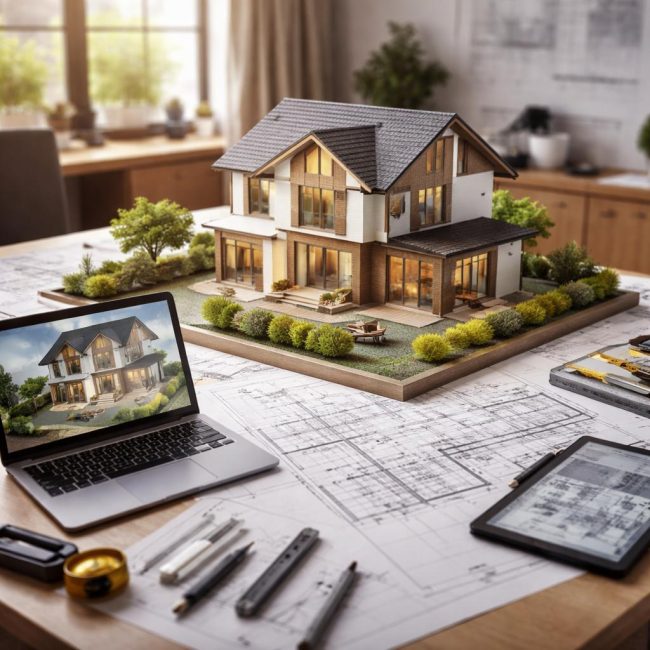
3D house modeling is the process of creating digital three-dimensional models of buildings using specialized software packages. Unlike traditional drafting, which uses two-dimensional plans and sections, 3D modeling allows you to create a three-dimensional model that can be rotated, zoomed in, adjusted in perspective, and viewed in detail from any angle.
The main difference and advantage of 3D modeling is its ability to create a realistic visualization of the future building at all design stages. This allows the client and architect to see what the house will look like before construction begins. Moreover, such programs allow not only to visualize the building's appearance but also to accurately calculate its functional characteristics: from thermal insulation and lighting to the placement of utility systems and structural elements.
How it works in practice
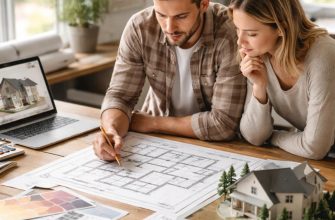
The use of 3D modeling in construction significantly improves accuracy and efficiency at all stages of home construction. During the design stage, specialists can take into account any client's wishes and propose possible solutions. Software programs make it easy to experiment with layouts, colors, finishes, and even furniture arrangements, creating not only technical but also aesthetic projections.
The models can be used to assess loads, structural strength, and various engineering systems. For example, they can simulate how the loads from walls, ceilings, and roofs will be distributed within a building, as well as how windows and doors should be positioned to ensure maximum lighting efficiency.
Scenarios and consequences of use
3D modeling in construction helps prevent many errors during the design stage, which could later prove costly during implementation. Often, errors related to incorrect calculations or underestimation of practical aspects only become apparent after construction begins, leading to additional costs and delays. Models allow for early verification of how various building components will interact, identifying potential structural weaknesses, and, if necessary, making adjustments before construction begins.
Another important aspect is the ability to implement customized projects. For example, thanks to precise calculations and clear visualizations, the client can create a unique design, not limited to standard solutions. This is especially important when the house must take into account specific site conditions, such as an unusual shape, terrain features, or other natural factors.
Limitations and nuances
However, despite all the advantages, there are some limitations to using 3D modeling in construction. One key factor is the high cost and complexity of the software, as well as the need for qualified specialists to operate such programs. Furthermore, the modeling process is time-consuming, which can often lead to extended project deadlines, especially if changes are made at the last minute.
Another important point is that a 3D model is not always a guarantee that the project will be perfectly implemented in reality. Firstly, there is always a certain risk in terms of execution accuracy, especially if the project involves complex architectural solutions or non-standard building materials. Secondly, real-life construction always involves additional nuances that cannot always be accounted for in a model, such as unforeseen geological features of the site or technical limitations.
Common misconceptions
One common misconception is that 3D modeling solves all design and construction problems. Many believe that with a good model, they can begin construction immediately, without worrying about other stages. This is incorrect, as 3D modeling is only part of a more complex process that includes design, government approvals, selection of materials and contractors, and the construction itself.
Another misconception concerns cost. Many people assume that creating a 3D model is always several times more expensive than traditional design. However, a closer analysis reveals that the initial costs can be offset by reduced risks and adjustments during construction.
Expanding completion
3D house modeling is an effective design and construction tool that can significantly improve quality and reduce risks during construction. However, it's important to understand that this is only one stage of a comprehensive process that requires a competent approach at all levels. Using 3D modeling requires highly qualified specialists and an understanding that the final result depends not only on the technology but also on many other factors, such as the choice of materials, working with contractors, and compliance with all building codes and standards.