Warm floor
Underfloor heating is gaining popularity every year, and is installed as a primary or supplemental heating system. There are two types: electric and hydronic.
Electric underfloor heating is more commonly installed in apartments, as hydronic systems are heavy and require permission to connect to the entire building's central heating system. They are subdivided into:
- cable - the heating element is the cable;
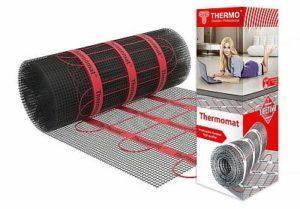
- mats are also a cable device, but they are more convenient because the cable is fixed on a special mesh;
- Infrared - film with carbon plates, heat is emitted by infrared rays.
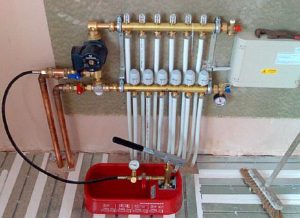
Cable-type systems can be installed with or without screed. The film is laid directly under the final flooring, resulting in a thin structure that doesn't take up any room space, which is ideal for city apartments. For installation in a private home, a water-based underfloor heating system is an excellent choice; it's economical, safe, and evenly heats the surface and the air in the room. It consists of a "pie" consisting of a base, hydro- and thermal insulation material, pipes carrying the hot coolant, and a concrete screed. Dry installation on wooden slats is also possible. A manifold is required for operation, and a boiler is required for heating the water.
Pipes are the main element of this structure. They are made of various materials: steel, copper, cross-linked polyethylene, or polypropylene. Copper is the most efficient and reliable, but expensive. Therefore, polyethylene or polypropylene are more commonly used. They are affordable, and circuits made of these materials also work well in underfloor heating systems.
In this section, you will learn about each type of heated flooring, their pros and cons, and installation methods for all systems.