Penoplex for underfloor heating is one of the most popular thermal insulation bases for both electric and water-based underfloor heating systems.
The first samples of extruded polystyrene foam were produced in the United States in 1941. The material was later called penoplex.
This article will discuss the technical characteristics of insulation, its application areas, and the grades and sizes of slabs.
You'll also learn which grade of expanded polystyrene is best for insulating specific building structures. Here you can also find detailed step-by-step instructions on how to properly install expanded polystyrene foam under underfloor heating.
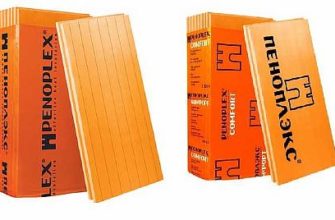
- Types and applications of penoplex
- "Roof"
- "Wall"
- "Foundation"
- "Comfort"
- Penoplex 45
- Technical specifications
- Advantages and differences from other insulation materials
- Biological stability
- Safety
- Strength
- Thermal properties and thickness of penoplex
- Thickness
- Service life
- Material processing
- Tips for choosing
- DIY installation of foam plastic for underfloor heating
Types and applications of penoplex
This versatile thermal insulator is very popular among builders. Penoplex (EPS), a modern type of thermal insulation, has a wide range of applications in construction.
This is the insulation of foundations, basements, basement floors, and interfloor ceilings.
When constructing roofs they insulate the roofPenoplex is also used for insulating facade walls, both internally and externally. This results in significant energy savings on heating residential buildings, buildings, and other structures.
EPS is produced in slab form using foaming polymer mixtures followed by filling the molds under pressure (extrusion). Penoplex supplies the following brands to the Russian building materials market:
- "Roof".
- "Wall".
- "Foundation".
- "Comfort".
- Penoplex 45.
"Roof"
This category of insulation provides thermal protection for both flat roofs with minimal slopes (up to 3%) and roofs of all types. Penoplex offers the following range of roofing insulation:
- "Roofing" - for roofs of all shapes and types;
- “Geo” – for inverted roofs, where the primary waterproofing is located under the insulation on the reinforced concrete floor;
- "Slope" - for creating a pitched roof on flat roofs.
"Wall"
It is used for insulating external and internal walls. The insulation is placed on walls under façade cladding, paneling, and decorative masonry.
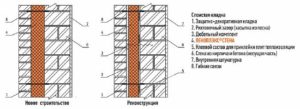
The manufacturer supplies the Russian building materials market with “Wall” slabs 1.2 m long, 0.6 m wide and 20 to 100 mm thick.
"Foundation"
This brand is used for insulating the foundation structures of private homes, including foundations, basements, and floors on the ground.
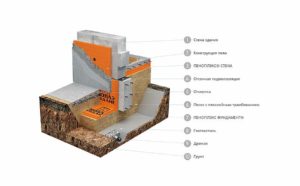
The material is characterized by increased strength and a long service life of over 50 years. The standard panel size is 1185x585x50 mm.
"Comfort"
The products have an increased density from 25 to 35 kg/m33The panels are popular for insulating urban housing, balconies, loggias, and attics.
This material does not absorb moisture, has high compressive strength, is biologically resistant, and has low thermal conductivity. The special joint shape allows for easy joining of the boards.
Penoplex 45
45th penoplex, due to its high density of up to 50 kg/m33, insulate roads, airfield runways, and the foundations of various structures in permafrost areas, thereby preventing frozen soil from thawing and protecting the area from subsidence.
Technical specifications
These may vary slightly for different types of EPS. The table below shows the main average technical characteristics of extruded polystyrene.
| Insulation characteristics | Meaning |
| Water absorption within 24 hours | 0.5% of the total volume |
| Vapor permeability coefficient | 0.005 |
| Fire resistance | Group G4 |
| Density | From 20 to 50 kg/m3 |
| Specific heat | 1.45 kJ |
| Thermal conductivity coefficient | 0.034 |
| Standard sizes | 1185 x 585 x (20 - 100) mm |
Advantages and differences from other insulation materials
Insulation materials for building structures, including penoplex intended for underfloor heating, are evaluated according to the following parameters:
- biological resistance;
- safety;
- strength;
- thermal properties;
- thickness;
- service life;
- material processing.
In some ways, extruded polystyrene foam is a close relative of foam plastic. However, in terms of quality, EPS significantly surpasses conventional foamed polymer.
Biological stability
Extruded polystyrene has properties that help repel harmful insects and small rodents.
The insulation's structure is not an attractive environment for microflora of any kind. Fungal growth also cannot occur on the EPS surface.
Safety
Penoplex is environmentally friendly materialThe material does not emit harmful fumes into the surrounding space at any ambient temperature and humidity level. The maximum operating temperature for polystyrene foam should be taken into account: 750 WITH.
It is also important to keep in mind that penoplex is a highly flammable material (flammability group G 4 according to GOST 30244-94).
Therefore, in those places where polystyrene foam is not covered by concrete or cement screed or masonry, it is necessary to take increased fire safety measures.
Strength
This characteristic is directly related to the density of the material.
At a density of 35 kg/m33 and the material retains its integrity when people walk on it, which is important when installing a water-heated floor on penoplex.
Thermal properties and thickness of penoplex
Compared to various building materials, penoplex occupies a leading position in terms of its thermal properties.
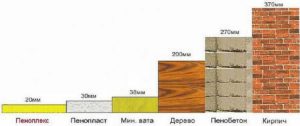
For example, 20 mm thick EPS has the same thermal insulation effect as 30 mm thick foam plastic, 38 mm thick mineral wool, etc. The figure below shows that EPS is the most effective thermal insulation material.
Thickness
This parameter significantly influences heat loss, which can lead to increased heating costs. The height of the insulation material can differ significantly from the location of the screed under the insulation.
If this is done on the ground, the minimum thickness of the expanded polystyrene should be 100 mm. For underfloor heating on a floor between floors, 20 mm or 30 mm thick material is quite sufficient.
Service life
The manufacturer of expanded polystyrene guarantees the service life of penoplex without changes in the physical and chemical state of the material for at least 50 years.
Operating conditions must not allow the material to be subjected to bending loads.
Material processing
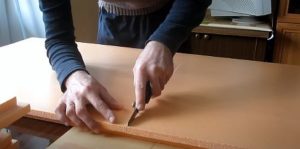
PPS is supplied to the retail network in the form standard size slabsWhen insulating floors with penoplex or other structures, additional pieces are required. These are obtained by cutting the foam polystyrene panel with a utility knife using a metal or wooden ruler.
The material cuts easily without splintering, leaving perfectly smooth cut edges. DIYers make various devices using replaceable utility knife blades as the cutting element.
They are secured with countersunk screw heads into the solid wood. When making extension pieces, they can be used to easily remove quarter panels from the ends of the slabs.
Tips for choosing
The choice of a specific brand of penoplex depends on the intended insulation material. By studying the technical characteristics of various types of this material, you can formulate your selection criteria in the following tips.
- For insulating basement floors and horizontal foundation surfaces, 50mm-thick "Fundament" brand slabs are primarily used. Penoplex produces these expanded polystyrene panels with grooves along the perimeter of the edges. Penoplex with grooves creates a tight connection between the slabs, virtually eliminating heat loss.
- Vertical building and structure enclosures are insulated with "Stena" brand boards. Penoplex, with grooves on the back, has high adhesion. The wall insulation installation technology involves attaching the panels to the facades and interior walls using a special adhesive. The grooves significantly increase the panels' adhesion to vertical enclosures made of any masonry material, as well as concrete wall panels.
- For insulating attics and cold lofts, Krovlya brand boards are used. The panels are attached from the inside to the roof truss sheathing, over a pre-installed vapor barrier or waterproofing layer. On pitched roofs, the panels are secured with mushroom-shaped dowels. For steeply pitched roofs, the dowels are installed at 20-30 cm intervals from the inside of the roof.
- There's only one answer to the question, "Is it possible to install underfloor heating over Penoplex?" No, it's not possible, but it's absolutely necessary. EPS is primarily used as subfloor insulation. Depending on the circumstances, Penoplex "Fundament" or "Comfort" brands are chosen for underfloor heating under a screed.
- Regardless of whether the underfloor heating system is electric or water-based, “Fundament” brand insulation is laid on a soil base with compacted layers of sand and crushed stone.
- Penoplex is installed under 20-30 mm thick reinforced concrete floor slabs under radiant-water underfloor heating or electric heating systems. "Comfort" grade polystyrene foam is selected for this application.
- Penoplex of any grade is used for thermal insulation of heating systems and heating mains. The thickness of the insulation is selected based on local conditions for laying the slabs and additional elements.
DIY installation of foam plastic for underfloor heating
To understand the entire process of preparing the base for a heated floor made of foam plastic, consider the example of a small room with a cement screed already installed. The entire process can be viewed in the video below.
Step-by-step instructions for installing foam insulation for underfloor heating
- Before you begin installing the insulation, you need to carry out the following preparatory measures:
- If the base is soil, it is cleared of debris and covered with a layer of crushed stone (100–150 mm).
- A 100 mm thick sand backfill is made. The sand is watered and compacted.
- make a screed with cement mortar.
- All cracks and cavities in the interfloor concrete floor are sealed with mortar, and protrusions are removed.
- The wooden base of the floor is leveled with putty.
- The required number of penoplex boards is calculated based on the area of the room’s base plus 5% for additional elements.
- Extruded polystyrene foam boards are brought into the adjacent room.
- Gaps and cracks in the screed are leveled with cement mortar and protrusions are removed.
- Apply adhesive to the back of the foam board using a comb. Tile adhesive is used.
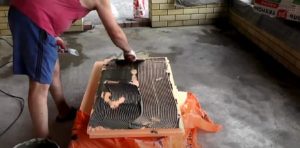
- Laying of the slabs begins from one of the corners of the room and continues along the long wall.
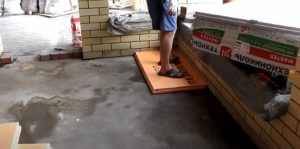
- Mounting foam is applied to one end of the slab;
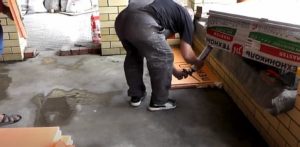
- The foam should be applied in a thin layer. If too much sealant is used, the foam may expand significantly and cause the EPS boards to bulge.
- To avoid deformation of the panels, they can be securely attached to the screed using mushroom dowels.
- Each subsequent panel is pressed tightly against the end of the adjacent slab.
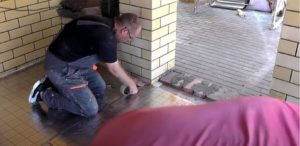
- Underfloor heating extensions are created by cutting entire slabs. For small jobs, a utility knife and ruler are sufficient. When covering a large subfloor with insulation, it's best to use a specialized mechanical or electric cutter.
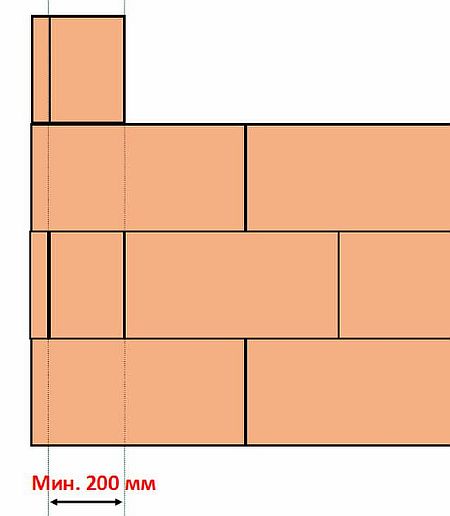
- The rows of foam insulation are laid out in a staggered pattern. The spacing between the seams of adjacent rows of insulation boards should be at least 200 mm. This same approach is used when laying boards in two layers. The top and bottom joints, both longitudinal and transverse, should also be spaced at least 200 mm apart.
- All seams on the outside are sealed with foam. Excess foam is trimmed off with a knife after it hardens.
- Scraps of polystyrene foam are inserted into the resulting cracks and gaps.
Next, depending on the type of heating, infrared film elements are laid out or water heating pipes are installed.
I agree that there's no better insulation material. I laid sheets myself on the floor of my parents' house on the first floor. Winter has already passed since the renovation, and my parents are happy. As the author recommends, it's best to insulate this material with screed, for your own safety. As for its lifespan, we'll see. 50 years is certainly too long; I hope it lasts at least 10-15.