The choice of ceiling finishing materials depends not only on design and budget. A crucial factor is the climate of the region where the home is located. In northern Russian cities, where high humidity and sudden temperature fluctuations prevail, apartment and house owners are forced to take these factors into account when renovating. This is why ceiling finishing materials have become a common and practical solution: they help cope with the vagaries of the climate while maintaining the aesthetic appearance of the interior.
- Climatic factors affecting the ceiling
- Air humidity
- Temperature changes
- The state of the old housing stock
- Popular types of ceiling coverings
- Whitewashing and painting
- Suspended ceilings
- PVC panels
- Stretch ceilings
- Advantages of stretch ceilings in humid climates
- What to look for when choosing
- Comparison of cost and durability
- Conclusion
Climatic factors affecting the ceiling
Air humidity
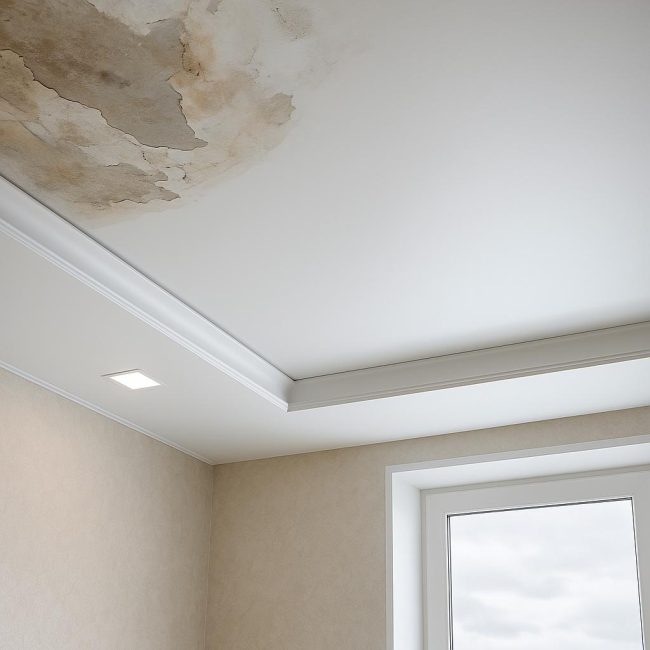
St. Petersburg and the northwestern regions are generally characterized by high humidity, especially in the off-season. This leads to condensation, mold, and the deterioration of traditional finishes. Ceiling surfaces are the first to suffer, as moisture rises with warm air.
Temperature changes
In winter, the temperature outside and inside the house can differ by tens of degrees. This puts stress on materials: paint peels, panels warp, and plaster cracks.
The state of the old housing stock
In cities like St. Petersburg, a high percentage of buildings have worn-out floors: cracks, uneven surfaces, and signs of leaks. Solutions that simultaneously conceal defects and protect the home from moisture are especially relevant here. These solutions have proven themselves particularly effective in these conditions, allowing even older apartments to be quickly transformed.
Popular types of ceiling coverings
Whitewashing and painting
A simple and inexpensive option, but completely impractical in high-humidity conditions. Stains and cracks appear after just a couple of years.
Suspended ceilings
Plasterboard structures or Armstrong-type systems conceal utility lines and uneven surfaces, but they don't handle moisture well. Additional treatment with moisture-resistant compounds is required.
PVC panels
They withstand moisture well and are not afraid of washing, but over time they turn yellow and are inferior in aesthetics to modern solutions.
Stretch ceilings
The perfect balance of functionality and design. They are moisture-resistant, temperature-resistant, and durable.
Advantages of stretch ceilings in humid climates
- Moisture resistance — PVC sheets do not allow water to pass through and can retain it in case of flooding from above.
- Mold protection - fungi do not develop on the film, which is especially important for humid climates.
- Maintaining appearance — neither temperature changes nor dampness lead to cracks or color loss.
- Masking defects — hide uneven surfaces and old communications.
- Design possibilities - a huge selection of textures, colors, and backlighting options.
What to look for when choosing
- Canvas material: for the kitchen and bathroom - PVC, for living rooms - fabric with impregnation.
- Ventilation: even a moisture-resistant coating requires normal air exchange.
- Installation: The quality of installation directly affects the service life.
- Lighting: It is better to choose moisture-proof lamps.
Comparison of cost and durability
| Type of coating | Average service life | Moisture resistance | Cost (approximate) |
|---|---|---|---|
| Whitewashing/painting | 2–3 years | Low | Low |
| Suspended ceilings | 7–10 years | Average | Average |
| PVC panels | 10–15 years | High | Average |
| Stretch ceilings | 15–20 years | Very high | Average/above average |
The table clearly shows that the durability and resistance to climatic loads of stretch ceilings is significantly higher than that of traditional solutions.
Conclusion
The northwestern climate places special demands on renovations: finishes must be moisture-resistant, condensation-resistant, and durable. Whitewash and paint quickly fade, suspended ceilings require protection, and PVC panels are only suitable for simple interiors.
Stretch ceilings remain the optimal solution, successfully combining practicality and design. This is why stretch ceilings have long been the standard not only in new buildings but also in renovations of older apartments: they reliably protect the home from the vagaries of the climate and help maintain a cozy atmosphere for years to come.