Heating radiators
The efficiency of a heating device is determined by its service life and heat output. The weight of the product, ease of installation, and maintenance are also considered. Bimetallic radiators are considered efficient. The price of the device is not related to its technical specifications. Retailers inflate the price due to brand recognition. The Royal Thermo BiLiner 500, Rifar SUPReMO 500, and Sira Ali Metal 500 models topped the user ratings for operational efficiency.
Autonomous heating in a private home operates at low pressure. There's no point in overpaying for bimetallic units. A private home will be heated by radiators made of pure aluminum. Cast iron and metal radiators are second best.
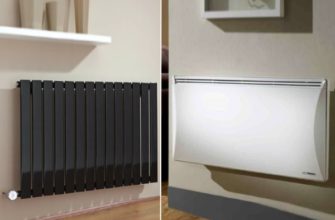
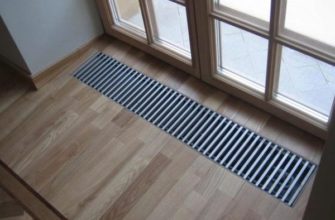
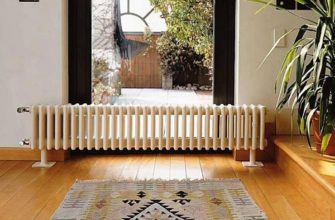
Floor-standing models differ from wall-mounted models in that they have stands. Based on heat transfer technology, these units are classified as panel, sectional, or convector-type with a finned-tube heat exchanger. A separate class are in-floor convectors, which are built into the screed or other floor finish.
Heating devices are selected based on their power. The heat output of one section and the entire radiator is specified in the manufacturer's instructions. Determine the number of radiators and sections based on the assumption that 100 watts of heat energy is required to heat 1 m² of a room with standard ceiling height.
Warm air rises according to the laws of physics. Cold air accumulates below. Large private homes typically have ceilings higher than the established standards of 2.5-2.7 meters. To heat a building with an unusual shape, select the radiator capacity based on the volume of the room. Multiply the width, length, and height of the room.
Find the volume of the interior space. Heating 1 m³ of space requires 40 W of heating power. Multiply the room volume by 40 W and divide by the power of one radiator section.
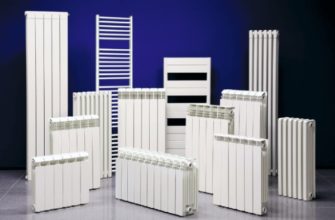
In apartments with central heating, it is recommended to use metal, cast iron, and bimetallic radiators designed for high operating pressure. These radiators are classified by design:
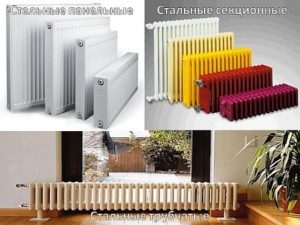
• sectional – assembled from sections connected by nipples;
• cast – made by stamping;
• panel – composed of individual panels into a single structure;
• tubular – made from pipes of a certain size and shape;
• plate – made from a pipe equipped with mounted plates.
Sectional and panel heating devices are most often installed in apartments.
In the 1980s and 1990s, the production of cast iron and metal radiators was concentrated in Russia. Today, the industry produces aluminum and bimetallic radiators. Production of steel panel and tubular models is growing. Well-known brands include Royal Thermo, Halsen, Loten, Teplopribor, and Steel Hot.
A centralized heating system operates under pressure up to 9.5 atmospheres and with a dirty, aggressive coolant. Bimetallic, cast iron, or metal heating elements are suitable for apartments. For efficiency and aesthetics, bimetallic heating elements are preferable.
In an apartment with a centralized heating system, install bimetallic, cast iron, or metal radiators. Copper models are suitable, but they are more expensive. In an apartment with independent heating, install all models, even aluminum ones. Determine the power based on 100 W of heating energy per 1 m² of an apartment with a standard ceiling height of 2.5-2.7 m.
The heat output of copper is 401 kW, aluminum – 200 kW, and steel – from 120 to 150 kW. The power of one radiator section is: aluminum – 190-205 W, bimetallic – 135-200 W. The cast iron section is characterized by low power (80-150 W), but it compensates for this by retaining heat for a long time. Aluminum, copper, steel, and bimetal cool immediately after the heating is turned off.
In a gravity-fed system, it's efficient to connect the radiators diagonally: the supply from the top and the return from the bottom. In a diagonal system, all sections are heated. For heating systems with forced circulation using a pump, side, bottom, and other connection types are suitable, as determined by the system diagram.
A gap of 70-120 mm is left between the floor and the bottom of the heating equipment. The distance from the window sill is maintained at more than 80 mm.
Heating equipment is made from aluminum, bimetal, steel, cast iron, and copper. Design features include sectional, plate, panel, and tubular models.
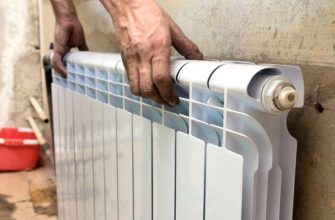
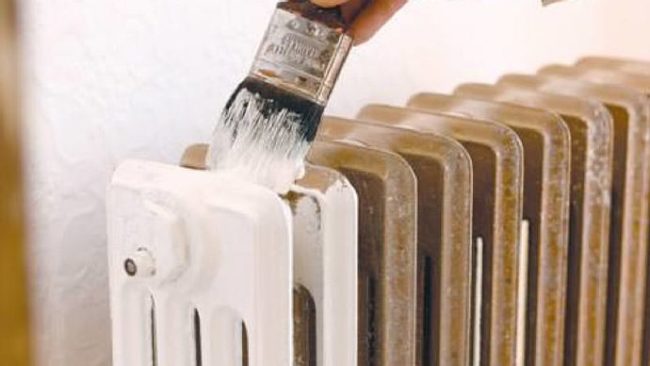
Sectional models are assembled from individual cast sections, held together on manifolds by threaded nipples with rubber gaskets. The cast instruments are manufactured using a stamping process.
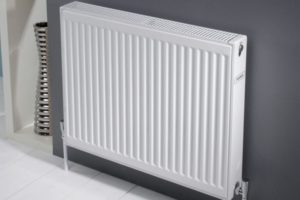
The panel radiator body is made of stamped plates that form a box. Inside the body are prefabricated panel heat exchangers through which the coolant circulates.
Tubular models are welded from pipes. The registers are custom-made to the size and shape required for the wall mounting location.
Plate models are welded from a tube. To enhance heat transfer, the round heat exchanger is equipped with mounted plates.
Bimetallic heating equipment has distinct design and performance characteristics. 5 tips to help you make the right choice:
1. Bimetallic monolithic models are more reliable due to the lack of joints, but a leaking section cannot be replaced. You'll have to buy a whole radiator. Sectional models may develop leaks at the joints over time, but a plumber can fix the problem and replace the faulty section.
2. Standard models with heights of 350 and 500 mm, as well as custom radiators, are produced. 500 mm high radiators are more suitable for apartments. Shorter models lack sufficient power. Custom radiators are unprofitable due to the difficulty of finding sections when adding or replacing a leaking element.
3. Depending on the size, each section weighs 1.5-2 kg. Any increase or decrease in weight indicates a defective or counterfeit product.
4. Depending on the size, the heat output of a standard section is 135-200 W. The presence of other characteristics in the accompanying documentation indicates a counterfeit or poor-quality product.
5. For an apartment, a model with the following pressure is suitable: working pressure – 20 atm, testing pressure – 30 atm.
The manufacturer provides a 15-year warranty on branded products and sets a 25-year service life. Short warranty terms indicate poor product quality.
To heat 1 m² of space, you need 100 watts of heat. Multiply the power of one section by the total area of the room. By adjusting the number of sections, you can select the number of radiators with the appropriate power to heat the room.