When unexpected cold weather hits, the easiest, fastest, most effective and safest way to warm up is to turn on the heater.
There are two main competitors in the market: radiators and convectors. In this article, we'll explore their differences, advantages, and disadvantages, which type of heater is right for you, and what features to consider when purchasing.
What is the difference between radiators and convectors?
While differing in appearance, design and operating principle, convectors and radiators (water or oil) perform the same function.
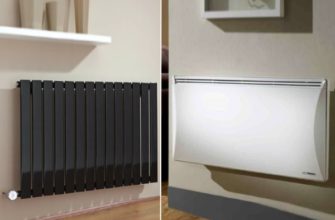
Convectors and radiators differ primarily in their operating principle:
- In the radiator Hot water flows through the panels or pipes, heating them, and the pipes heat the air. The room becomes warm due to radiant heat.
- In convectors Hot water is also used, but they operate based on natural air circulation. A convector has a hollow, elongated body with a heating element at the bottom that plugs into a power outlet.
Convectors generate convective heat. They draw in heated air from the bottom of the unit, and convection activates a hot air circulation system. This creates a flow of thermal waves that heat the space.
Convective heat, compared to radiators, heats rooms faster and more evenly. Convectors consume less electricity, and radiators are less expensive.
What is a heating radiator?
Radiators—batteries in a heating system or powered by the grid—are designed to heat rooms. The comfort of a home depends on how efficient they are.
They may differ in design and material, and each option has its own characteristics, advantages and disadvantages.
Cast iron
Radiators have long been widely used in centralized and independent heating systems. Cast iron radiators have always been particularly popular.
Pros:
- unpretentious in terms of water purity;
- any coolant is suitable;
- high heat transfer at any service life;
- retain heat for a long time after switching off;
- you can reduce or increase the number of sections;
- withstand high heating of the coolant - up to +130°C;
- serve for at least 40 years.
Cons:
- heavy - sections weigh 5-7 kg;
- take a long time to heat up;
- small heat transfer area;
- outdated appearance;
- difficult to wash and remove dust from the surface.
Aluminum
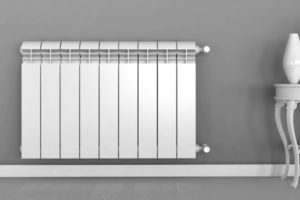
Aluminum radiators are now significantly ahead of their cast iron counterparts in the market. Manufacturers offer two options: standard (6 atmospheres operating pressure) and reinforced (12 atmospheres).
Pros:
- light weight;
- good heat dissipation;
- able to withstand high operating pressure;
- look harmonious in rooms with different interiors;
- ease of installation.
Cons:
- corrosion of aluminum walls when using untreated water (pH should not exceed 7.5);
- installation of an automatic air vent;
- corrosion in contact with other metals.
Steel plate
They are installed primarily in private homes. The radiator consists of several plate sections with internal channels through which the coolant flows.
Pros:
- light weight;
- heats up quickly;
- easy installation;
- high heat transfer;
- price.
Cons:
- cannot be installed in multi-story buildings due to pressure limitations;
- insufficiently high corrosion resistance;
- It is necessary to constantly fill it with coolant.
Steel tubular
They consist of two collectors connected by spot-welded steel pipes. A small amount of coolant is required to heat the room.
Pros:
- the room heats up quickly;
- a large selection of shapes and sizes.
Cons:
- insufficiently high corrosion resistance;
- price.
Bimetallic
Bimetallic radiators are made of aluminum panels and steel pipes located underneath. Water is the coolant used. Antifreeze is unsuitable, as it will damage the interior surface. The air is heated by the aluminum panels, which are then heated by the steel pipes.
Pros:
- there are no restrictions on water acidity;
- can be used at pressures up to 30 atmospheres;
- high level of heat transfer;
- suitable for heating large areas;
- aesthetic appearance.
Cons:
- installation of an automatic air vent;
- complex installation;
- price.
Oily
Oil-filled radiators operate on the same principle as water-filled radiators. The only difference is the coolant—mineral oils are used instead of water.
Inside the unit is a heating element that heats the oil, which in turn transfers heat to the surrounding area. Oil-filled radiators are not typically used as primary heating sources, but in regions with mild winters, many rely on them, especially in areas without central heating.

Pros:
- quickly heats a large area;
- works silently;
- there is a built-in thermostat;
- can be moved from place to place, transported;
- no installation required.
Cons:
- the case gets very hot;
- Low-quality devices may leak, and leaking oil may cause burns;
- constant monitoring of the device’s operation is necessary to avoid dangerous situations and breakdowns;
- high price.
What is a convector?
Convectors heat a room by circulating hot air, either naturally or forced. They come in different types—water, electric, or gas—but they all have the same design.
Any convector consists of:
- metal rectangular body;
- heating element built into the lower part of the housing;
- thermostat.
Electric
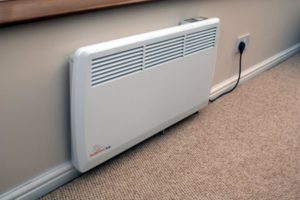
Electric convectors are installed when connecting the house to the main gas pipeline is not possible. For the unit to function, only an electrical network is required; there is no need to install a boiler or radiators, nor is there any need for piping or a coolant supply.
Electric models operate on the principle of heat exchange. They warm air masses, which rise and exit the convector. The heated air displaces cold air from the ceiling, which is sucked into the unit and repeats the process described above.
The temperature is regulated by electronic or mechanical thermostats, which turn the heating element on or off.
Pros:
- autonomous operation;
- no coolant;
- simple design;
- You can create a heating network from several convectors - a kind of centralized heating for the house;
- Eco-friendliness – the devices do not affect air humidity and do not dry the air.
Cons:
- efficiency drops with long-term operation;
- high level of energy consumption;
- If the device is faulty, there is a risk of electric shock.
Water
There are convectors that can operate with a liquid coolant heated by a boiler. With their simple design, these units are easy to operate and quickly heat the room.
Water convectors are equipped with high-power heat exchangers made of copper, steel or aluminum.
Manufacturers offer several options for water heating convectors:
- wall-mounted - they are placed under window sills;
- floor-standing - they are placed near windows with low windowsills;
- built-in - designed for installation of a hidden heating system;
- In-floor - prevents condensation on panoramic windows.
Pros:
- no power consumption required;
- economy;
- simple design;
- compactness;
- efficient work.
Cons:
- insufficiently efficient when installed in rooms with high ceilings;
- labor-intensive installation - it is necessary to run pipelines throughout the building;
- insufficiently high resistance to corrosion processes;
- increased sensitivity to temperature changes.
Water models, compared to electric convectors, are easier to operate and more economical.
Gas
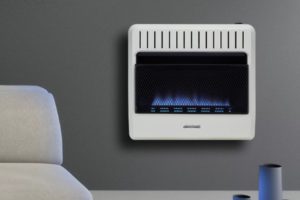
Gas convectors have recuperative heat exchangers. The air is heated by combustion gases exiting the house through the chimney. Heating can be provided by natural gas or liquefied propane-butane mixture.
There are several types of gas convectors:
- Wall-mounted — compact, they fit into any interior. They are mounted under window openings to offset the effects of cold drafts.
- Floor-standing — they are used for heating large areas and are mounted on concrete foundations.
- Built-in — such models are installed hidden in floors or walls.
Based on the convection type, gas convectors are classified as either forced-air or natural-ventilation. The former pumps hot air, while the latter forces the air up toward the ceiling.
Pros:
- economical gas consumption;
- can be installed independently;
- fast heating of the room;
- You can use bottled gas;
- autonomous operation;
- price.
Cons:
- it is necessary to obtain permitting documentation for connection to the gas pipeline;
- a large amount of construction and installation work needs to be completed (holes need to be made in the walls, a foundation needs to be built for the boiler);
- bulkiness.
General functions
Radiators and convectors, although significantly different in design, operating principle, and appearance, are created for the same purpose: heating rooms by distributing heat throughout them.
Both devices - a convector and a radiator - can be used as either a primary or an additional heat source.
What else do radiators and convectors have in common:
- operate from a 220 V network (radiators - oil, convectors - electric);
- usually installed on the floor;
- can be transported without any problems;
- work silently;
- are equipped with built-in thermostats.
Comparison
Before choosing the best option, it is useful to take a closer look at the most important characteristics of convectors and radiators and compare them.
Selection criteria:
- Efficiency (COP). Radiators have a higher heat output than convectors, as the radiation heats not only the air but also objects, which then radiate some of the heat back. When using a convector, walls, furniture, and objects remain cool.
- Compactness. Convectors are the clear winner in this regard. They are more compact and require less space for installation.
- Speed of heating of rooms. Convectors are faster. However, radiators, even when turned off, continue to emit heat for some time, while convectors stop heating the room immediately after being turned off.
- Safety. Convectors' housings heat up less than radiators'. The hot surface of radiators can cause burns. Most convectors are protected against voltage surges and overheating, and also have position sensors that shut off the unit if tilted or dropped. Oil-filled convectors may not have any protection, so their operation requires constant monitoring.
- Heating of large spaces. Radiators are more effective in this regard. When using stand-alone convector heaters, they are connected to a single network. In large rooms, several oil-filled heaters are connected, each to a separate outlet.
- Easy to care for. Radiators are easier and quicker to clean. Simply wipe off dust or wash the housing. Convectors, however, require disassembly, as dust and small debris enter the unit along with the air.
- Design. Convectors look more modern than radiators of any type—they always resemble a cast-iron radiator. Convectors are easier to integrate into any interior.
- Accuracy of sensors. A temperature sensor is located at the bottom of the convector. When all the air in the room has warmed to the required temperature (even the air near the floor), the convector switches off.
Radiators (oil-filled) are less accurate. The device heats the air directly next to the housing, which can cause the sensor to malfunction. For example, if it's still cold in a corner of the room, the sensor, detecting air near the housing, triggers and shuts off the device. - Service life. It depends on the quality guaranteed by a particular manufacturer. When comparing oil heaters and convectors, the former have a warranty of no more than two years, while the latter have a warranty of five to ten years. Leaking oil heaters cannot be repaired, but convectors can be.
- Environmentally friendly. The idea that heaters burn oxygen is a myth; neither radiators nor convectors contain an open flame. The downside of convectors is that they spread dust and harmful microbes throughout the room.
- Noisiness. Convectors operate completely silently. Most electric radiators are also silent, except for fan-assisted models.
- Mobility. All autonomous devices – radiators and convectors – are equipped with built-in wheels (except for stationary models).
- Price. While technical specifications are equivalent, radiator heaters are slightly more expensive than convector heaters. The more additional features a heater has, the more expensive it is.
What should you base your choice on?
Before choosing a heating device, decide whether you'll be using a boiler-based heating system or standalone units. Technology is changing rapidly, so it's important to familiarize yourself with new models and compare them to previous ones—they may have already addressed their shortcomings.

When choosing between convectors and radiators, consider the room's dimensions. Convectors are definitely a good choice for those looking to save space. They are also chosen for the fastest possible heating of rooms.
Radiators are preferred by those who value uniformity and quality of heating, as well as slow heat release after switching off, and are willing to sacrifice design and size for these qualities.
Comparison table by brief criteria
Manufacturers offer a huge variety of radiators and convectors—for hydronic heating, gas, oil, electric, and so on. In each case, it's necessary to compare competing radiator and convector types across a range of parameters. Below is an example of a comparison between stand-alone convectors and oil-filled heaters.
Comparison table:
| Evaluation criteria | Convector | Oil heater |
| Dimensions | Lightweight and compact | Heavy and bulky |
| Design | Modern | Outdated |
| Efficiency | High | High |
| Room heating rate | Fast | Slow (except fan versions) |
| Application scenario | Universal | With restrictions (not recommended for bathrooms and children's rooms) |
| Care | Average | Minimum |
| Safety | Maximum | Average |
| Accuracy of sensors | High | Average |
| Eco-friendliness | Low | Average |
| Service life | High | Average |
| Mobility | High | High |
| Noisiness | Silent | Silent (except for models with fans) |
| Cost (with equivalent parameters) | Cheaper | More expensive |
| Additional functionality | More | Less |
When choosing a heat source for space heating, many factors and objectives must be considered. Both systems have their pros and cons, and the choice will depend on the consumer's primary criteria—energy efficiency, cost, economics, or other factors.