Thanks to the ability to regulate the temperature in heating batteries, it is possible to achieve a comfortable microclimate in residential and industrial premises.
Considering the high cost of energy, a feature that allows you to save on heating is very valuable.
- Benefits of adjustment
- Heat regulation
- Operating principle of the regulating valve
- Types of adjusting devices
- Ball valves
- Needle taps
- Mechanical thermostat
- Automatic thermostat with remote sensor
- Electronic regulator
- How to choose an adjustment device?
- Adjusting heating devices depending on the type of heating system
- Individual heating
- Central heating
- How to install a thermostat on a radiator?
- What difficulties and malfunctions can occur?
Benefits of adjustment
Heating regulation, regardless of the implementation method, allows you to achieve several goals at once.
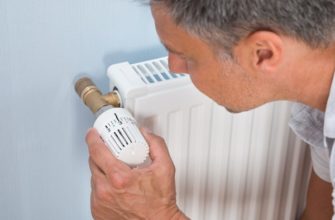
What are the benefits of regulating battery temperature:
- A comfortable environment is established.
- It is possible to save 25-50% of costs.
- They are being liquidated air locks in the pipeline, the liquid moves freely.
- Uniform heating.
- If desired, different temperatures in the rooms.
Before the heating season begins, install plastic windows and thoroughly insulate the walls and seams between panels.
Heat regulation
It's important to know not only how to operate heating radiators but also how they work. Adjustments are made using valves and thermostats. Keep in mind that a thermostat doesn't increase heat output, only decreases it. It's not practical to install one on cast iron radiators.
Cast iron radiators are massive and capacious, but they are inert and respond slowly to automatic regulation. Aluminum, on the other hand, cools and heats up extremely quickly. Bimetallic radiators can be adjusted individually for each radiator.
How to decrease/increase the temperature of radiators:
- Automatic models usually have a siphon that presses on spring-loaded mechanisms.
- Without automation, just turn the handle.
- In electronic devices, the processor is responsible for operation.
Operating principle of the regulating valve
The procedure for manually adjusting the temperature using a valve consists of several steps. They are as follows:
- When the valve is turned, the shut-off mechanism rises or falls.
- When the valve is in the closed position, the flow of liquid is blocked 100%.
- The cone, moving up or down, regulates the volume of circulating liquid.
Advantages of the regulating valve:
- the reliability of the device - it is not afraid of blockages and small abrasive particles present in the coolant (this only applies to high-quality valves in which the valve cone is made of metal and carefully processed);
- price.
The downside of the valves considered is that their position must be changed manually, making it difficult to maintain a stable temperature.
Types of valves:
- Adjusting. To regulate the operation of the batteries, special valves are used - with straight and angled connections. They allow you to reduce the flow of liquid, reducing heat transfer in an overheated room.
These valves are used in autonomous heating systems. These devices do not allow for precise regulation of heat output, as they lack any scale or temperature sensor. - With thermal head. Their design allows for blocking or limiting high temperatures using manual or automatic control. They are installed in both single- and two-pipe systems. Regulation is manual, using a limiting ring.
- With thermostat. It is installed before the radiator. The coolant flows under the control of a valve installed before the thermostat.
Types of adjusting devices
Manufacturers offer a wide variety of devices designed to change the volume of coolant.
There are cheap and expensive ones among them, with different adjustments.
Ball valves
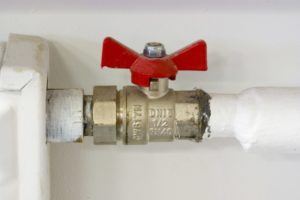
Ball valves allow you to completely shut off the coolant flow. The valve has only two positions—open and closed. This simple valve allows you to perform repairs without shutting down the entire heating system.
Design and operating features of ball valves:
- There is a ball with a through hole inside the tap. It can make a 90° turn, blocking or opening the flow.
- Intermediate positions of ball valves are possible. However, installing them is prohibited. At high coolant temperatures, the ball may stick to the walls, causing further damage.
- The mechanism is made of nickel-plated brass or stainless steel. Polymers are also used in metal-plastic systems.
- When installing a shut-off valve. Installing a bypass is mandatory. The bypass pipe is installed to ensure that the coolant continues to circulate when the flow to the radiator is shut off.
- If you place the tap on the bypass. The volume of water passing through it can be adjusted, allowing for the radiator's heat output to be adjusted.
On the market you can find both expensive products - SAS, Danfoss, Remer, Giacomini, and budget ones - Chinese and Turkish production (Fado, Valtec).
Experts advise against using ball valves for adjustments. Their use can lead to a blocked riser and problems with neighbors.
Needle taps
The special feature of this valve is its smooth regulation of the liquid flow rate, which determines the temperature in the heating radiators. The needle valve is installed before the pressure gauge. It is used primarily for maintenance and repairs. It also prevents hydraulic shocks in the event of shut-off valves opening too quickly.
Design and operating features:
- The needle tap consists of. It consists of a cast body and a cone-shaped rod, driven by a handle. Rotation of the handle advances the needle within the channel, opening or closing the passage. Adjustment is smoother if the tip is spherical and non-rotating.
- Needle valve control. Can be manual or automatic.
- Design feature of needle taps. The coolant flow is cut off by a factor of two. For example, in inch-diameter pipes with a needle valve of a similar cross-section, its flow capacity is only 0.5 inches. As a result, each such valve reduces this parameter.
When several products are installed in series, the radiators will be barely warm or even cold.
Due to the severe restriction of the flow passage, needle valves are not recommended for regulating radiator temperatures, as their heat output is critically reduced. The parameter can be increased by removing the valve, doubling the number of sections, or installing a device with larger-diameter couplings.
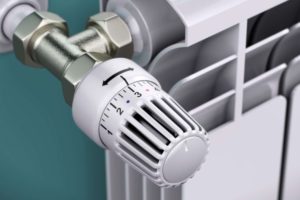
Mechanical thermostat
Mechanical thermostats are used to regulate and maintain a set temperature in heating batteries.
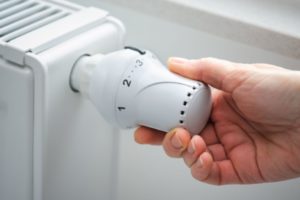
The design and operation of a mechanical regulator:
- It consists of a valve that is cut into the pipe. Through which the coolant is supplied.
- There is a thermal head at the top of the valve. With its help the required mode is set.
- Inside the thermostatic head there is a cylindrical bellows. With a gas/liquid having a high coefficient of thermal expansion. When heated, the volume of the bellows' contents expands. This causes the stem to shift, reducing the clearance in the tube, and cooling the radiator.
Mechanical thermostats allow for effective room temperature control without constant human intervention. The set temperature is maintained automatically.
The valve's durability depends on the quality of the coolant—water or antifreeze—since the device is extremely sensitive to contamination.
Automatic thermostat with remote sensor
These devices have two main components: a mechanical thermostatic head and a temperature sensor. They are connected by a thin tube, ranging in length from 1 to 10 meters. The mechanical thermostatic head maintains the set temperature of the coolant within a range of +30 to +90°C.
Purposes of using automatic thermostats:
- valve starting;
- turning on/off the circulation pump.
Electronic regulator
Electronic thermostats are state-of-the-art devices that create the most comfortable indoor environment possible. Control is achieved via a microprocessor built into the thermostatic head. The device is battery-powered.
There are two control modes:
- Standard. A constant room temperature is maintained. It is set using touch buttons or via radio.
- Programmable. Adjustments are made by the hour and day. The temperature is set via a radio remote control or an app on a smartphone (tablet, computer).
Automatic thermostatic control reduces unnecessary load on the heating system and saves on heating costs when the homeowners are away. Most importantly, it allows you to create the most comfortable conditions in every room.
Radiator thermostats are often standardized and can be used with different types of thermostatic heads. In addition to a remote temperature sensor, a thermostatic head may have a built-in thermocouple, an external controller, or an electronic unit.
How to choose an adjustment device?
The choice of temperature control method depends on the heating system design, the user's personal preferences and financial capabilities.
When choosing shut-off and control valves, first of all, consider the operating conditions of the radiators:
- Central heating. It's best to install brass and steel taps here. The pipes here carry extremely low-quality water, so installing control valves on the heating radiators is impractical.
- Private house with autonomous heating. It's advisable to install faucets equipped with thermostatic valves. Adjustable heating radiators allow homeowners to effectively conserve energy.
- Apartment building with an individual boiler room. It is better to install a high-quality ball valve here, which can withstand pressure in the range from 16 to 40 Bar and temperatures up to +200°C.
Resistance to corrosion and mechanical damage is a must. Central heating systems are often subject to water hammer and pressure surges, and after draining the coolant in the summer, there is a risk of corrosion.
Tips for choosing an adjusting device:
- In a single-pipe In a heating system (in an apartment building), if there is a bypass, as well as in a two-pipe system, it is convenient to use a three-way valve.
- In two-pipe In heating systems (in an apartment building or a private home), there are many options for regulating the temperature in the radiators.
Standard faucets with valves are often used here, but thermostats are much more effective. They allow precise temperature control, and it's done automatically and conveniently for users.
Adjusting heating devices depending on the type of heating system
Before adjusting the heating in an apartment, determine the type of heating.
It can be centralized or individual.
Individual heating
In apartments with individual heating, the regulation process is much simpler. The system is typically powered by a powerful heating boiler and equipped with a circulation pump, with a three-way valve installed on each radiator.
Thanks to the valves installed on the radiators, it is possible to use heat more efficiently, create a comfortable microclimate in the premises and, if necessary, completely disconnect an individual battery from the system.
Central heating
In rooms connected to the central heating system, heating adjustments are made taking into account the piping layout.
Adjustment methods:
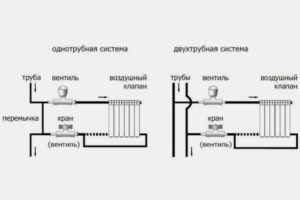
- Two-pipe system. Two risers are installed here, providing the coolant supply to the radiators and its return. The flow of heated water is regulated by a special valve and a thermostat (manual or automatic), which is located on each heating radiator.
- One-pipe system. It involves feeding the coolant to each radiator and returning it back to the main riser. This system maintains a uniform water temperature in the radiators, regardless of floor. In this case, a regulating valve is installed on the supply line of each heating radiator.
- Vertical supply of coolant. This design is used in most multi-story buildings. Temperature regulation in the radiators is completely eliminated. With this design, the radiators on the lower floors don't heat up well, while on the upper floors, they're too hot.
How to install a thermostat on a radiator?
To install a thermostat on a heating radiator, you'll need several tools. They are as follows:
- ball valve;
- the thermostat itself;
- two tees with 1/2″ thread;
- pipe d 20 mm made of metal-plastic;
- 6 American fittings.
Operating procedure:
1. Use an adjustable wrench to loosen the nut on the coupling and unwind the winding.
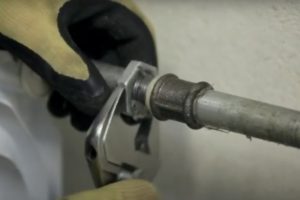
2. Clean the threads to reveal where the pipe connects to the radiator.
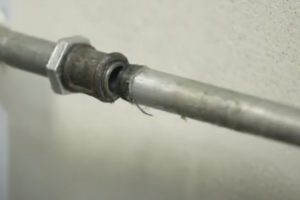
3. Repeat the same procedure with the lower connection. For ease of access, remove the radiator and place it on the floor or another horizontal surface. Hold the battery connector with one wrench and loosen the tube with the other.
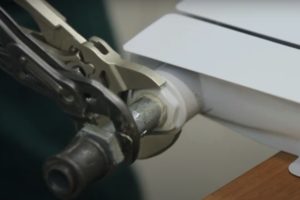
4. Remove the seal from the hole. To do this, use a suitable tool, such as a screwdriver.
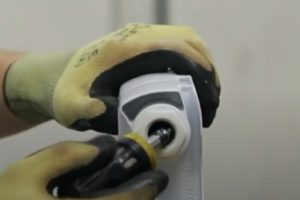
5. Assemble the bypass with the ball valve and thermostat. Lubricate the threads on the compression fitting. The silicone sealant should fill all cavities.
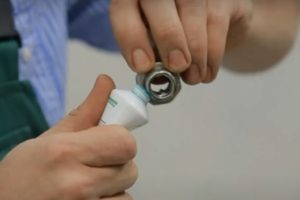
6. Take two tees and two nipples and twist them together.
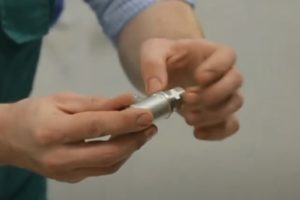
7. Screw the thermostat and ball valve to the nipple.
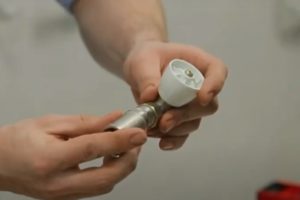
8. Install transition couplings into the tee - from metal-plastic to metal.
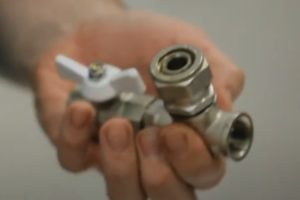
9. Screw the resulting unit into the radiator.
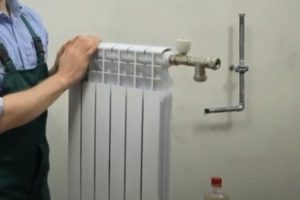
10. Do the same with the lower connection.
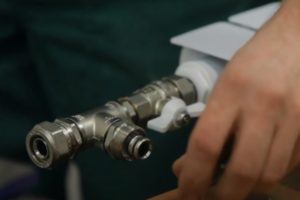
11. For the bypass, cut a piece of pipe to the appropriate length. First, remove the nuts from the compression fittings and measure the distance.
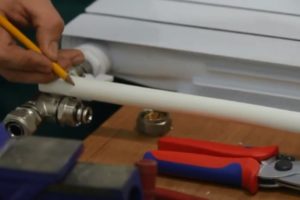
12. Calibrate the edge by chamfering it using a calibrator.

13. Place the nut on the pipe, then the compression ring, and connect it to the thermostat and ball valve.
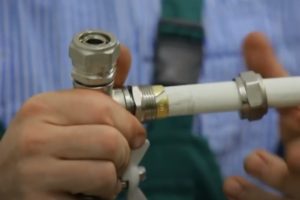
14. Repeat the same steps with the other end of the pipe. The bypass is ready; connect it to the radiator.
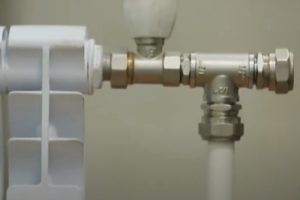
15. Hang the radiator on the bracket from which it was removed and connect it to the riser. For this purpose, prepare a pair of metal-plastic pipes. Measure the length at the bottom and top—they often differ.
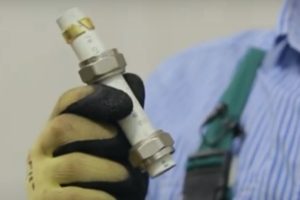
17. Remove the bypass from the radiator. Screw the tubes into the lower and upper assemblies.
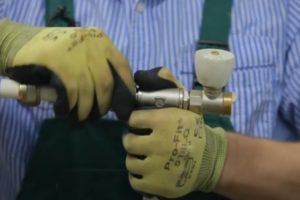
17. Install a bypass on the radiator and place the tube into the riser outlets. The heating thermostat will be installed at the top, and the ball valve at the bottom.
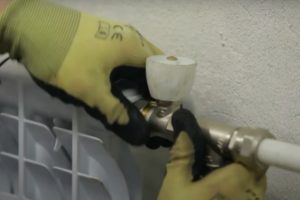
18. Tighten the nuts with an adjustable wrench. Now the radiators and thermostat are ready to operate.
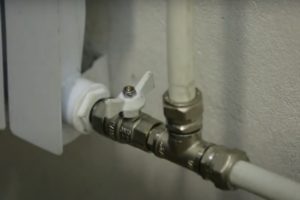
What difficulties and malfunctions can occur?
One of the main problems in the operation of a heating system is a sudden or gradual deterioration in the heat output of the radiators.
Causes of malfunctions:
- the coolant pipes and shut-off valves are clogged;
- air pockets formed;
- the supply mode in the main pipeline changed due to actions taken by neighbors;
- the plugs are not installed correctly;
- the valve broke.
In any case, before you begin troubleshooting, you should check the system for defects and then fix them.
What needs to be done:
- bleed air from the heating radiators;
- wash the batteries;
- change the faucet.
If normal heat transfer is not restored after completing all the above steps, more complex repairs will be necessary. However, these should be performed by professionals to avoid further damage.
By regulating the temperature of your radiators, you can maintain comfortable conditions indoors while saving money on heating. To ensure maximum convenience and efficiency, it's important to choose the right control mechanism based on your heating system, radiator material, and other factors.