In any heating radiator, one part is warmer, the other cooler, which is normal, but the temperature difference should be smooth and insignificant.
What should you do if the top of the radiator is hot and the bottom is cold? First, figure out the cause, and second, try to fix it.
In this article, we'll examine the causes of uneven heating in radiators and provide solutions.
- Why is the battery not all hot?
- Air in the battery
- Clogged radiator
- Malfunctions in shut-off valves
- Insufficient pressure in the system
- Incorrect installation and connection of radiators
- The coolant is moving at insufficient speed
- Cold room
- What are the risks of inefficient heating devices?
- Helpful tips and preventative measures for heating problems
Why is the battery not all hot?
The heating radiator's efficiency depends on the uniformity of heating. If this indicator doesn't reach the optimal level, there's no point in talking about a comfortable room temperature.
A hot top and cold bottom on a radiator occurs not only in old cast iron systems, but also in innovative bimetallic systems.
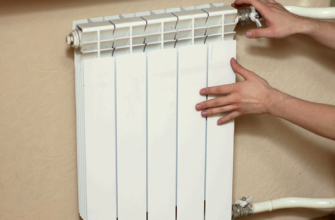
Air in the battery
The problem is most common in multi-story buildings and upper floors. This is due to the laws of physics—air flow always flows upward.
The term "airiness" refers to the presence of accumulated air inside the heating system, which prevents water from moving properly through the pipes and radiator.
If your apartment has older-style radiators—without a Mayevsky valve—you'll have to call a plumber from the housing office to bleed the air. But try it first. bleed the radiator yourself:
- Find the coupling located at the junction of the pipe and the approach to the battery.
- Unfold it, and the water will flow out, and the air will leave with it.
Don't forget to put a basin underneath to catch the liquid. Otherwise, the water will spill onto the floor and flood the neighbors below.
If it is a private house, then the problem is solved simply:
- Shut off the general heating supply.
- Open the drain valve located at the top of the system.
- Remove air using back pressure.
It's much easier to remove stagnant air from modern radiators, which are equipped with special valves. Here's how to do it correctly:
- Turn off the valve on the pipe supplying hot water to the radiator. Leave the valve on the return line open.
- Open the bleed valve and wait a few minutes to allow all the air to escape from the system.
- Close it and turn on the water.
If such actions do not change the situation, then the problem lies elsewhere.
Clogged radiator
The second most common cause of cold bottoms and hot tops in radiators is the accumulation of debris within the system. There are many causes:
- Poor quality heat carrier. This is a problem for every city and country. Low-grade, untreated water containing various impurities is used for heating.
In their normal state, they move easily through the coolant. When heated, the particles form a larger fraction, which settles as a deposit on the metal surface. - Garbage from outside. This applies to heating systems that are not dependent on central heating.
In such autonomous circuits, dirt penetrates through open pressure tanks. As a result, all the debris, along with the water flow, enters the heating radiators, completely disrupting the circulation of the coolant. - Air accumulation. In this case, anaerobic bacteria accumulate. They survive thanks to the presence of oxygen in the heating system.
During their lifespan, microorganisms release waste products. These settle on the radiator's inner surface, and when they accumulate, they form a thick sludge that impedes water circulation. - Heat exchanger design. There are radiators in which the water constantly changes its direction as it moves. This results in dirt being deposited in hard-to-reach corners.
If the cold bottom problem is due to a clog, there are two methods to resolve it: chemical and mechanical. Here's what you can do yourself:
- Remove the battery. To do this, disconnect the device from the pipes using tools.
- Drain the water from the radiator.
- Tap all sections with a rubber mallet or hammer. This will loosen rust and residue from the surface.
- Shake the battery. Turn it over to release debris from the inside out.
- Use a sealed hose to pour hot water into the radiator, then add a special cleaning solution. Let it sit for 30 minutes.
- Drain the boiling water and reinsert the hose, connected to the cold water faucet on the other side. Turn the water on full blast and flush. This intense action removes all remaining debris.
When calling specialists, an electrohydraulic pulse, hydropneumatics or hydrodynamics.
Malfunctions in shut-off valves
Shut-off valves are located in the heating circuit and act as a water flow regulator and shut-off element for the working fluid. They consist of a ball valve, a thermal head with electronic/mechanical control, and a cone valve.
If the shut-off system malfunctions, the coolant circulation is disrupted. To correct the situation, carefully inspect the valves and replace the faulty part. If this is difficult to do yourself, call a professional.
Insufficient pressure in the system
This problem most often occurs in modern radiators. The cause is their design. While Soviet-era radiators had large passages, modern versions have narrow passages, requiring increased pressure to ensure normal and stable flow of the working fluid.
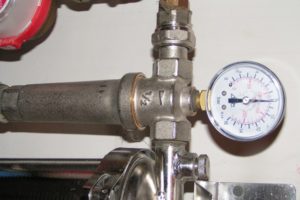
Passages include elements such as the heat exchanger labyrinth and pipes (inlet and outlet).
If the line was originally designed for cast iron systems, it will not be able to generate the pressure required for modern models with narrow passages.
There are other reasons:
- faults in the main line - repairs are required;
- connecting the heated floor to the neighbors - in this case, more pressure is required, and since the heating system is located in the lower part of the room, the bulk of the pressure is directed there;
- the presence of a valve on the bypass slows down the pressure;
- increasing the number of sections (including neighbors) - more pressure is required;
- Neighbors adjust their radiators, which negatively affects the flow of coolant in nearby apartments.
Why does low pressure cause the bottom of the radiator to be much colder than the top? The answer to this question has the following variations:
- the balance is disturbed;
- air pockets are formed;
- the coolant cools down quickly;
- incorrect cross-section in the pipeline;
- low power of pumping equipment;
- water leakage occurs (as happens with underfloor heating).
Methods to solve the problem:
- Call the management company, as it is impossible to fix the problem on your own;
- If the faults are not detected, then the culprits are the neighbors who made adjustments to the heating system without informing the heat supplier.
Such actions are considered illegal. When heating conditions change in apartments, the supplier must adjust the pressure to ensure even distribution of the coolant.
Incorrect installation and connection of radiators
When connecting heating radiators, specialists adhere to a specific procedure. Failure to do so not only results in a cold bottom, but also leads to other problems (increasing the risk of a pipe rupture).
The most common installation error is the valve on the bypass (the pipe connecting the return pipe and the internal working fluid supply element). The bypass must be closed when connecting the heating system, and it's best to install it closer to the radiator.
Heating radiator failures also occur for other reasons:
- incorrectly selected pipe diameter;
- incompatibility of the battery and the boiler.
To resolve the issue, please check the compliance installation in relation to the connection diagramIn this case, it is better to contact specialists.
The coolant is moving at insufficient speed
Several factors influence the speed of the heat transfer fluid. They are as follows:
- water characteristics;
- diagram of the entire heating system (it does not have pumping equipment, but operates by gravity, etc.);
- performance and power of the pumping unit;
- the diameter of the pipes is narrow;
- equipment clogging;
- material used in the manufacture of batteries and pipes.
The speed of the coolant for private houses and apartments should vary from 0.5 to 1.5 m/sec.
The bottom of the radiator becomes much colder than the top because the water has time to cool due to its slow movement. By the time it reaches the return line, the working fluid is completely cold.
It's practically impossible to identify the cause yourself. You'll have to contact your heating system supplier. If the pipes are too narrow, you'll need to replace that section of the water supply; if the capacity is low, you'll need to increase it; if the equipment material doesn't retain heat, you'll need to buy a new one, and so on.
Here we give the answer to the question - Why do heating radiators use water?, the pros and cons of this coolant.
Cold room
The bottom of the radiator may be cold if the radiator is located on the veranda or hallway of a private home or on the balcony of an apartment. In cool air temperatures, metal surfaces cool quickly, which also cools the working fluid.
Since water initially flows along the top of the radiator and then along the bottom, a corresponding temperature imbalance occurs—the bottom is colder than the top. Another reason is that cold is concentrated more in the floor area, while warmth is concentrated higher up, near the ceiling.
What are the risks of inefficient heating devices?
The problem of uneven heat distribution in a radiator isn't something that will resolve itself. If left unaddressed, it can lead to the following consequences:
- The efficiency of heating equipment is reduced;
- The apartment is getting cold;
- The risk of a pipe burst increases;
- Economic losses. If the heat meter in an apartment building is shared between all heat consumers, the cost of services will be shared among all heat consumers, even though the heat output will be low.
- There's a risk of freezing your heating system. This is unlikely, but it does happen from time to time.
If the air temperature in the room does not meet established standards, then residents will be forced to pay utility bills not for the supplied heat, but for the cold air.
Additionally, people are using electric heaters, which leads to higher energy costs. Optimal room temperatures:
- living room and bedroom - from + 18 to + 22°С;
- toilet - + 18°С;
- bathroom — from + 20 to + 25°С;
- corner room - from + 20 to + 24°С.
According to GOST, at night (from 00:00 to 05:00) the temperature can drop by 3 degrees, which is not a deviation.
If the cause of the cold bottom of your heating radiators is a system failure caused by your heating supplier, you should submit a complaint to the management company with a clear description of the problem. The housing office is obligated to send a technician to measure the temperature of the heating medium, air, and radiators.
As a result, the heating tariff may be recalculated.
If equipment failure is detected in your apartment, be prepared for the following consequences:
- repairs are carried out at the expense of the owner of the house;
- If the equipment is outdated, the replacement is carried out by the owner of the apartment.
If the neighbors' guilt is proven, they are obliged to fix the problem.
Helpful tips and preventative measures for heating problems
It's better to prevent problems than to deal with repairs later. To improve the heating system's performance, experts recommend paying special attention to the following:
- The diagonal connection scheme is used exclusively in apartment buildings - this way the coolant will be distributed evenly;
- A specialist must solder plastic pipes, since incorrect actions lead to the passage being blocked by the melting elements;
- do not panic immediately after connecting the heating, as stable heating after the first switch-on occurs in 3-4 days;
- The first steps to find the cause of a cold bottom should be carried out according to the following algorithm:
- check the accuracy of the connection of the batteries to the pipes;
- let the air out;
- clean the heating radiators.
Be sure to carry out preventative maintenance after the end of the heating season. This includes the following steps:
- Remember how efficiently the system worked in the winter - if there were problems with uneven heat distribution, focus on them and call a specialist;
- In summer, clean out debris and sediment, especially if there is a predisposition to their occurrence;
- Check how the shut-off valves work;
- Install Mayevsky taps, if you don't have any, to make it easier to get rid of air during the heating season.
If your radiators are very old, replace them with modern models that resist internal corrosion and are easy to maintain. Don't forget to ask your installers how many sections are allowed in a given room.
If the top of the radiator is hot and the bottom is cold for 2-3 days, this is a reason to investigate the cause of the problem. If you are unsure of your ability to correct the problem, you should call a housing office representative. The management company has no right to refuse the request.
Not in every case. An oil-filled electric radiator heats up evenly, both from top to bottom and from left to right.
In the first video, the comments do not match the explanations in the text of this video.
The house was built in 1951 and has never had a major renovation. The cast-iron radiators stopped heating properly after the building's system was flushed in 2019. The water supply comes from above, and the return line runs under the wooden flooring, resulting in a rotten smell in the apartment. The radiators are drained for the summer. All my inquiries to the heating company, the management company, and the Kerch City Administration have resulted in formal replies that I must replace the radiators myself, even though they are considered common property because there are no shutoff valves. Meanwhile, heating rates are as if it were -20 degrees Celsius, and they are billed for the coldest temperatures in the apartment, according to the standard. What should I do? How can I get proper heating service for my apartment, given that the cold pipe running through my apartment is missing because there are no radiators in the entryway and the ends are capped?
The problem of utility lines is a common problem in all older apartment buildings. The pipes have served their purpose. Flushing the system, as experience shows, only makes the situation worse. Corrosion products have settled in your radiators. Flushing doesn't completely remove the sludge, so it's best to remove the radiators, flush them manually, and reinstall them.
Who should handle repairs is more of a question for lawyers. Water utilities and heating systems don't service in-building plumbing. Utility systems in apartments were previously the responsibility of the organizations that owned the building. With the onset of privatization in the 1990s, the ownership structure changed. Find out the status of your building and apartment and who should handle repairs from your local authorities.
The following options are possible to solve the heating problem:
As a last resort, you can hire a team to flush your radiators yourself, but results are not guaranteed if the pipes are clogged with sludge. Your problem requires a personalized review of the technical and legal aspects.