Residents of multi-story buildings are wondering whether it's possible to replace radiators in winter. Of course, it is. The difficulty lies in the fact that the radiator must be replaced during the heating season, when the heating system is filled with hot water.
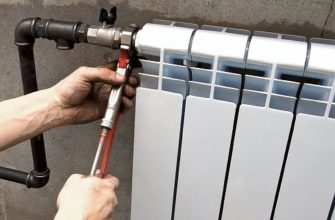
This problem affects apartment buildings whose radiators are connected to the central heating system. This doesn't apply to autonomous heating systems, where the solution is simple. Replacing a radiator in an apartment during the winter may involve shutting off the heating of one appliance or the entire circuit of radiators.
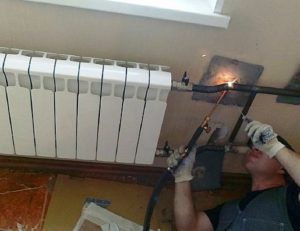
In this case, the riser must be shut off. The pipes are cut with a blowtorch and the radiator is removed. A new radiator is hung and connected to the riser, new pipes welded on, and shutoff valves installed.
Whether this can be done independently or not, what documents are required, and where to apply for permission to replace a radiator—the reader will learn all about this in this article. It will also be interesting to study the step-by-step instructions on how to replace a heating appliance yourself.
Reasons to replace batteries in winter
Heating devices with running hot water can become completely unusable for several reasons, let's look at them.
- poor battery assembly;
- errors when connecting the battery to the heating system;
- slagging of channels with contaminated coolant;
- corrosion of the metal body and its destruction;
- water hammer in a worn-out battery and its destruction.
Signs of radiator failure include:
- complete or in some places battery cooling;
- leaks in inter-section connections, plugs and taps;
- as a result of water hammer the section bursts;
- profuse hot water leaks and destruction of canals.
All these cases require urgent replacement of the heating appliance during the heating season. If the failure of the heating appliance is accompanied by a slight drop in indoor air temperature, there's no need to rush to replace the radiators. Wait until summer arrives.
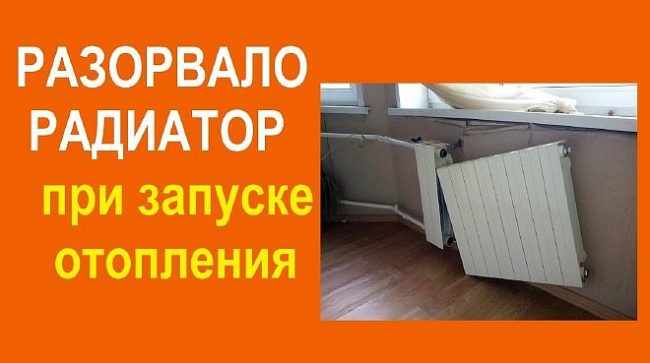
Water hammer is a sudden change in water pressure in a heating system. It can rupture pipe joints and destroy the radiator itself in a split second. This phenomenon is common in centralized heating systems. Independent heating systems in private homes are protected by expansion tanks, which absorb the full force of the water hammer.
Coordination with public utilities
About whether it is possible to change batteries during the heating season or not, the law is silentThere are no laws, either at the federal or local level, that prohibit this.
On the other hand, housing and communal services and other responsible utility companies are obligated to comply with Russian Government Resolution No. 354 of May 6, 2011. According to its provisions, during the heating season, periods during which the heat supply to a specific riser of an apartment building's heating system may be shut off are regulated:
- several times - in total no more than 24 hours during the month;
- at a time for no more than 16 hours at a temperature in the apartment of at least 120 WITH;
- at a time no more than 8 hours - no less than 100 WITH;
- no more than 4 hours at a time – no less than 80 WITH.
Coordination with utility services for permission and documentation for replacing a radiator occurs as follows.
- The apartment owner submits a free-form application to the utility company servicing the building requesting the replacement of a faulty radiator, disconnection of the riser, and drainage of water.
- In addition to the application, the property owner must provide a copy of their passport with their registered address and a copy of the apartment plan indicating the radiators to be replaced. Technical specifications (TU) must be provided in response. These specifications must specify the requirements for the new heating appliance, including the heating system's thermal conditions, the pressure in the central heating pipes, the nominal capacity of the new radiator, and the connection diagram to the riser.
- Utility companies appoint a committee that, at the radiator installation site, records the need for replacement of the device in the defect report.
- When selecting a new heating appliance to replace a worn-out radiator, its power rating is taken into account. Builders in apartment buildings select and install radiators based on heating engineers' calculations in the design documentation. This is used to calculate monthly heating charges during the winter. Therefore, radiator replacement must be coordinated with the management company.
- Based on the statement, a cost estimate for replacing the heating device is prepared.
- The apartment owner is notified in writing of the date and time of the riser shutdown and water drainage, and is also informed of the cost of the work to be paid.
- Before work begins, receipts for battery replacement payments must be presented to the commission. If copies are required, they must be made and the originals kept for your records.
- After installation and commissioning of a new heating device, an acceptance certificate is drawn up with mutual signatures in 2 copies, one of which remains with the owner of the property.
Replacement of heating radiators by the management company
Regardless of the time of year, the management company's procedure for replacing heating batteries is always the same. Replacing heating batteries in winter is a rather complex procedure. If the heating unit is isolated from the power grid by two valves, it can be replaced independently without causing inconvenience to anyone. However, the situation is different when the battery is connected directly to the riser or is connected in series with several other units.
In this case, part of the building's heating system will have to be shut off. To do this, you'll need to go through the entire paperwork process (see above) to obtain permission to replace the radiator in the apartment. It's worth noting that utility companies are extremely reluctant to issue permits; their goal is to do the work themselves and make money from it.
To replace a radiator in an apartment in winter, you need to understand the wiring diagrams for the radiators and heating pipes. Before replacing a faulty radiator with a new one, you need to ensure that the unit can be shut off independently, or, conversely, be aware that you'll be cutting off heating throughout the entire heating riser.
There are three ways to connect heating appliances to the central heating system. The photo below shows the options: side, diagonal, and bottom connection of radiators.
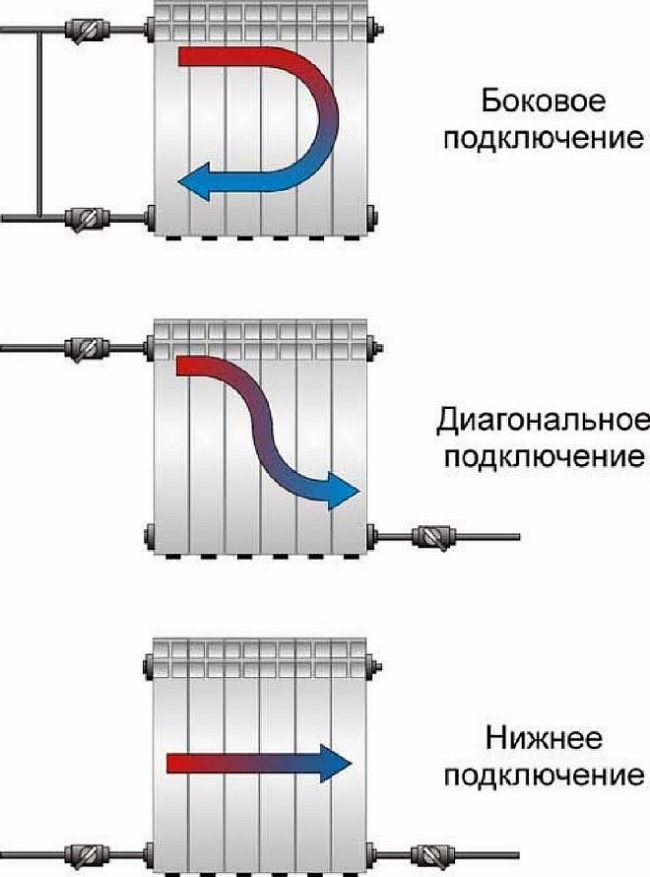
With a side connection, the coolant flows through the radiator channels from top to bottom and returns to the return pipe. This allows you to change radiators during the heating season without draining the system. The radiator can be easily disconnected by turning off both valves. The equilibrium of hot water circulation in the system is virtually undisturbed, as the coolant flows through the bypass.
In the other two cases, shutting off the appliance will also cut off heat supply to the remaining radiators on the riser lines. The radiator replacement work will need to be entrusted to the housing office or management company. The procedure in this case is as follows.
The condition of the supply pipes and connections from the riser to the radiator is checked for cracks and leaks. A decision is made about replacing the pipes or repairing them with welding or replacing the fittings. The quantity and type of consumables are noted in the defect list.
The type and model of the new radiator are agreed upon, along with who will pay for it. The components and consumables are also determined. The homeowner should be aware that if a radiator with a higher power rating than the old unit is installed, the management company will recalculate the monthly heating bill.
Replacing heating radiators yourself in winter
This chapter will discuss one of the examples, DIY heating battery replacement In winter, a worn-out convector in an old panel house needs to be replaced with a bimetallic radiator. The connection diagram is side-mounted, "bottom-bottom." The riser is located in the wall. Replacement is as follows.
- Since a convector without shut-off valves has leaked, a request is submitted to the housing office or management company to shut off the riser for 8 hours.
- Housing office workers must notify homeowners about heating shutdowns.
- A new bimetallic radiator Rifar Monolit with a welded manifold and a center distance of 500 mm is brought into the room.
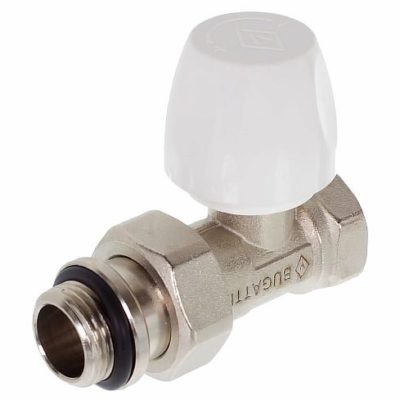
- Prepare for installation a thermostatic valve, anchor brackets, one plug, a Mayevsky tap, 4 couplings, 2 ball valves with union nut (American unions).
- Before dismantling the convector, ensure that the water has been drained from the riser. To do this, use a blowtorch to burn a hole in the pipe.
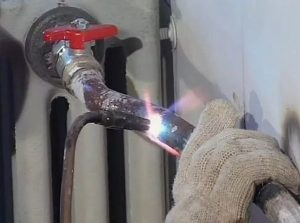
- We cut off the supply pipes using a grinder or welding.
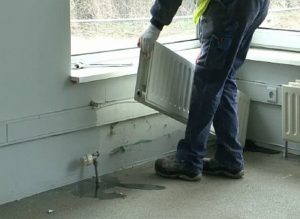
- The old battery is removed.
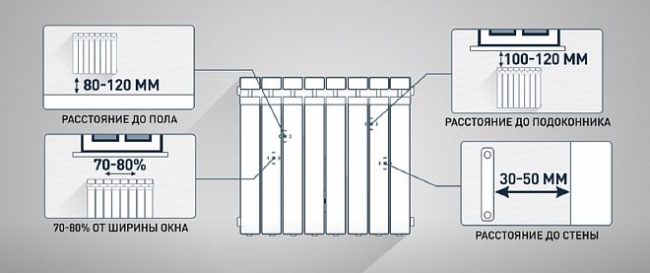
- Using a laser level, mark the center of the window on the wall for installing the brackets.
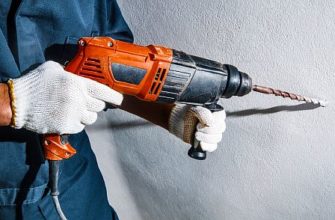
- Using a hammer drill, they drill mounting holes for the dowels and mount the brackets.
- The brackets must ensure a minimum distance of 30 mm between the radiator and the wall.
- The couplings, plug, Mayevsky tap, and thermostatic head are screwed into the mounting holes of the bimetallic battery, after first making a flax winding with Unipak sealant.
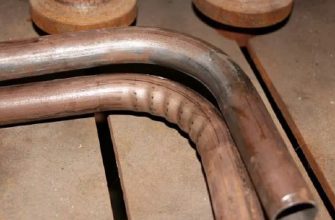
- The pipes are prepared by bending them to the required shape using a pipe bender.
- Threads are cut at the ends of the pipes.

- The pipes are autogenously welded to the riser pipes.
- A bypass is welded between the supply and return pipes.
- American taps with flax winding and sealant are screwed onto the free ends.
- A Rifar bimetallic radiator is hung on the brackets. The radiator's correct vertical and horizontal position is checked and adjusted using a level.
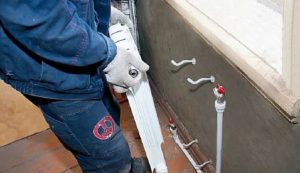
- The taps are connected to the radiator using couplings.
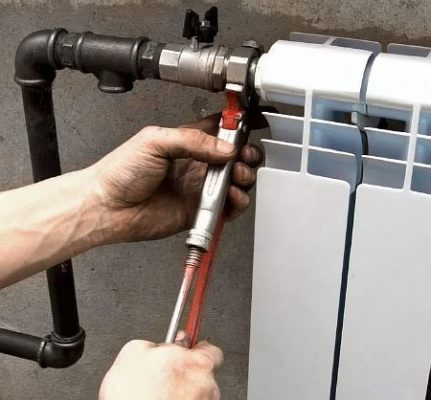
- They contact the company with a request to restore heat supply.
- Through Mayevsky's crane is releasing air and check the tightness of all connections.
- In the event of an emergency leak, it is necessary to repeat the operation of disconnecting the riser and re-check all connections.
- The process of releasing air through the Mayevsky valve is repeated until it disappears.
We replace radiators without draining the water.
Since 2015, a pipe freezing technology has been successfully implemented in Russia. This technology allows radiator replacement without draining the home's heating system using press fittings. The process is carried out in stages and is presented step-by-step in photographs.
Step 1. Assemble the new radiator. Install the plugs and the Mayevsky valve. Install the adapter fittings.
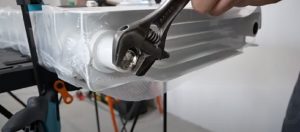
Step 2. Prepare the pipes for the new heating appliance. The pipes are cut to the required lengths and threaded at the ends.
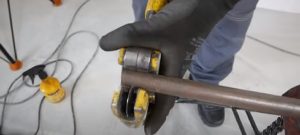
Step 3. The fittings are crimped using a special press. These are special press fittings from the German company Vega.
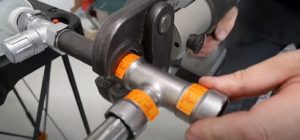
Step 4. Installation of an interaxial jumper, which acts as a bypass.
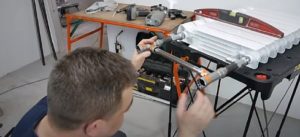
Step 5. Preparing equipment for freezing pipes.
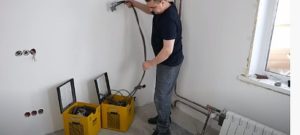
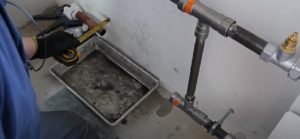
Step 6. The process of freezing pipes.
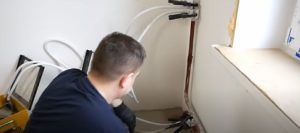
Step 7. Removing the old converter.
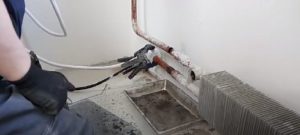
Step 8. Installing new shut-off valves.
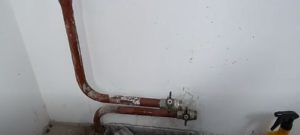
Step 9. Marking for hanging the battery.
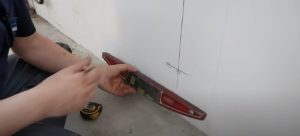
Step 10. Connecting the new radiator to the riser
Conclusion
Replacing a battery in winter is a serious undertaking, and should only be performed by trained professionals. They must be proficient in the use of tools and have an understanding of heating technology.
Trying to replace a radiator yourself without experience means risking a frozen heating system and flooding your home and the neighbors below with hot water. Therefore, the best option is to trust professional plumbers and save yourself from unnecessary trouble.