Can you paint hot radiators? This question worries those who delayed their apartment renovations during the summer and had to do them during the heating season. Paint is a chemical product, and people are concerned about how a fresh coat of paint will react to hot metal.
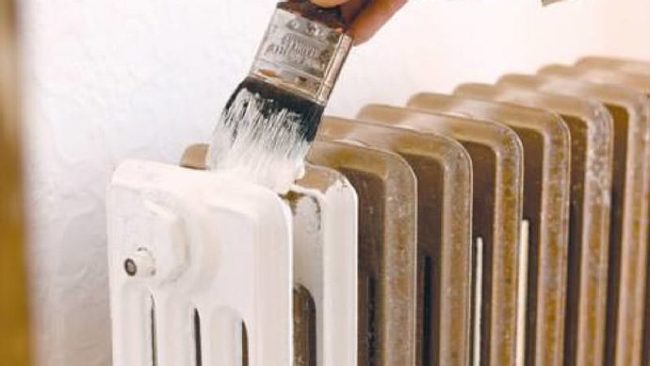
This article will help readers understand the potential risks and how to avoid them when painting hot radiators. It also provides advice on how to prepare a radiator for painting, the best way to paint it, and which paint to use depending on the type of radiator. Step-by-step instructions will help.
You also need to prepare the paint, tools and necessary materials, arm yourself with personal protective equipment and only then proceed directly to painting.
- Paint requirements for hot radiators: which one to choose?
- Acrylic
- Alkyd
- Oily
- Water-based
- Special
- Enamels in aerosol
- Does paint color affect the heat output of a radiator?
- What we need for painting
- Materials
- Tools
- Round
- Radiator
- Filleted
- How to prepare a radiator for painting
- Features of painting batteries made of different materials
- Step-by-step painting instructions
- Should I paint during the heating season or wait?
- Tips and recommendations
- Conclusion
Paint requirements for hot radiators: which one to choose?
Radiators require special attention when choosing paint during the heating season. After all, these appliances can become very hot in winter, and not every paint is suitable for these conditions. The paint must polymerize and dry on the heated metal without losing properties such as adhesion, color fastness, durability, and attractive appearance. Furthermore, the paint must be hypoallergenic and odorless.
Taking into account the above requirements for hot batteries, the following paint materials are used:
- acrylic;
- alkyd;
- oily;
- water-based;
- special;
- enamel in aerosol.
Acrylic
Acrylic dyes based on polyacrylic emulsions, They dry quickly, are odorless, and are used for painting radiators in children's rooms.Based on the solvent type, they can be divided into water-dispersible types and dyes based on organic solvents. Water-soluble acrylic paints are used for painting batteries. They are environmentally safe and harmless to human health.
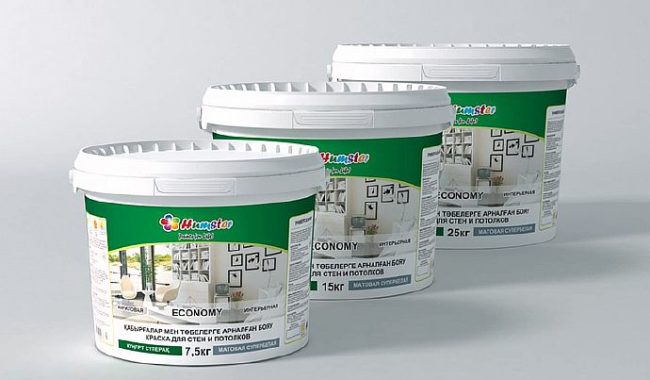
One of the advantages of acrylic compounds is that fresh streaks and stains in unwanted places can be easily removed with a rag soaked in water, leaving no traces.
However, you shouldn't leave a can of paint open, even for a short time. The paint will dry out quickly and lose its properties.
Alkyd
Alkyd paints are made from alkyd resins obtained by heat-treating vegetable oils with alcohols. Alkyd paints are sold ready-to-use in metal cans. They differ in elasticity and durability, they dry quickly, do not shrink, do not crack and do not lose brightnessThe most common type of alkyd paint is white pentaphthalic enamel.
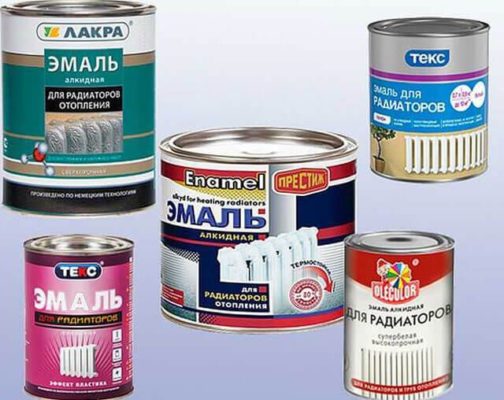
A significant disadvantage of this dye is that the paint components evaporate as it dries and can emit an unpleasant odor for a long time.
Therefore, painting radiators in winter with an alkyd composition can be done armed with a special gas respirator, clearing the premises of people for some time, and ventilating the rooms with freshly painted radiators as much as possible in winter.
Another drawback is the poor durability of the white color. Over time, painted surfaces turn yellow.
Oily
They are based on vegetable oils and are used as waterproof coatings for metal surfaces.
Oil-based paints are practically never used for painting hot radiators.
They have been successfully replaced by acrylic paints. Surfaces painted with oil-based paints take a long time to dry, but form a durable coating that prevents corrosion of the radiator metal.
Water-based
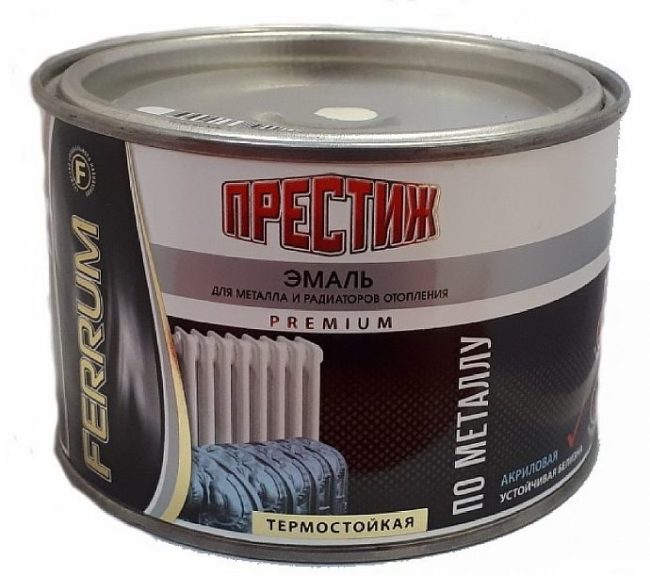
They consist of water with small particles of polymers and pigments suspended in a suspended state. After the paint is applied to any surface, the water molecules evaporate, leaving a durable layer of hardened emulsion. Water-based paints are similar in composition to acrylic paints.
They can be used to paint hot heating appliances. The paint may lose its gloss and begin to peel over time.
Special
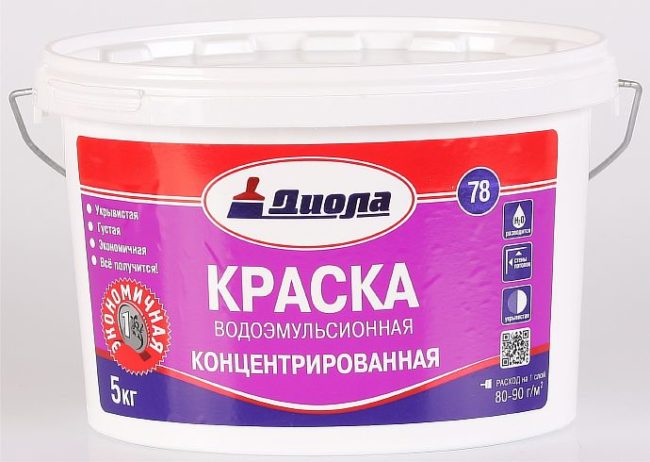
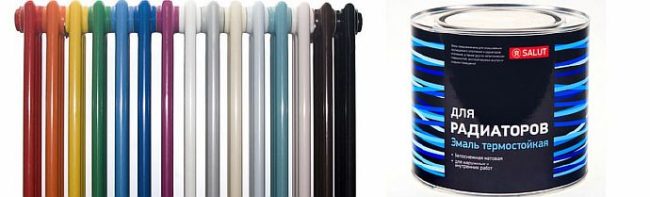
These are targeted enamels, specifically designed for painting heating appliances and pipes in any condition – be they cold, warm, or very hot.
These are essentially the same acrylic paints, but with special additives. This special paint is hypoallergenic, odorless, and does not yellow over time. After drying, the paint forms a durable, glossy layer.
Enamels in aerosol
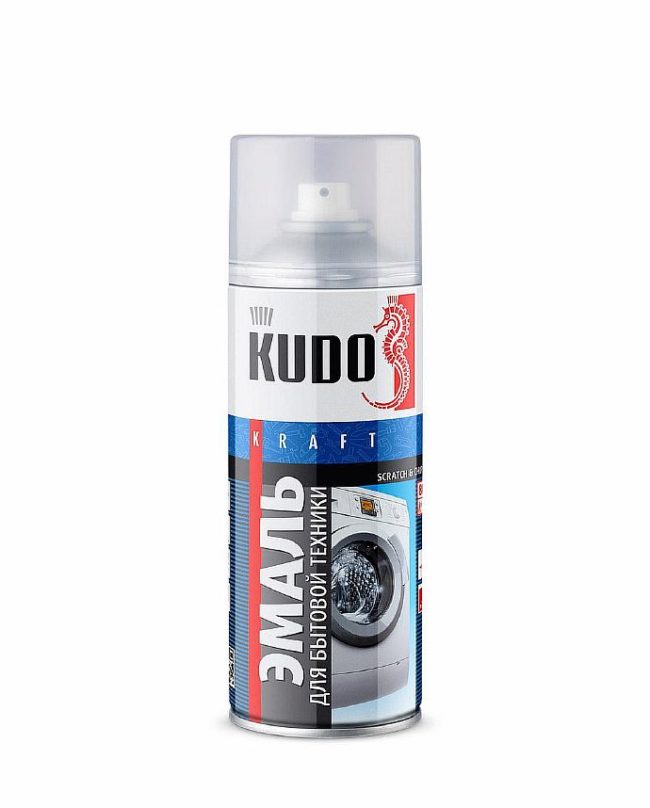
Aerosol enamel is convenient for painting panel radiators. This product is available commercially in cans containing automotive heat-resistant enamel. Unlike cast iron grille radiators, panel radiators are solid surfaces.
For this reason, the aerosol is practically lies completely on the surface being treated, without going elsewhere. Therefore, despite the apparent high cost of spray paint, it ultimately results in significant cost savings.
Having considered the above types of paints, you can choose paint for hot batteries during the heating season, taking into account the features of the heating devices.
Does paint color affect the heat output of a radiator?
This issue is the subject of a lively debate in the modern world. Opinions are often contradictory and mutually exclusive. Some sides agree that color can have a significant impact on the heat output of heating devices, while others, on the contrary, rule out the influence of radiator color on the degree of heat transfer into the interior of the heated space.
The real answer to this question lies in the third plane.
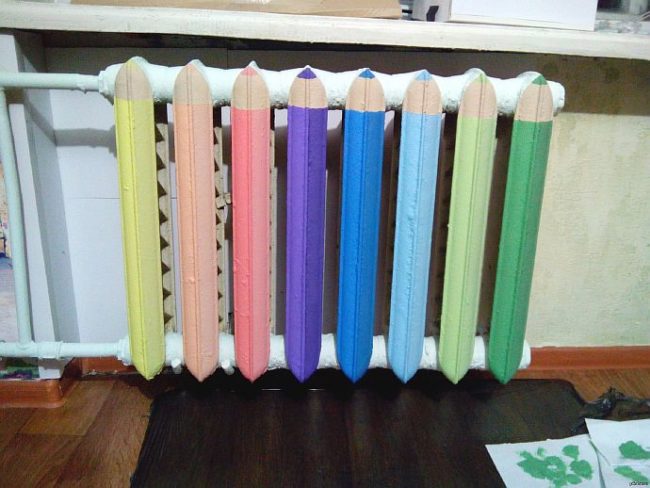
Yes, paint color can affect a radiator's heat output, but it's so minor that it's not worth paying attention to. Experts say painting hot radiators with green paint and lead white can reduce heat output by 4.4% and 1.3%, respectively.
However, applying white and terracotta enamel to radiators increases their heat output by 1% and 3.8%, respectively. The effect of paint of any color on the heat output of heating devices with a coating thickness of up to 1 mm is negligible.
What we need for painting
Once it's been determined that the radiators can be painted during the heating season, they need to be prepared for painting. To do this, you'll need the following materials and tools.
Materials
You'll need sheets of paper or cardboard to protect the surfaces around the radiator from paint drips and splashes. You'll also need a suitable solvent and a rag.
Tools
These are the brushes:
- round;
- radiator;
- paneled;
Round
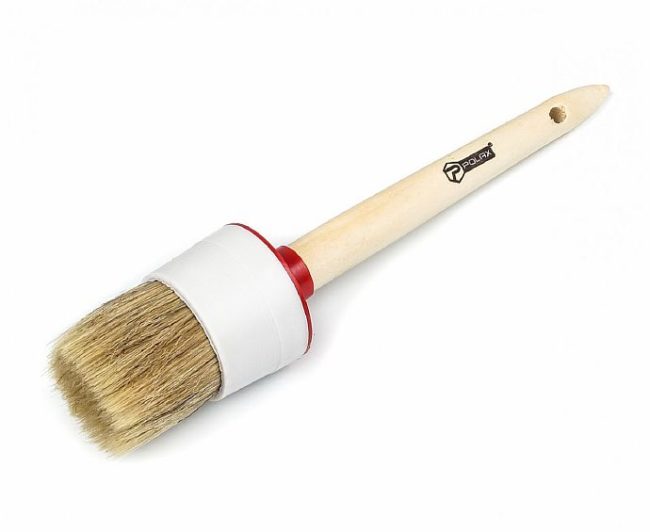
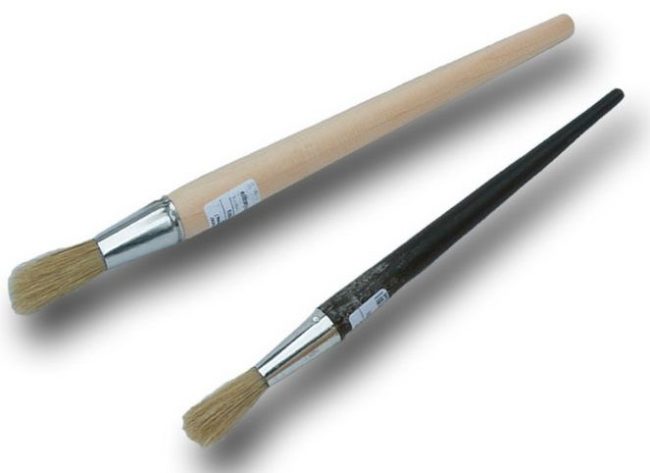
The brush has a round shape. The bristles are attached to a round wooden handle with a metal ferrule. The brush is used for painting wide sections of radiators. The optimal bristle diameter is 38 mm.
Radiator
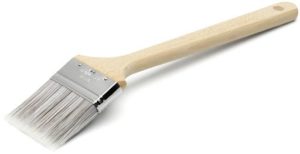
A radiator brush is the essential tool for painting cast iron radiators, where access to the back of the radiator sections is difficult. The brush has a long handle with a curved end. It is recommended to stock up on brushes with bristle lengths ranging from 20 to 100 mm.
Filleted
Designed for drawing out fillets—thin stripes of paint. Small, round brushes are convenient for final touch-ups on painted surfaces. They are used to fill in hard-to-reach or missed areas.
How to prepare a radiator for painting
Preparation of batteries for painting is carried out as follows:
- Wipe all sections of the heating unit thoroughly with a damp cloth. If the radiator is heavily soiled, wash it with detergent.
- Rust is removed with sandpaper. If the corrosion is deep, it is removed with a round metal brush inserted into a drill chuck.
- Hard-to-reach areas are treated with a rust converter. The chemical solution converts iron oxides into a durable anti-corrosion layer. Apply the solution with a suitable brush. Wear gloves when applying.
- Prepare the paint remover. Apply the solution to the hot radiator and cover with plastic wrap. After about two hours, remove the swollen old paint with a spatula or a round metal brush. The paint remover can be prepared at home. To do this, mix 1 kg of baking soda with the same amount of slaked lime in 5 liters of water.
- Finally, all surfaces are sanded and degreased with white spirit.
- The heating element is coated with a special primer. The primer improves paint adhesion to the cleaned radiator surface.
If the preparatory work has been carried out correctly, the paint will adhere perfectly to the treated surfaces of the heating devices while hot.
Features of painting batteries made of different materials
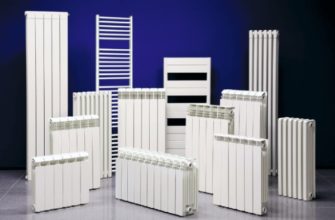
The range of domestic water heating radiators consists of radiators of various materials such as devices:
- cast iron;
- steel;
- aluminum;
- bimetallic;
- copper.
Each type requires a specific approach to painting based on its structural features. Cast iron is painted with round and radial brushes. Panel steel appliances are best painted with a spray gun. Bimetallic and aluminum appliances are painted with round and panel brushes. Exposed aluminum surfaces are left untouched due to aluminum's high corrosion resistance. Copper radiators should not be painted at all.
Step-by-step painting instructions
After the radiator has been prepared for painting, we begin to carry out a set of works on painting the batteries in accordance with the following points of the instructions.
- Cover the walls and floors around the radiators with protective material (PVC film, paper, or cardboard sheets). Secure the protective covering with tape.
- Paint the radiators from top to bottom. Remove any drips with a brush.
- The front surfaces of the sections are painted with round brushes and rollers.
- The surfaces between the sections and inside are painted with radiator brushes with curved heads.
- Panel appliances are painted with rollers or spray paint. Heating panels are also painted with a spray gun.
- Depending on the type of paint, a certain amount of time must be allowed between coats of paint.
- The final drying of the paint is determined tactilely.
- The covering material is removed.
Should I paint during the heating season or wait?
The solution to this problem depends on the apartment owners' wishes. If the apartment renovation is completed when it's time to turn on the heating, but the radiators are still in an unsightly state, the best option is to start painting immediately rather than waiting for spring.
The presence of small children and elderly people in the apartment may hinder this. Actively ventilating rooms where radiators have been painted can negatively impact their health. In such cases, it's best to wait until warmer weather arrives.
Tips and recommendations
We present you with useful tips and recommendations for painting hot radiators during the heating season.
- During the heating season, when radiators are already hot, it's preferable to paint them with acrylic enamels or special paint for radiators. This will eliminate the need to ventilate the rooms for extended periods.
- It's not necessary, and indeed not allowed, to paint the aluminum petals of convectors. Only the protective casing is painted.
- When working with alkyd enamels, it is essential to wear gloves, a respirator, and glasses.
Conclusion
Painting hot radiators is certainly possible. The key is choosing the right paint and the right brushes. It's essential to follow safety precautions when working with flammable paints and hazardous fumes.