A leaking heating unit is a common problem faced by apartment owners in multi-story buildings. Owners of private buildings with independent heating systems are also vulnerable. There can be several possible causes, all of which require solutions.
A leak in the heating system is not considered normal under any circumstances.
- Where should I call if my heating radiator is leaking?
- Main causes of leaks
- What to use to seal a leak?
- Liquid sealants
- Clamp and gasket
- Moisture-resistant glue
- Bandage with cement and plaster
- Welding
- Magnet and screw
- Salt "bandage"
- Homemade sealants
- Types of leaks and their elimination
- Leak between two sections of batteries
- Crack in the battery
- Leaking from the connection between the radiator and pipes
- Depressurization of the radiator wall or fin
- If water leaks from the Mayevsky tap
- Restoring the integrity of the heating pipe
- General rules for eliminating leaks
- Maintenance and care of radiators in summer
Where should I call if my heating radiator is leaking?
When a leak is detected in a multi-story building during the heating season, the property management staff must fix it, as the situation is considered an emergency. The apartment owner is responsible for preventing the consequences of the leak.
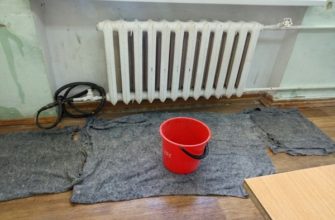
To avoid damaging furniture, flooring, or flooding your downstairs neighbors, place a container under the running water from the radiator. Only then should you call the management company.
The repair team is required to respond as quickly as possible – find the cause of the leak, fix it, and inspect the heating equipment.
Finding out the phone number of the management company is easy; it is contained in:
- on stands on the first floor;
- in receipts for housing and communal services;
- on the Internet.
Main causes of leaks
A heating system leak can't just happen on its own, i.e., without any obvious cause. The most common causes are:
- External factors. Examples: impacts, attempts to move radiators during repairs, etc.
- Defective, i.e. a low-quality battery model with defects was initially selected for installation.
- Errors were made during installation of the heating device.
- Wear and tear that all materials are subject to.
- The permissible water pressure level in the heating system has been exceeded.
- Errors of the public utility service at the time of system launch.
What to use to seal a leak?
In some situations, a property owner can repair a leak themselves. For this job, you'll need a sealant. This doesn't have to be a store-bought product. However, other materials and methods can be used, all with varying degrees of effectiveness.
Liquid sealants
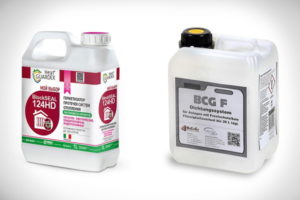
The best option. There are commercially available compounds specifically designed for sealing leaks. Liquid can conceal damage even from the inside. For example, water is leaking from a pipe partially concealed in the wall. The sealant should be injected into the pipe: it penetrates the problem area and fills it.
There are several options for liquids to repair the heating system:
- For external use. Apply spot-on to the leaking area. The leak is resolved once the compound has fully cured.
- For interior work. That is, the sealant is introduced into the mechanism, it independently finds the area with the leak and eliminates it.
- For compaction purposes. It is necessary to strengthen the joints in the system.
The manufacturer provides all necessary information about use, application technique, and other details on the packaging.
Clamp and gasket
To seal a leak using the old method, you'll need a few parts. These are:
- aluminum clamp;
- rubber gasket;
- pliers.
Procedure:
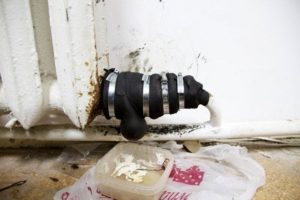
- Place a rubber gasket over the leaking area. Ensure a tight seal.
- Secure the material with a clamp.
If you don't have a special gasket and clamp, there is an alternative method: cut a piece of material from a bicycle tube and fasten it with regular wire.
In both cases, use pliers to tighten the structure as tightly as possible.
Moisture-resistant glue
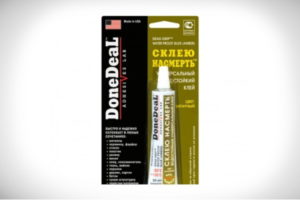
For a small leak at the joint between sections, you can purchase a moisture- and heat-resistant epoxy adhesive. Take a piece of any fabric, soak it in the adhesive, and apply it to the affected area.
The problem will be solved after the glue has dried completely.
Bandage with cement and plaster
This type of sealant must be prepared before applying it to the leak. Here's how:
- Take a medical bandage, cement (can be replaced with alabaster)
- Mix the cement in any container. The consistency is like thick sour cream.
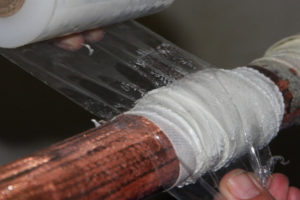
- Place 30 cm long strips of bandage into the mixture. They should be completely soaked.
- Wrap the leak area with several layers of wet material. This will create a strong, cocoon-like bond.
This option can be used if the radiator has been completely drained of water. If any liquid remains, it's best to use alabaster and apply a plaster cast to the fistula, and only then cover the entire area with a cement cast.
Welding
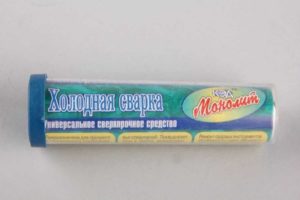
We're talking about cold welding. Each type of metal has its own composition. For heating systems, universal products can be used. They can be used to seal cracks, repair small holes, and eliminate leaks.
The manufacturer provides detailed instructions on the label. Just remember: before using, degrease and clean the leaking area and surrounding area to remove any traces of corrosion. You can use gasoline or acetone.
Magnet and screw
This method is suitable for small leaks, as they are caused by metal particles circulating through the heating system and damaging the radiator frame. Without draining the water, apply a small piece of magnet to the pipe.
It will attract the metal parts to the defect. Typically, a minor leak will begin to heal within 2 days.
This method cannot be used on plastic pipes.
If a microscopic leak still remains, you can take a screw or bolt and screw it into the hole. This option is effective in several cases:
- for point defects measuring 1.5-5 mm;
- on metal or polypropylene pipes.
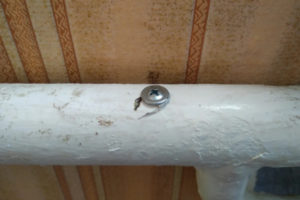
Metal-plastic pipes delaminate, so a self-tapping screw will not be able to stop the leak.
To increase the effectiveness of a screw, you can coat it with machine sealant or epoxy resin. If the hole is large, you can hammer in a wooden stake sharpened to a cone and apply a standard clamp on top.
Salt "bandage"
The purpose of using table salt is to create conditions conducive to artificial corrosion of the metal. This method can only be used on old steel radiators that will soon need to be replaced, and if the leaking hole is no larger than 2 mm.
How to work:
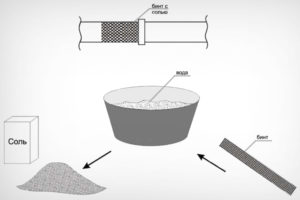
- Wet a piece of bandage and wrap it 2 times around the pipe at the leak point.
- Sprinkle the material with table salt. Continue wrapping. There should be 20 to 40 layers in total.
- After 3 hours, turn on the heating system. Water will still flow at first. After 24 hours, the problem will disappear.
Salt should not be used to seal polyethylene and polypropylene pipes. Pressure sealing is permitted if the temperature allows.
Homemade sealants
Sometimes there's no need to buy specialized products to seal a leak. You can resort to tried-and-true folk remedies. For example, use dry mustard. How to use:
- Take the product. About 200 grams, but each dose is individual and depends on the amount of liquid in the heating system.
- If the mechanism is open, add mustard to the expansion tank. Boiler temperature should be between 60 and 70 degrees.
- With the heating system closed, mix mustard with water and pump the solution through the make-up valve.
200 grams of the product is enough to seal small holes. Mustard is a fine-grained substance with a high capacity to absorb moisture.
Once in water, the microparticles begin to swell, becoming irregularly shaped and clinging to the uneven surfaces of the heating element. Joints and hard-to-reach areas are also susceptible to mustard attack.
The sealing process takes from 4 hours to 2 days.
You can use a mixture of cement and PVA glue. The mixture should be water-free. Mix the ingredients until the consistency of heavy cream is achieved. While the mixture is still wet, apply it to the leak with a bandage.
Types of leaks and their elimination
The measures used to fix a leak are directly related to the type of problem. It's important to familiarize yourself with them so you know what to do if you decide to fix the leak yourself.
Leak between two sections of batteries
Leaks are very common in cast iron radiators. The problem occurs where the sections join together. If water starts leaking during the heating season, it can be extremely difficult to locate the leak because the entire unit becomes completely wet.
To try to locate the hole, turn off the water supply and wipe the heat source dry.
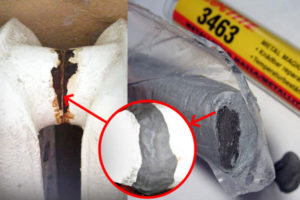
If the leak is between sections, use cold welding. Before applying the compound, clean the surface of any contaminants, including corrosion, and degrease.
Welding compound can be sold in various forms. Plasticine should be kneaded in your hands beforehand; the liquid compound requires no preparation.
Crack in the battery
The crack can be repaired with conventional welding, but this requires skill and strict adherence to safety precautions. Therefore, cold welding is better. How to perform the work:
- Degrease the area where the leak is located and the area around it, remove dust, debris, and rust.
- Squeeze out a pea-sized amount of the product and press firmly onto the leak.
- Leave until completely polymerized – about 30 minutes.
- Start the battery up within 24 hours after the work is completed.
After the heating season ends, remove the cured solution and resort to a thorough repair of the crack. Welding in this case is only a temporary measure. You can use plasticine.
Leaking from the connection between the radiator and pipes
Water may be leaking from the connection between the heating unit and the pipes. In this case, the problem lies in the threaded seal. Turn off the water supply and reduce the pressure. Then, proceed as follows:
- Inspect the joint.
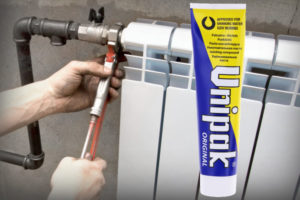
- Wrap tow around the threads and apply a layer of Unipak paste on top.
- Tighten the components tightly.
- Depending on the situation, change the fasteners.
- Gradually open the water supply tap, monitoring the operation of the system.
Depressurization of the radiator wall or fin
This type of damage is very difficult to repair, and can only temporarily alleviate the problem. What to do in this case:
- Enlarge the leaking hole slightly. Use a drill with a bit of the appropriate diameter. Before doing this, turn off the water and reduce the pressure.
- Insert a wooden stake into the hole. It will swell when it comes into contact with water, temporarily stopping the leak.
Instead of a wooden part, you can use a self-tapping screw with a rubber washer.
If water leaks from the Mayevsky tap
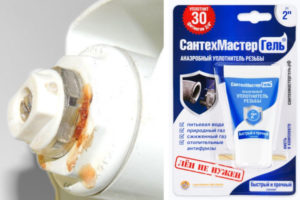
Mayevsky crane A bleeder is a small device that allows air to be released from a heating or hot water system. It is usually installed at the top of radiators. One of its components is a rubber gasket, which often wears out and becomes damaged, causing water to leak.
The best option is to replace the faucet completely. If that's not possible, use SantekhMaster Gel and perform the repairs. The procedure is as follows:
- Unscrew the Mayevsky tap and remove the deformed rubber gasket.
- Generously lubricate the threads on the faucet with gel.
- Apply the composition to the rubber seat.
- Lubricate the initial threads on the radiator.
- Install the tap, unscrew it halfway and screw it in completely.
- Remove any remaining gel from the surface.
- Wait 15 minutes and check how the part functions.
Restoring the integrity of the heating pipe
To connect the coolant, steel pipes are used. If they are damaged, use a cement mixture.
Work with the composition using the classical method.
General rules for eliminating leaks
To avoid making things worse, it's recommended to entrust leak repair work to professionals. If this isn't possible, follow the general leak repair guidelines:
- Gypsum and cement mortar is only a temporary measure.
- If a small leak appears, place a container to temporarily collect the water. If you don't act, the water pressure will make the hole larger. A hole could cause flooding. Even if you see only a slight drip, the leak still needs to be fixed.
- Sometimes a leak appears and then disappears after a while. Don't do nothing; this is a sign that the material has worn out or the heating system is about to completely leak.
- If it is not possible to repair the radiator, then you should drain the water, shut off the coolant flow and only then begin dismantling.
Maintenance and care of radiators in summer
To avoid leaks at the start of the heating season, it's recommended to carry out preventative measures during the summer. While these aren't a 100% guarantee, they can reduce the risk of problems.
What to do in summer:
- clean regularly, wipe the radiator, remove dirt;
- Clean the ribs of the appliance as thoroughly as possible;
- After the end of the heating season, carry out a pressure test using increased hydraulic pressure;
- Inspect the battery and if there are any areas where leaks are likely to occur, carry out repairs using a suitable sealant.
Radiator leaks are a common and unpleasant occurrence. If left untreated, the consequences can be dire. Minor defects can be repaired at home using a sealant. Serious problems require professional attention. Repairs during the heating season are handled by the management company.