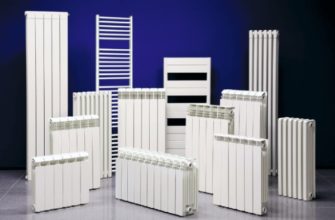
Heating elements for radiators are designed to supplement a room's heating system. For cottages or summer houses, such devices can become the primary source of heat.
To choose the optimal model, you need to understand their structure and selection criteria.
- Why is a heating element needed in radiators?
- The design of a radiator heating element
- Advantages and disadvantages of a radiator heating element
- Types of heating elements for radiators
- How are heating elements used in heating radiators?
- How to choose?
- Power calculation formula
- Design Features
- Automatic control
- Installing a heating element
- Safety issues and operational features
- How to evaluate the efficiency of a radiator heating element?
Why is a heating element needed in radiators?
The device heats the coolant in the batteries and maintains its operating temperature (what water temperature in heating radiators Is this considered normal?). It can be installed not only in radiators, but also in any heating devices with liquid-filled cavities. This is why radiator heating elements have such a wide range of applications.
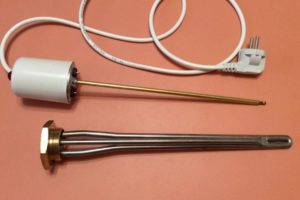
The device is used primarily in small spaces such as garages, utility rooms, etc.
TEN is a metal tube with a heat-conducting electrical insulator and a conductive thread.
Features of radiators equipped with a built-in heating element:
- In appearance, they are almost indistinguishable from conventional radiators. However, unlike the latter, they are not connected to the heating system.
- The devices are filled with a coolant circulating through the battery.
- The best coolant is oil with low viscosity. This prevents the radiator from freezing when it's turned off.
The design of a radiator heating element
Structurally, the device differs little from other types of heating elements. Design features:
- The body is made of metal tubing and conducts heat well. It is typically made of carbon steel or stainless steel. The latter is chosen if the metal will be heated to temperatures exceeding 45°C.
- The steel tube—the body—is coated with chrome or nickel plating to protect against corrosion.
- The heating element is a nichrome coil. This component heats up to high temperatures when an electric current passes through it. The coil is located inside the housing, and the remaining space is occupied by the filler.
- The body is filled with quartz sand or periclase, and then pressed and the product is given the required shape.
A tube with a conductive coil can be installed inside any radiator—copper, cast iron, bimetallic, etc. The device's power is 2.5 kW. Industrial-grade devices are more powerful, up to 6 kW.
The operation of a radiator heating element is extremely simple:
- Thanks to a well-thought-out design, all incoming electrical energy is converted into heat within the device, with virtually no losses.
- When turned on, the coil heats up quickly, and the oil/water is heated by it.
- The heated liquid, in accordance with the laws of physics, rises upward, and cold liquid takes its place.
- The heated liquid rises, gives off its heat and, cooling, descends to the lower part of the radiator.
- The electrical device creates movement of liquid inside the radiator.
The main danger of heating elements is limescale deposits. They gradually coat the heating element, eventually leading to failure.
One of the best coolant options is transformer oil. It heats up quickly and retains heat for a long time, gradually releasing it into the casing.
Advantages and disadvantages of a radiator heating element
Tubular electric heaters allow you to create a practical and highly efficient heating system—either as a primary or supplemental heating system. Before purchasing the necessary equipment, it's helpful to evaluate all its advantages and disadvantages.
Pros:
- Easy installation – even an inexperienced craftsman can handle it.
- Low price of the heating element (not including other equipment).
- Much more reliable than oil-filled radiators, radiators with heating elements are repairable. When the equipment fails, simply replacing the heating element is sufficient.
- Additional functionality is available.
- Automatic control of the heating system is possible; however, this will require purchasing additional appropriate equipment.
Cons:
- High operating costs - this disadvantage is due to high electricity tariffs.
- Automation comes at a cost. If you buy a heating element with automation, the price of this kit will be significantly higher than that of an electric convector.
- They are inferior to oil radiators and convectors in terms of comfort level due to the lack of mobility.
- Heating elements are electrical devices, and therefore generate electromagnetic fields. The harmful effects of these devices have not been proven. However, the generation of a field is a negative factor, given the proximity of radiators to people.
Due to the high speed of liquid movement, the device is inferior in efficiency to conventional systems with liquid coolants.
Costs will be reduced by switching your heating system to automatic control. With this automatic control, the heating elements will only start operating once the temperature drops to a certain level. Once the coolant reaches the set temperature, the unit will automatically shut off.
Types of heating elements for radiators
Despite their simple design, various types of radiator heating elements are available at specialized retailers and online stores. They vary in housing design, materials, power, and other features.
How do heating elements for radiators differ?
- By power. Low-power models are rated at 0.3 kW. Devices up to 4 kW are classified as household, while those from 4 to 6 kW are classified as industrial.
- Constructively. Manufacturers produce heating elements with right-hand and left-hand threads, single and double. The latter are considered more convenient to use. They increase the heating rate of the coolant, but are more expensive.
- Diameters. It depends on the cross-section of the radiator caps on which the devices are mounted. The standard value is 40 mm.
- Additional options. The manufacturer offers 2 functions:
- Turbo heating. This mode allows you to quickly increase the coolant temperature to quickly heat a room. If this feature is available, the device is equipped with a thermostat, allowing you to change the room heating mode.
- Anti-freeze. A mode that prevents system breakdown (defrosting) when temperatures drop. Heating elements with this feature automatically maintain a minimum temperature by using energy efficiently.
Heating elements for radiators can also differ in length and have various design characteristics that are not crucial for achieving the desired result.
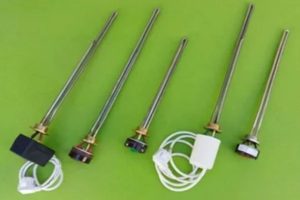
How are heating elements used in heating radiators?
The primary function of radiator heating elements is to heat liquid in centralized or independent heating systems. The device can be used as a primary or secondary source.
Options for using radiator heating elements in heating systems:
- In temporary housing. During the off-season, before the heating comes on, these radiators provide warmth for residents. Radiator heating elements are convenient in summer cottages that require heating only occasionally. In this case, the heating elements are installed in radiators located in each room.
In rooms without other heating sources, heating elements in radiators are used independently as the sole heat source. In this case, it is recommended to fill the radiators with low-viscosity oil, as it has a low freezing point. - In permanent housing. The radiators are filled with regular water (it's cheaper), since the system isn't expected to freeze. However, this option is expensive because it requires constant electricity consumption.
Heating elements can be installed in radiators in multi-story buildings if the main heating system doesn't provide comfortable conditions. Installing these devices helps maintain an optimal temperature in living spaces. - Addition. This is the most efficient and popular option. Heating elements are built into radiators and turned on when the heating is turned off for one reason or another.
Installing radiator heating elements in multi-story buildings is an uneconomical and impractical solution, as it restricts the flow of water circulating through the building's heating system. As a result, you end up paying twice—for the operation of the electric heating element and for the central heating.
How to choose?
Radiator heating elements don't have such a wide variety as to pose any particular difficulty when choosing. The main factors to consider when purchasing a heater are power output and design features.
Power calculation formula
To accurately calculate the capacity, local thermal performance standards (specific to each region) are required. However, in principle, the average standard applicable to central Russia can also be used.
Let the heater be the primary heating source in the house/room. For this case, you need a model with a thermostat. Keep in mind that 1 kW is required to heat 10 square meters. Devices used for emergency heating are 3-4 times smaller.
The radiator's heat output is specified by the manufacturer. The average output of a single section of a cast iron radiator is 140 W, while that of an aluminum radiator is 180 W.
Calculation formula for the heating element power: Q = 0.0011*M (T1-T2)/t, where:
- M is the mass of the energy carrier;
- T1 — temperature after heating;
- T2 — temperature before heating;
- t is the time for maximum temperature increase.
Design Features
When selecting a heating element, consider its size and thread direction. The length of the rod, in particular, directly impacts efficiency. If the heating element is not long enough, the equipment will not be able to provide the required fluid flow rate. This will result in insufficient and uneven heating of the radiator.
The optimal length is considered to be one where the device's rod is 6-10 cm short of the inner wall on the opposite side of the radiator. When choosing the plug's shape and material, consider the manufacturer's recommendations—they usually list suitable options.
Automatic control
When purchasing a radiator heating element, pay attention to whether it has automatic controlIf so, you'll get the most convenient device without the need for additional accessories.
The automatic heating element is equipped with a thermostat built into the bottom of its housing. It contains a special sensor that measures the liquid's temperature. Based on this reading, the heating element automatically turns on and off, saving energy.
Heating elements without automatic controls have no thermostat. In such cases, it's recommended to install a thermostat by installing a room temperature detector in the room. This is currently an impractical and inconvenient option; European manufacturers don't produce such devices.
Installing a heating element
Installing radiator heating elements is not difficult, so any DIYer can do it. To avoid any problems during installation, review the package contents before purchasing and check that everything is included.
Ideally, the heating element box should include everything needed for installation. If any parts are missing, they should be purchased immediately. Installing heating elements with thermostats is virtually no different from installing similar elements without automatic control.
Before installing a heating element in a radiator, make sure the water has been drained from the heating system. This is why, in apartment buildings, it's best to install the device in the summer, when the central heating is off.
How to install a heating element:
- Remove the plug located at the bottom of the radiator.
- Install the heating element using a threaded fastener and a rubber gasket.
- Seal the joint with sealant.
Video of radiator heating element installation:
What to look out for:
- The heating element is installed only in the lower part of the radiator - this will ensure unimpeded circulation of the coolant.
- The device is inserted into the radiator strictly parallel to the floor - this is necessary for unimpeded operation.
- As the coolant heats up, it increases the pressure in the radiator. This requires the installation of a small expansion tank. The radiator can also be equipped with a valve to regulate the pressure in the system.
- The heating element should only be connected to a grounded outlet. It is also recommended to connect the device to a voltage stabilizer to protect it from power surges.
- The fasteners that connect tubular electric heaters are quite fragile. To avoid damage, installation must be carried out with extreme care, without applying excessive force.
Safety issues and operational features
A tubular electric heater operates from the mains, which means it poses a certain danger if certain safety rules are not followed.
Operating recommendations and safety regulations:
- A radiator heating element will operate long and trouble-free, according to its technical specifications, if serviced every three months. The unit should be cleaned of any scale that forms on its surface—this is necessary to ensure proper heat transfer.
If the heater is not descaled in time, it may fail. - Do not allow the electric heater to overheat. The maximum temperature of +70°C must not be exceeded.
- The heating element should only be used in a radiator filled with coolant. If water comes into contact with a hot element, a thermal explosion may occur. This could damage not only the radiator but the entire heating system.
- If static electricity appears on the surface of tubular heaters, the device should be immediately disconnected from the power supply and all connections should be checked for leaks.
- The heating element's power cannot exceed the radiator's rated thermal output. A single outlet can handle no more than 3.5 kW.
- If a heating element is installed in a radiator, it is necessary to provide reliable and proper grounding.
To reduce the intensity of scale formation on the radiator heating element, it is recommended to use distilled water as a coolant.
How to evaluate the efficiency of a radiator heating element?
A radiator heating element is not a heating device that can provide full heating of a room, especially in a large apartment or house.
If cast iron radiators are installed, a 100 W/m2 heating element equipped with automatic control is capable of heating a maximum of 25 m2 of area.
Over the course of a day, a heating element with a thermostat consumes 36 kW/h. This is quite a significant consumption, as the average power consumption is only 1.5 kW/h. Therefore, with a properly designed heating system, using tubular electric heaters is uneconomical.
A radiator heating element is best used as an emergency device or as a temporary heating source for non-residential spaces. This device will maintain a comfortable level of heat in your home during severe frosts and, if needed, heat unheated garages, cottages, and other spaces.