Today, when people consider renovating their apartments or homes, they increasingly consider ceramic tiles from Spain. It's no coincidence that designers and builders, eager to see the latest designs firsthand, flock to specialized exhibitions. To attend such events, such as the legendary Cevisama in Valencia, you'll need to obtain a Spanish visa in Moscow in advance. There, you can discover the latest collections, discover the latest trends, and understand why Spanish tiles are deservedly considered among the best in the world.
Spain holds a special place in the history and modern production of ceramics. Here, ancient pottery traditions have merged with high technology and innovative design. As a result, Spanish tiles have become more than just a building material, but a true cultural and aesthetic element.
- Historical Roots: Why Spain is the Birthplace of Unique Tiles
- Manufacturing centers: where the best tiles are made
- The benefits of Spanish tiles for renovations
- Unique design
- High quality materials
- Versatility
- Eco-friendliness
- Wide range of formats
- Where Spanish tiles are used in interior design
- Spanish Tile Trends
- Economy and accessibility
- Conclusion
Historical Roots: Why Spain is the Birthplace of Unique Tiles
Spain has been a cultural crossroads for centuries. Arab influences, Catholic architecture, and Mediterranean traditions have shaped a distinctive artistic style. As early as the Middle Ages, local artisans created intricate mosaics and glazed tiles that adorned palaces, cathedrals, and noble homes.
A prime example is Gaudi's famous park in Barcelona. Mosaics made from ceramic fragments continue to be a hallmark of Spanish decorative art. Today, this style lives on in the collections of contemporary factories, which skillfully combine tradition with minimalism and contemporary architectural trends.
Manufacturing centers: where the best tiles are made
The main center of ceramic tile production in Spain is the province of Castellón (Valencia region). More than 90% of the factories producing for the global market are concentrated here.
Some of the famous factories:
- Porcelanosa Grupo — one of the industry leaders, producing premium tiles known for their quality and design solutions.
- Roca Tile — specializes in universal tiles for bathrooms and kitchens, combining classic and modern styles.
- Tau Cerámica And Mainzu — factories that are valued for their original collections with a distinct artistic aesthetic.
Each company has its own laboratories where new technologies are implemented: from durable porcelain stoneware to tiles with wood or marble textures.
The benefits of Spanish tiles for renovations
Spanish tiles are known for their practicality and durability, but this is not the only reason for their popularity.
Unique design
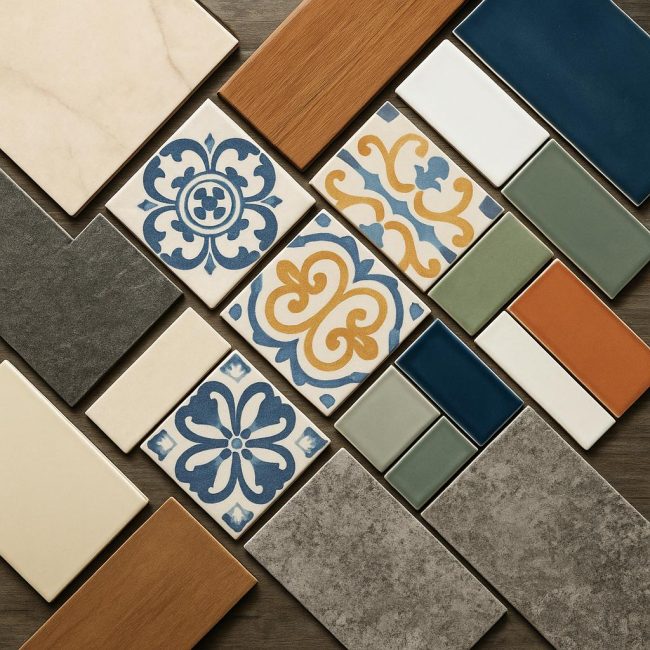
Factories produce collections in a wide variety of styles, from classic to industrial loft. You can find tiles imitating stone, marble, concrete, or wood, as well as options with patterns inspired by ancient Moorish ornaments.
High quality materials
Spanish manufacturers use modern kilns and firing equipment, which ensures that the tiles are resistant to moisture, temperature fluctuations, and mechanical stress.
Versatility
These tiles are suitable not only for bathrooms and kitchens. They are also used to decorate living rooms, hallways, facades, and even outdoor terraces.
Eco-friendliness
Manufacturers strictly adhere to European standards, using safe materials. This is important for those renovating apartments with children or pets.
Wide range of formats
From small mosaic tiles to large-format tiles that visually enlarge a space, tiles of 60x120 cm and larger are particularly popular today.
Where Spanish tiles are used in interior design
Spanish tiles are versatile and can be used in a variety of areas:
- Bathroom Its moisture resistance and aesthetic appeal make it an ideal solution. Collections with marble textures are particularly popular.
- Kitchen — tiles for a backsplash or floor covering are practical and durable.
- Living room — modern collections imitate parquet or stone, which allows you to create stylish interiors.
- Street — special frost-resistant series are suitable for terraces and facades.
Spanish Tile Trends
At the exhibitions in Valencia and Madrid, several main themes can be identified:
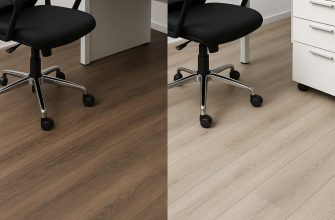
- Imitation of natural materials - wood, slate, travertine, concrete.
- Large formats - slabs that create the effect of monolithicity.
- Minimalism and neutral tones - white, gray, beige.
- Geometric patterns and 3D textures — the effect of depth and play of light.
- Eco-design — tiles with recycled components and energy-saving production technologies.
Economy and accessibility
At first glance, Spanish tiles seem expensive, but in reality, they're an investment in durability. Many collections are mid-priced and affordable for large-scale renovations. More expensive brands are aimed at premium interiors.
Moreover, delivery and logistics from Spain to Russia are well-established. Many suppliers work directly with factories, offering a wide range of products.
Conclusion
Spanish tiles are more than just a building material. They represent a blend of centuries-old culture, modern technology, and unique design. By choosing these tiles for your renovation, you're getting not only a practical and durable solution but also a touch of Mediterranean aesthetics in your home.