Every year, more and more homeowners are considering switching to alternative energy sources. This is not only cost-effective but also environmentally beneficial. The use of alternative energy in private construction is becoming increasingly important not only for those seeking to reduce their costs but also for those wishing to contribute to solving global environmental problems. In this article, we will examine the main types of alternative energy, their operating principles and advantages, and discuss the practical aspects of implementing such systems in private homes.
Types of alternative energy for private homes
Alternative energy sources are generally divided into several main types, each of which has its own characteristics and advantages:
- Solar panels (photovoltaic systems)
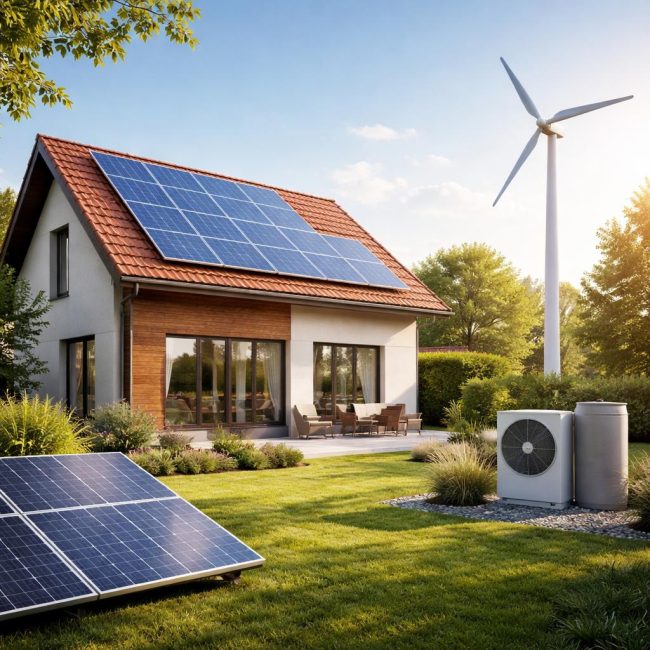
Solar panels convert solar energy into electricity, which not only reduces dependence on traditional energy sources but also fully covers a home's electricity needs. These systems are easy to install and maintain, although the initial cost can be quite high. However, as solar panel technology advances, their cost is gradually decreasing and their efficiency is increasing.
- Wind turbines
Wind turbines use the power of the wind to generate electricity. This option is suitable for homes located in areas with stable winds. Wind turbines can be small or large enough to power an entire home. However, installing wind turbines requires a certain amount of space and is not always feasible in urban areas.
- Heat pumps
Heat pumps use heat from the air, water, or ground to heat a home or hot water. These systems are environmentally friendly and energy efficient, as they don't require burning fuel to generate heat. They work well in moderate climates and can be used to provide a home with heating and hot water year-round.
- Biogas plants
Biogas systems convert organic waste into gas that can be used for heating, cooking, or generating electricity. This not only recycles waste but also reduces environmental impact. For such systems to operate effectively, sources of organic waste, such as agricultural produce, plant waste, or pet waste, are essential.
- Geothermal systems
Geothermal energy is used to heat and cool homes by harnessing the heat stored within the earth. Geothermal heating systems are quite efficient and durable, but their installation requires significant drilling and piping costs. This solution is ideal for sites with abundant geothermal resources.
Operating principles of alternative energy sources
Each alternative energy source is based on the principle of converting natural resources into usable energy. For example, solar panels collect light and convert it into electrical energy. Wind turbines capture the kinetic energy of the wind, and heat pumps use temperature differences to transfer heat from one object to another. Biogas plants convert organic waste into methane, and geothermal systems utilize the earth's heat.
The main difference between alternative energy sources and traditional ones is that they don't deplete resources, don't pollute the atmosphere, and don't create dependence on external supplies, like coal or natural gas. This makes them attractive for use in private homes.
Practical application
The practical use of alternative energy sources depends on many factors, including the home's location, climate conditions, available space for installation, and the homeowner's budget. It's important to remember that switching to alternative energy sources requires a comprehensive approach. For example, installing solar panels can be effective when combined with a heat pump for heating, and wind turbines work ideally in combination with solar panels in areas with insufficient sun exposure.
For private homes located in areas with unstable power supplies, using alternative energy can be not only a cost-effective but also a safe solution, ensuring uninterrupted power supply in the event of power outages.
Limitations and nuances
Like any other approach, using alternative energy has its limitations. For example, solar panels don't provide sufficient efficiency in conditions of frequent cloud cover and precipitation, and wind turbines require favorable wind conditions. Furthermore, the initial costs of installing alternative energy equipment can be quite high, despite the potential for future savings.
It's also important to note that installing such systems requires permits and compliance with local regulations. In some cases, the installation of wind turbines or solar panels may require approval from local authorities.
Common misconceptions
One common misconception is that alternative energy is only suitable for dachas and country houses. In fact, such systems can be effectively used in urban areas as well, especially given new technologies and compact solutions for city apartments.
Another misconception is that solar panels or wind turbines require a lot of space. Modern advances in energy technology allow equipment to be installed in limited spaces, such as rooftops, minimizing land use.
Expanding completion
Alternative energy for a private home is more than just a trendy idea; it's a real opportunity to provide your home with autonomous power, reduce utility bills, and minimize your environmental impact. Technological advances and falling equipment costs are making these systems increasingly accessible to a wider audience. It's important to approach the selection and installation of these systems wisely, considering not only your needs and capabilities but also the environmental conditions to maximize the benefits of innovative solutions.