For many, life outside the city is associated with peace, fresh air, and a sense of freedom. However, along with the comfort and beauty of country living comes a special responsibility: protecting your home, family, and property. That's why more and more homeowners are considering installing video surveillance in their homes. Modern systems allow you to monitor the situation on your property, prevent theft, and ensure peace of mind, even if you're hundreds of kilometers away.
Security is a particularly pressing issue in suburban areas. Houses in cottage communities or gardening associations (SNTs) are often located at significant distances from one another, and even the presence of security guards doesn't guarantee complete control. This is where cameras become a reliable tool, allowing you to keep your finger on the pulse 24/7.
- Why is video surveillance in a private home becoming a necessity?
- Types of video surveillance systems: from simple to professional
- Analog cameras
- IP cameras
- Wireless cameras
- Self-powered cameras
- Where to Place Cameras: Practical Tips
- Additional features to consider
- The Economics of Security: How Much Does Peace of Mind Cost?
- Legal aspects: what is important to know
- Psychological effect
- Results
Why is video surveillance in a private home becoming a necessity?
There are several factors that explain the popularity of surveillance systems:
- Vulnerability of country houses. Unlike apartments in multi-family buildings, cottages remain less secure. They have more entry points: windows, doors, gates, and garages.
- Long departures. Owners often abandon their property for weeks or months at a time, especially in winter. This makes the home an attractive target for burglars.
- Control over workers and service personnel. Cameras help ensure that gardeners, builders, or nannies are doing their jobs properly.
- Smart comfort. Modern systems integrate with smart homes and allow you to manage security directly from your smartphone.
Thus, video surveillance ceases to be a luxury and becomes part of the necessary infrastructure of suburban life.
Types of video surveillance systems: from simple to professional
When choosing equipment, it is important to understand that there are several types of systems, each of which has its own pros and cons.
Analog cameras
- Advantages: affordable price, easy installation.
- Disadvantages: limited image quality, difficulty of remote access.
Suitable for those who value basic control, such as monitoring movement at the gate.
IP cameras
- Advantages: high image quality (Full HD, 4K), remote viewing via the Internet, integration into a smart home.
- Disadvantages: higher price, need for stable internet connection.
This is a universal option for a private home, allowing you to see everything that is happening on the property in real time.
Wireless cameras
- Advantages: no need for cable laying, flexible installation.
- Disadvantages: dependence on Wi-Fi signal, possible connection interruptions.
Ideal for small homes and situations where there is no desire to run cables throughout the entire property.
Self-powered cameras
- Advantages: they operate on solar panels or batteries and are not dependent on the power grid.
- Disadvantages: limited battery life, high cost.
Suitable for remote buildings such as sheds, greenhouses, and bathhouses.
Where to Place Cameras: Practical Tips
Proper placement of equipment plays a key role in the efficiency of the entire system.
- Entrance group. A camera above the gate or wicket allows you to record all visitors.
- Perimeter of the site. Installing cameras at the corners of the fence provides visibility of the entire area.
- Entrance doors and windows. Key access points must be controlled.
- Outbuildings. A garage, bathhouse, workshop or shed often become a target for burglars.
- Inside the house. Cameras in the hallway or living room will help you monitor the situation during your absence for a long time.
It is important to avoid blind spots and choose cameras with an appropriate viewing angle.
Additional features to consider
Modern systems offer not only video recording, but also many useful features:
- Motion detectors. The camera starts recording only when movement occurs, which saves storage space.
- Night vision. Infrared illumination allows you to shoot even in complete darkness.
- Notifications on your phone. Owners receive push notifications when suspicious activity occurs.
- Two-way communication. The built-in speaker allows you to communicate with the courier or scare off an intruder.
- Cloud storage. The video is saved on a remote server, and even if attackers steal the recorder, the recordings will be preserved.
The Economics of Security: How Much Does Peace of Mind Cost?
Many homeowners believe that video surveillance is too expensive. In reality, it all depends on the system you choose:
- Basic set 2-3 cameras will cost from 15 to 30 thousand rubles.
- Advanced system with cloud recording and control via smartphone - from 50 to 100 thousand.
- Professional solutions with dozens of cameras and a security console - from 150 thousand and up.
However, these investments often pay off when you consider how much it can cost to repair or restore stolen property.
Legal aspects: what is important to know
Before installing cameras, you should take into account the following legal nuances:
- You can only film your own property. Pointing the camera at your neighbor's property is prohibited.
- If cameras are installed inside the house, all residents must be warned.
- When recording violations, video recordings can become evidence in court.
Psychological effect
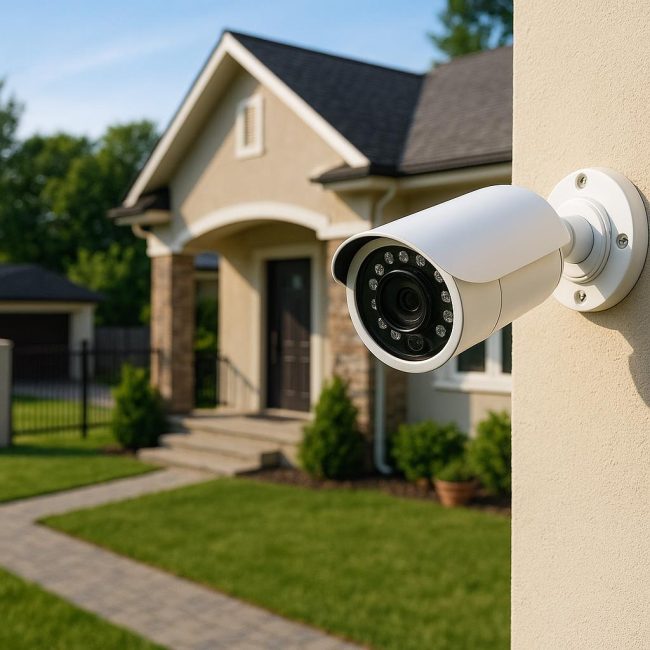
The psychological factor shouldn't be underestimated either. A visible camera at the gate or on the facade is often the best preventative measure. Most burglars prefer to avoid a house with surveillance equipment installed.
In addition, owners feel much calmer when they know that they can check the situation from their phone at any time.
Results
Installing cameras in a country house isn't just an added convenience, it's a genuine necessity. They can help you:
- protect property from theft,
- control employees and guests,
- be confident in the safety of the family,
- integrate the system into a smart home.
Modern video surveillance has become accessible, convenient, and functional. It's an investment not only in security but also in psychological comfort. After all, the most important thing is a sense of security, without which it's impossible to fully enjoy country life.