Rolled metal is the basis for many construction, engineering, and manufacturing solutions. However, when choosing between ferrous and stainless steel, it's important to consider not only price but also operating conditions, durability, and maintenance requirements. A mistake at the purchasing stage can result in unexpected expenses or premature structural repairs.
Many professionals rely not only on technical specifications but also on real-world experience working with suppliers. For example, at large metal warehouses, it's often possible to find not only the desired item but also a consultation on choosing the most suitable option based on the needs. Understanding the differences between rolled metal types is useful not only for specialists but also for those choosing metal for their own project for the first time.
- What is ferrous rolled metal?
- Advantages:
- What is stainless steel rolled metal?
- Advantages:
- Flaws:
- Key differences between ferrous and stainless steel products
- Where to use one or another type?
- Choose black rolled metal if:
- Use stainless steel if:
- What mistakes do people make when choosing?
- How to simplify your choice
- Conclusion
What is ferrous rolled metal?
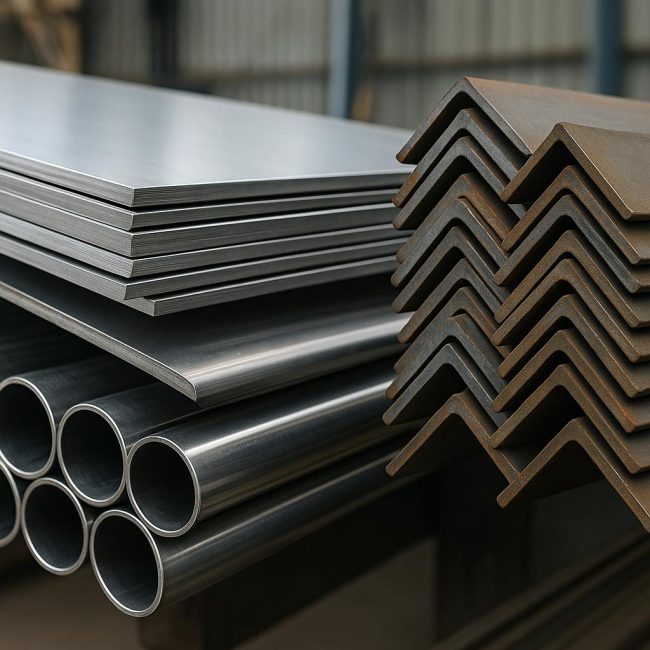
"Black rolled metal" generally refers to products made from carbon steel. This category includes:
- reinforcement,
- corners,
- channels,
- beams,
- hot-rolled and cold-rolled sheets,
- round and profile pipes.
Black rolled steel gets its name from the dark color of the steel's surface after rolling and the lack of protective coatings. Its key advantage is low cost And high strength, making it ideal for mass use in construction and industry.
Advantages:
- availability and wide range of products;
- ease of welding, cutting, bending;
- high load-bearing capacity.
- Flaws:
- susceptibility to corrosion when exposed to moisture and air;
- the need for protective treatment (primer, paint, galvanizing).
What is stainless steel rolled metal?
Stainless steel is made from alloy steels with a high chromium content (at least 10.5%) and sometimes nickel, which makes it corrosion-resistant. It is used in applications where hygiene, resistance to moisture, aggressive chemicals, and temperature fluctuations are critical.
Main forms of delivery:
- sheets and rolls (matte, mirror, polished),
- circles and rods,
- pipes,
- stainless steel corners and channels.
Advantages:
- exceptional corrosion resistance;
- long service life without additional processing;
- presentable appearance;
- chemical inertness (important for the food and medical industries).
Flaws:
- higher cost;
- the complexity of mechanical processing and welding of some brands;
- the need for precise selection of steel grades to suit environmental conditions.
Key differences between ferrous and stainless steel products
To make it easier to understand, we present the differences in table form:
| Parameter | Black rolled products | Stainless steel products |
|---|---|---|
| Compound | Carbon steel | Alloy steel with chromium |
| Corrosion resistance | Low (no protection) | Very high |
| Price | Low | Significantly higher |
| Appearance | Matte, dark | Mirror or polished |
| Scope of application | Construction, mechanics | Medicine, food, chemical |
| Processing | Simple | May require special equipment |
Where to use one or another type?
Understanding the characteristics of each material will help you choose the best option:
Choose black rolled metal if:
- You build load-bearing structures (foundations, floors);
- Need a lot of material at a minimal price;
- We are ready to treat the surface with anti-corrosion compounds.
Use stainless steel if:
- High hygiene is required (kitchens, food warehouses);
- There is contact with water, steam, chemicals;
- An aesthetic appearance without additional finishing is important;
- You work in shipbuilding, medicine, pharmaceuticals.
What mistakes do people make when choosing?
- They focus only on price. Black rolled metal is cheaper, but its maintenance and replacement in the future may be more expensive.
- Ignore operating conditions. Even galvanized black metal cannot replace high-quality stainless steel in conditions of high humidity.
- The steel grade is not specified. Different grades of stainless steel have different properties. For example, AISI 304 is not suitable for aggressive chemicals, unlike AISI 316.
- The purchase volume is calculated incorrectly. It is important to consider waste when cutting, especially for non-standard items.
How to simplify your choice
When purchasing, it is important not only to know the technical parameters, but also to consider practical nuances:
- Check with the supplier for product range and availability. Some items are available only upon request.
- Ask for quality certificates. This is especially critical for critical facilities.
- Please seek advice. Experienced warehouses will advise you on which steel is suitable for your case.
- Compare prices including handling and shipping. Sometimes the final price of "cheap" metal ends up being higher due to hidden costs.
Conclusion
The difference between ferrous and stainless steel is not simply a matter of material; it's a strategic choice that affects the service life, safety, and cost of a project. Understanding key characteristics and a smart procurement approach can help avoid unnecessary expenses and technical problems. If you have any doubts, it's always helpful to consult with specialists: even a brief consultation with companies like ROBMETALLSTAL LLC can save you tens of thousands of rubles and prevent mistakes in your selection.