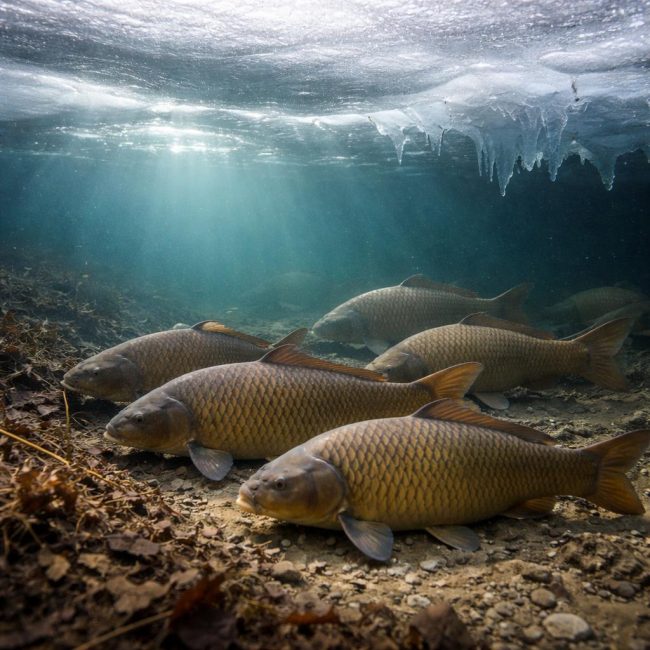
For many aquatic creatures, winter is a time of calm, with activity significantly reduced. This is especially true for freshwater fish like carp, which undergo a special winter state. The question of what carp do in winter is of interest to both fishing enthusiasts and those involved in aquaculture or simply observing nature. In this article, we'll take a detailed look at carp behavior during winter, explore how they adapt to the cold, and determine what factors can influence their activity.
Why do carp behave differently in winter?
Carp, like other fish, are cold-blooded, meaning their activity is directly dependent on water temperature. When water temperatures drop below 10–12°C, their metabolism slows significantly. This leads to carp becoming less active and feeding almost entirely. It's important to note that carp don't hibernate in winter, like some other species, but their behavior changes in response to deteriorating environmental conditions.
Water temperatures in winter can drop to 0°C, and in these conditions, carp enter a state of low activity. During this time, their metabolism slows significantly, requiring minimal energy to sustain life. This is especially important for anglers, as winter carp fishing requires a special approach. During this period, the fish are less likely to actively feed, making catching them more challenging.
How do carp adapt to cold water?
Carp adaptation to winter conditions involves a number of physiological and behavioral changes. Unlike warm-water species, carp are able to survive in decreasing water temperatures thanks to their unique ability to maintain a low metabolic rate.
- Slowing down metabolism:As mentioned, at water temperatures below 10°C, carp begin to slow their metabolism, which reduces their food intake. Under these conditions, carp are less active than in the warmer months and prefer to remain in deeper waters, where the water temperature is more stable.
- Deep sea habitat:During the winter, carp migrate to deeper parts of the reservoir, where the water remains warmer and the temperature remains stable. They prefer areas with less intense currents and a bottom covered with silt or vegetation, providing them with shelter.
- Decreased activity:Although carp don't hibernate, their activity significantly decreases. They stop searching for food on the surface and simply use their stored energy reserves to sustain themselves. This also explains why carp are much less likely to be caught in winter.
How it works in practice: carp behavior in different bodies of water
In practice, carp behavior in winter can vary depending on the type of water body. For example, in small ponds or lakes where the water freezes to the bottom, carp are forced to seek out deeper areas where they can survive the winter. In such water bodies, carp often remain in the thermocline—a layer of water where the temperature does not drop below the critical threshold for their survival.
In larger bodies of water, such as rivers or large lakes, carp may migrate to deeper, quieter areas where the water temperature remains above freezing. Here, they may remain more active, although their behavior will still noticeably slow down.
Limitations and nuances of winter carp activity
Not all carp can withstand low temperatures to the same extent. Young specimens are generally less resilient to cold and can die from sudden temperature changes or freezing of the pond. Adult carp are more resilient, but they are also at risk in extreme conditions. It's also important to note that prolonged winter periods with extremely low temperatures and oxygen deficiency in the water can lead to oxygen starvation.
Particular attention should be paid to the pond's conditions. In well-equipped ponds, such as those with aeration systems, carp can remain active even in winter, as oxygen levels in the water are maintained at the proper level. In natural ponds, where such conditions are not available, the fish may suffer from a lack of oxygen, which also reduces their activity.
Common misconceptions about carp winter behavior
There are several common myths about carp in winter that are worth debunking.
- Carp are not caught in winter:This isn't entirely true. Although winter carp fishing is challenging, it's still possible. Carp can actively respond to certain baits, especially if they're presented correctly, such as in areas of the reservoir where fish are still present.
- Carps overwinter on the bottom:Yes, carp often hide in the depths, but that doesn't mean they're completely motionless. Some carp can move between sections of the pond and sometimes surface to get oxygen, especially if conditions require it.
- Carp do not eat in winter:Although their appetite is significantly reduced, carp will still occasionally eat food during the winter, especially if the water temperature does not drop too low.
Conclusion
In winter, carp adapt to environmental changes by slowing their activity and moving to deeper parts of water. Although they become less active and less inclined to forage, they still survive in the cold, using up their energy reserves and surviving the winter until spring. Understanding carp behavior in winter is useful for both anglers and those interested in freshwater fish biology.