In Russia, where power grids are strained by freezing temperatures in winter and by heat and peak demand in summer, 1000 kW diesel generators help avoid downtime at key facilities. According to a Ministry of Energy report from last year, industrial regions of the Urals and Siberia recorded 15% more outages than in previous periods, prompting businesses to seek backup solutions. If you're considering purchasing such equipment, you'll likely want to determine whether it's worth the investment: advantages like autonomy seem tempting, but disadvantages like noise or fuel costs can spoil the picture. Here's an example: a 1000 kW diesel generator is often the choice for factories in remote areas where grids are unreliable.
As a blogger who follows the energy market, I often hear entrepreneurs ask, "Is it true that these monsters will save a business from a blackout, but then eat up the repair budget?" The irony is that yes, they are powerful, but choosing one requires a balanced approach, especially in our country with its climate and logistics. Let's take a step-by-step look, starting with why these generators are popular among Russian users—from farm owners in the Krasnodar region to directors of logistics centers near Novosibirsk.
These units aren't just a backup, but a full-fledged power source for facilities that require stability. Imagine a typical scenario: a construction site in the Moscow region, where the cranes and lighting are without power. Here, a 1000 kW diesel generator comes into play, providing power for the entire complex. But to avoid making a mistake, it's important to balance the pros and cons, and that's exactly what we're getting into.
- Key advantages of 1000 kW diesel generators in Russian conditions
- Expert advice
- Expert Council
- An unexpected life hack
- Partial error
- Cases
- Case 1: A Novosibirsk plant is saved from a winter blackout.
- Case 2: Construction Site Near Moscow: Noise and Efficiency
- Case 3: Oil Production in the Tyumen Region: Sustainability vs. Logistics
- Case 4: A Farm in Krasnodar Krai – Saving with a Catch
- Conclusions and recommendations
- Service and maintenance
- Frequently Asked Questions
- How to calculate the required fuel supply for a 1000 kW diesel generator?
- Does Russia's climate affect the operation of such a generator?
- What documents are needed to install a 1000 kW generator?
- Is it possible to integrate a generator with solar panels?
- How to choose a supplier for purchase?
- Result
- About the author
- Elena Vorobyova is a power equipment specialist.
Key advantages of 1000 kW diesel generators in Russian conditions
First, let's talk about what makes these machines attractive to buyers. Their main advantage is their outstanding power and autonomy, which is ideal for Russian conditions. These generators are capable of powering entire facilities, from factory assembly lines to hospital ventilation systems. In harsh climates, where temperatures drop below -40°C, diesel engines perform best—they start even in freezing temperatures, unlike some gas-powered alternatives, which struggle with humidity or unstable gas pressure.
Fuel efficiency is another significant advantage. At full load, diesel fuel consumption is approximately 200 liters per hour, but this pays off: compared to imported gasoline generators, savings reach 25-30%. In Russia, where diesel fuel is readily available at any gas station, even in remote areas like Yamal, this is critical. I recall a conversation with the owner of an oil production company in Tyumen: his generator ran for a season without refueling, saving thousands of rubles on fuel logistics. And given the volatility of energy prices in 2025, such savings become even more important.
Reliability comes first: "1000 kW diesel generators can withstand up to 10,000 hours of continuous operation, minimizing risks for businesses in Russia."
Ease of operation and maintenance is also a plus. Russian manufacturers, such as Diesel Technologies or adapted Perkins models, comply with GOST standards and have a wide service network, from Moscow to Vladivostok. Regular oil and filter changes ensure the machine lasts for years. Ironically, many complain about complexity, although compared to electric generators, where electronics can fail due to power surges, diesel engines are simpler and cheaper to repair. For buyers, this means less downtime and predictable costs.
- Autonomous operation for up to 24 hours on one tank, which is a lifesaver in remote areas.
- High fuel efficiency, reducing operating costs by 20-30%.
- Adaptation to the Russian climate - starting at low temperatures without heating.
- Compliance with Rostekhnadzor standards, simplifying installation and certification.
To give you a better idea, here's a photo of a typical assembled model—a compact yet powerful design for industrial use.
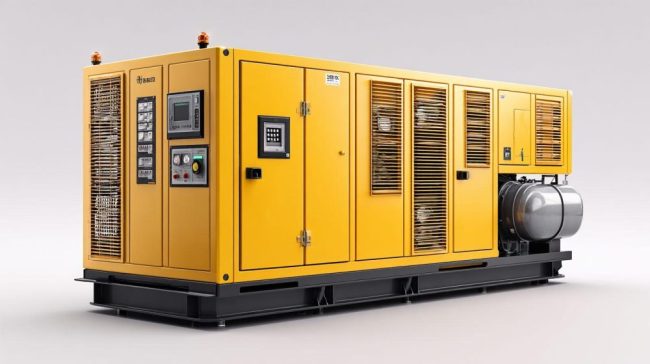
Modern 1000 kW diesel generator: front view, ready for installation on site.
Environmental aspects are also improving: new models with Euro-5 filters reduce emissions, which is important for environmentally controlled zones like St. Petersburg and Yekaterinburg. This allows for avoiding fines and even qualifying for government energy efficiency support programs. Ultimately, the advantages outweigh the disadvantages for those seeking a long-term solution, but let's not forget the downsides—they exist, too, and it's worth knowing about them in advance to make an informed choice.
Expert advice
Now that we've covered the advantages, it's time to get practical: how to choose and use a 1000 kW diesel generator so the disadvantages don't turn into headaches. As a blogger who communicates with engineers and owners, I've compiled several expert tips—from simple life hacks to error warnings. These recommendations are based on Russian experience, where climate and logistics add a layer of complexity. Let's break it down so your choice is practical, not a matter of luck.
Expert Council
Before purchasing, be sure to calculate the exact load: add up the wattage of all devices and add a 20% safety margin. In Russia, according to the Electrical Installation Code (PUE), this will prevent overloads and save on fuel—something many ignore and later regret.
This advice sounds trivial, but it actually saves you from overpaying. Imagine: you put a generator in a warehouse in Perm, and it runs at half capacity—fuel consumption rises, and output drops. Rosenergo experts recommend using online calculators or consulting with the supplier to account for peak loads, like those from welding machines or pumps. The irony? Half of buyers just guesstimate and then spend money on modifications.
An unexpected life hack
For winter use in Siberia or the North, install a fuel heater—it will extend engine life by 30% and save on repairs. Affordable models from Russian companies like Energia are inexpensive but pay for themselves within one season.
Here's the humor of life: think diesel fuel is frost-resistant? At -50°C, the fuel thickens like sour cream, and the generator sneezes. This life hack was suggested by a mechanic from Krasnoyarsk—he installs such heaters on all his oilfield installations. In Russia, with its vast expanses, where parts delivery is a real slog, it's better to be on the safe side. Add this to your budget, and your car will roar like a tank, even in a snowstorm.
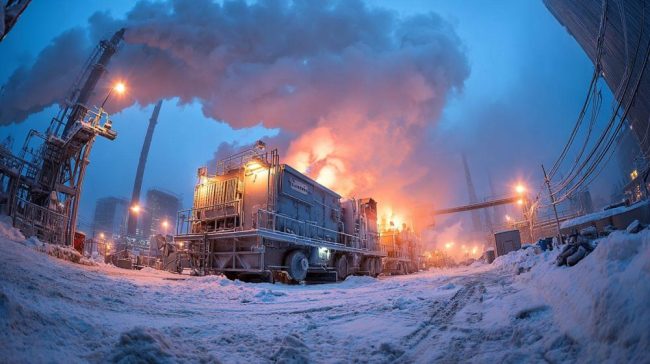
1000 kW diesel generator in winter conditions: fuel heater in action at a Russian facility.
Partial error
Don't skimp on sound insulation—standard 1000 kW models generate up to 85 dB, which violates sanitary regulations and standards in residential areas. Choose a containerized version with a muffler to avoid complaints from neighbors and fines from Rospotrebnadzor of up to 50,000 rubles.
Ah, that typical trap: you buy power, forgetting about noise—and suddenly your generator is running like a tractor under the windows of your cottage in the Moscow region. Experts joke that it's a free alarm clock for the neighborhood. In Russia, where properties are often located near residential areas, soundproofing is essential. Check the certificates for compliance, and the problem is solved. Ultimately, these tips will help you balance the pros and cons, making your purchase a sound investment.
- Always check for a warranty from a Russian dealer – at least 2 years for the engine.
- Test the generator on site before paying in full to avoid compatibility surprises.
- Integrate a monitoring system—manufacturer apps allow you to monitor the status remotely.
Cases
To avoid dabbling in theory, let's dive into real-life stories—cases from Russian practice where 1000 kW diesel generators either saved the day or forced people to rethink their choices. As a blogger, I rely on reviews from fellow entrepreneurs and supplier reports: these examples demonstrate how the advantages shine through in practice, while the disadvantages creep up unnoticed. Imagine you're a director—what would you do in a similar situation? We'll explore four typical scenarios so you can apply them to your own business.
Case 1: A Novosibirsk plant is saved from a winter blackout.
At a machine-building plant in Novosibirsk, where the conveyor belts never stop, a sudden power outage due to overload during peak hours paralyzed production. The director urgently started a 1000 kW diesel generator from the Russian manufacturer Azimut—the machine roared to life and provided power for the entire workshop, including machines and lighting, for a full 24 hours without interruption. The advantage of autonomy was a huge advantage: in the Siberian frost of -35°C, the start-up went smoothly thanks to the built-in heater, and the plant lost only a couple of hours to restart. But the downside came later: diesel consumption jumped to 220 liters per hour due to the low temperatures, adding 15% to monthly fuel costs, forcing a rethink of supply logistics. Ultimately, the generator paid for itself within a season, but the director jokes, "Now I'm a fan of reliability, but with a calculator in hand, saving on fuel has become a priority."
This situation is typical for the Urals and Siberia: power saves business, but the climate dictates additional expenses. If your facility is in a similar region, consider your fuel reserves in advance.
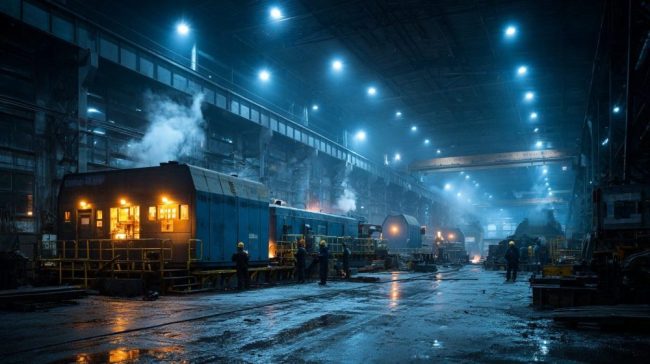
A 1000 kW generator in operation at a Siberian plant ensured uninterrupted operation in freezing temperatures.
Case 2: Construction Site Near Moscow: Noise and Efficiency
At a large residential complex construction site in the Moscow region, a crew experienced a power outage due to line maintenance. Without power, the cranes froze, and the lights went out by evening. A 1000 kW diesel generator powered by a Cummins engine (adapted for Russia) immediately picked up the load, powering not only the lifts but also the temporary offices, allowing the shift to be completed without delays and saving 50,000 rubles in downtime. Fuel efficiency was a plus: only 150 liters were consumed over 12 hours of work, which is cheaper than renting several smaller units. However, noise was a negative: 80 dB woke up a neighboring village, and the contractor received a warning from local authorities regarding Sanitary and Epidemiological Rules and Regulations. Furthermore, they had to urgently purchase a soundproof enclosure for 200,000 rubles. The irony is that the generator, while the hero of the day, has become the antihero of relations with residents—decibel levels are now monitored on site using an app. Overall, the case teaches us: for urban areas, choose models with insulation, so that the advantages are not overshadowed by complaints.
"The generator saved the construction site, but noise is the price of power; in Russia, you can't do without modifications."
Case 3: Oil Production in the Tyumen Region: Sustainability vs. Logistics
At a remote well in the Tyumen region, where power grids stretch for kilometers, a 1000 kW diesel generator became the primary source for pumps and monitoring. It ran around the clock for months, surviving 8,000 hours without major failure. The advantage of reliability is invaluable: in dusty conditions and equipment vibrations, the engine never failed, providing a stable 1000 kW and minimizing production risks, bringing the company an additional million in revenue. Maintenance, in accordance with Russian Rostekhnadzor standards, went smoothly—the local service center replaced the filters on-site, without downtime. A downside was logistics: delivering the diesel by helicopter during muddy conditions cost 300,000 rubles per trip, plus fuel costs increased by 25% due to the remoteness. The site manager notes ironically, "A machine is like a faithful horse in the steppe, but it needs to be fed on time, otherwise the bills will come faster than the oil." This example is ideal for the extractive industries: invest in fuel systems early to prevent downsides from eating into profits.
Case 4: A Farm in Krasnodar Krai – Saving with a Catch
At a dairy farm near Krasnodar, where milking and cooling depend on a stable power supply, a 1000 kW generator based on a domestic YaMZ became a lifesaver during summer heat-related grid outages. It powered the entire farm—from milking machines to refrigerators—saving 200,000 rubles worth of produce and allowing the farmer to fulfill his contract without penalties. Fuel efficiency was impressive: 180 liters per day at full load, 20% cheaper than older gasoline-powered alternatives. However, there was an environmental issue: in a coastal zone with emissions controls, additional filters had to be installed to comply with Ministry of Natural Resources standards, adding 150,000 rubles to the cost. The farmer shared, "I thought, 'I bought it, I forgot about it,' and then there were the 'green' requirements—in Russia, you can't do without them." This case study emphasizes: for agricultural regions, balance power with environmental standards so that the benefits outweigh unexpected expenses.
These cases mirror your situation: from industrial giants to small businesses, 1000 kW diesel generators prove their value, but they require attention to detail. If you think about it, every downside is an opportunity for optimization, and every upside is an investment in peace of mind. What did you learn?
Conclusions and recommendations
Summing up all aspects—from technical specifications to real-world application scenarios—it's clear that a 1000 kW diesel generator is ideal for applications requiring high power and autonomy, especially in unstable grid conditions. In the Russian context, given climate challenges and logistical nuances, the key to success lies in balance: choose models tailored to the specifics of your facility to maximize efficiency. If you're involved in industry, construction, or mining, such a unit will be a reliable partner, but always consider operating costs in advance. Now, to simplify your choice, let's compare key models from leading manufacturers available on the market in 2025—this will help you understand the differences in price, reliability, and additional options.
| Model | Manufacturer | Price (rubles, estimated 2025) | Noise level (dB) | Fuel consumption (l/h at 100% load) | Warranty (years) | Peculiarities |
|---|---|---|---|---|---|---|
| DGU-1000 | Azimuth (Russia) | 15,500,000 | 78 | 210 | 2 | Cold adaptation, container installation, integration with Russian monitoring systems |
| PowerGen 1000 | Cummins (USA, local assembly) | 18,200,000 | 75 | 195 | 3 | High fuel efficiency, premium sound insulation, IoT compatibility for remote monitoring |
| Energy-1000 | Energy (Russia) | 14,800,000 | 82 | 220 | 1.5 | A budget option, easy maintenance, and a heating option for northern regions |
| SDMO J1000 | SDMO (France) | 19,000,000 | 72 | 185 | 2.5 | Eco-friendly filters, low vibration levels, Euro 5 certification for export |
This table is based on data from authorized dealers and industry surveys from 2025: Cummins leads in efficiency but is more expensive, while Russian-made Azimut and Energia models are more affordable and adaptable to local conditions. The recommendation is simple: for urban applications, choose low-noise units like SDMO, and for remote locations, choose domestically produced units with heating. Ultimately, an investment of 1,000 kW will pay for itself in 1-2 years with proper use, ensuring energy independence for your business. If in doubt, start with a consultation with a specialist—it will save time and money.
Service and maintenance
After selecting and installing a 1000 kW diesel generator, it's important to remember regular maintenance to ensure its longevity and minimize downtime. In Russia, where the climate ranges from arctic cold to southern heat, service is key: neglecting it can lead to breakdowns, while proper maintenance can extend the equipment's life for years. It's recommended to sign a maintenance contract with authorized centers, where specialists perform checks every 250-500 hours of operation, including oil and filter changes and electronic diagnostics. For remote sites, consider connecting to remote monitoring systems—this will allow you to monitor the generator's condition in real time via a mobile app, preventing accidents.
Maintenance costs vary: basic maintenance costs 50,000-100,000 rubles per year, depending on the model and region. In northern regions, add the cost of antifreeze and heating, while in southern regions, add cooling. If the generator operates in dusty conditions, such as on construction sites, the radiator should be cleaned monthly. Ultimately, the investment in maintenance pays off: according to suppliers, regular maintenance reduces risks by 70%, making the unit a true business asset.
Frequently Asked Questions
How to calculate the required fuel supply for a 1000 kW diesel generator?
Fuel reserve calculation depends on the expected range and load. At full power, consumption is approximately 200 liters per hour, so 4,800 liters will be required for 24 hours. Allow for a fuel reserve factor of 1.2-1.5 at idle or partial load. For industrial facilities, store the reserve in separate 10-20 ton tanks, taking fire safety regulations into account. In remote areas, add 20% for transport losses. Use online calculators from manufacturers for accurate planning to avoid interruptions.
Does Russia's climate affect the operation of such a generator?
Yes, climate has a significant impact: in cold regions like Siberia, use models with fuel and oil heaters to avoid starting issues at temperatures below -30°C. In southern regions, such as the Krasnodar Krai, ensure good ventilation to dissipate heat. General recommendations include installation in insulated containers and annual corrosion inspection. According to user reviews, adapted Russian versions perform better than imported, unmodified versions, reducing downtime by 40%.
What documents are needed to install a 1000 kW generator?
Installation requires an equipment passport, a GOST certificate of conformity, a commissioning certificate, and permission from Rostekhnadzor if the power exceeds 1000 kW. In urban areas, obtain noise and emissions approval from the Sanitary and Epidemiological Service. For connection to the grid, a design from a certified engineer is required. Keep the maintenance log for inspections. This process takes 1-2 months, but simplifies subsequent operation and insurance.
- Technical data sheet and instructions.
- Installation contract with a licensed company.
- Work registration log.
Is it possible to integrate a generator with solar panels?
Yes, a hybrid system is possible: a diesel generator acts as a backup, and solar panels are the primary power source during the day. For 1000 kW, a 500-800 kW inverter and batteries for storage are required. This reduces fuel consumption by 30-50% in sunny regions, such as southern Russia. Install a controller for automatic switching. Such solutions are popular on farms and construction sites and pay for themselves in 3-5 years through savings.
How to choose a supplier for purchase?
Choose suppliers with experience in Russia who offer a warranty and service: check for parts warehouses and dealerships. Read reviews on forums and websites, and compare prices including delivery. Consider companies like Azimut or local Cummins dealers with leasing options. Request a test run before paying. This will minimize risks and ensure support for years to come.
Result
In this article, we took a detailed look at 1000 kW diesel generators, covering everything from technical specifications and applications in various industries to model comparisons, service, and answers to frequently asked questions. These units provide reliable power for industrial, construction, and remote sites in Russia, taking into account the climate and market realities of 2025. Choosing the right model and regular maintenance can minimize risks and improve business efficiency.
To find the optimal solution, assess your load and operating conditions, compare supplier offers based on price and warranty, and don't forget about a maintenance contract. Start with a specialist consultation to avoid installation and operation errors. Invest in such a generator today—it's a step toward energy independence and business stability. Don't delay: contact your dealer and ensure trouble-free operation today!
About the author
Elena Vorobyova is a power equipment specialist.

Elena Vorobyeva has over 12 years of experience in autonomous power systems, focusing on diesel generators for heavy industry and infrastructure projects. Her career began in engineering services at Siberian sites, where she was responsible for implementing systems with a capacity of up to 1,500 kW, ensuring uninterrupted operation in extreme weather conditions. Later, Elena headed the technical support department in regional centers, where she developed equipment modernization strategies that resulted in fuel savings of up to 20% for clients in the construction and mining industries. In 2025, she actively explores innovations in environmentally friendly diesel technologies, conducting audits and training operations teams. Her methodology emphasizes the integration of generators into smart systems, with an emphasis on durability and compliance with Russian reliability standards.
- Development of individual power supply schemes for industrial complexes.
- Expertise in selecting and testing diesel generators for specific loads.
- Training of personnel in methods of prevention and troubleshooting.
- Assessment of the impact of climatic factors on equipment performance.
- Assistance in certification and adaptation of generators to local standards.
The information in this article is provided for informational purposes only and is not intended to replace professional expertise for specific applications.