Profiled lumber is often the first choice for construction and finishing work due to its high strength, durability, and aesthetic qualities. However, despite its popularity, many people don't fully understand what this material is, its properties, and its uses. Profiled lumber is more than just wood; it's a construction product with specific characteristics that make it ideal for specific purposes. This article will help you understand this material, its applications, and the nuances of choosing it.
Profiled lumber: what is it?
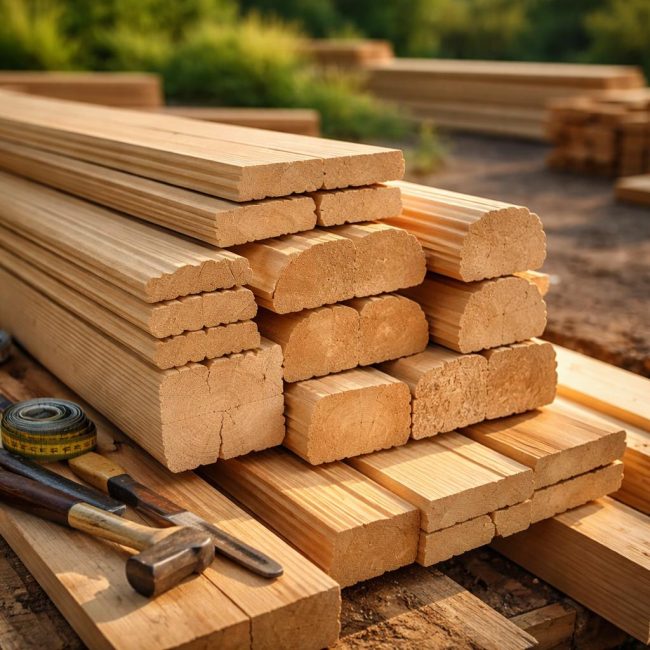
Profiled lumber is wood processed and shaped using various technological processes. "Profiled" means the wood has a specific shape that makes it suitable for use in construction and finishing. Such materials are often used to create highly durable and aesthetically pleasing structures.
The main difference between profiled lumber and regular lumber is that it has already undergone additional processing. This may include the creation of various grooves, notches, tenons, or other elements that make them easier to install and improve their performance. Such elements often serve aesthetic or functional purposes.
Types of profiled lumber
There are several types of profiled lumber, each used in different construction applications. Let's look at the main ones.
- Profiled boards– This versatile and frequently used construction material is often used for finishing walls, ceilings, and creating exterior and interior panels. Profiles can vary: smooth, tongue and groove, and even with decorative grooves. These boards are often used for finishing houses and cottages.
- Imitation timber– This is a special type of lumber that imitates the appearance of timber but is smaller in size. It is used for finishing exterior walls or creating interior partitions, and is also widely used in façade construction. This type of board also has tongues and grooves, making it easier to install.
- Block house– This is a board with a distinctive round profile reminiscent of a log. It is ideal for finishing both exterior and interior surfaces, giving a building the appearance of a wooden house. This profile is often used in the construction of baths, saunas, and other wooden structures.
- Batten– This is a special type of board used for flooring. These boards typically have locking joints, simplifying the installation process. Floorboards can be smooth or feature various textured and decorative elements.
- Profiled timberThis material is a timber with special grooves and tenons, making it suitable for use as a building material for load-bearing structures. It is used in the construction of frame houses, saunas, and other structures requiring high strength.
Features of profiled lumber
Profiled lumber has a number of features that make it popular in construction and finishing.
- Easy to installThanks to tongue and groove joints, profiled boards and beams can be easily joined together. This significantly simplifies installation and saves time during construction and finishing work.
- AestheticsThese materials offer an attractive appearance and are often used for finishing both exterior and interior surfaces. Decorative elements, such as various grooves and textures, lend a cozy and natural feel to the space.
- StrengthDespite their decorative properties, profiled lumber is characterized by high strength and durability, making it suitable for use in construction and finishing work where reliability is required.
- Eco-friendlinessIn most cases, profiled lumber is made from natural wood, making it safe for human health and the environment. This is an important advantage for those who prefer to use natural materials in construction.
- ThermoregulationThanks to processing techniques, such lumber can have good thermal insulation properties. This makes it suitable for use in environments where a stable temperature is required, such as baths, saunas, and homes in cold climates.
Application of profiled lumber
Profiled lumber is widely used in various construction applications. It is used for both exterior and interior finishing. Let's look at the areas in which it is most widely used.
- Facade finishingOne of the most popular uses for profiled lumber is for building exteriors. Blockhouse, imitation timber, and other types of lumber are ideal for creating facades that give a home a stylish and natural look.
- Interior decorationProfiled boards and beams are often used for finishing walls, ceilings, and floors. They can be used to create beautiful interior solutions, such as wood paneling and decorative elements.
- Construction of baths and saunas: Due to its temperature-regulating and aesthetic qualities, profiled lumber is often used for the construction of baths, saunas, and other facilities where it is necessary to create a cozy atmosphere and maintain optimal climatic conditions.
- Frame constructionProfiled lumber is also used in frame houses. This can be used for both load-bearing structures and decorative elements such as panels and cladding.
Application scenarios and consequences of choice
When choosing profiled lumber, it's important to consider several factors, such as the type of material, its characteristics, and the specific application. For example, for façade finishing, it's worth choosing materials that offer not only decorative value but also good moisture protection. For interior finishing, consider lighter and more affordable options, such as imitation timber.
It's important to remember that each type of profiled lumber has its own characteristics, and not all are suitable for every type of work. For example, for flooring, it's better to choose floorboards, while for wall finishing, choose imitation timber or blockhouse.
Limitations and nuances
Like any building material, profiled lumber has its limitations. One of the main drawbacks is its tendency to warp with changes in humidity and temperature, which can lead to cracks or even warping. To avoid such problems, it's important to choose the right material based on the operating conditions and follow the care and processing recommendations.
Common misconceptions
One of the common misconceptions when working with profiled lumber is that it can't be used for exterior work. In fact, such materials can be perfectly suitable for façade work, but it's important to choose high-quality processing and consider the region's climatic conditions.
Conclusion
Profiled lumber is a versatile and practical building material that combines high performance and aesthetic appeal. Choosing the right material for a specific task will help create a structure that is not only reliable but also beautiful and long-lasting.