In modern construction, increasing attention is being paid to the combination of strength, sustainability, and aesthetics. Among the many architectural solutions, the type of construction is gaining increasing popularity.Post and Beam, or, as it's known in Russian construction, the post-and-beam system. This technology, originating from traditional Canadian and Japanese architecture, is now widely used in the US and Europe and is gaining popularity in Russia. In this article, we'll take a detailed look at what a post-and-beam house is, its advantages, design features, construction stages, materials used, and important considerations for those planning to build such a home.
What is the Post and Beam system?
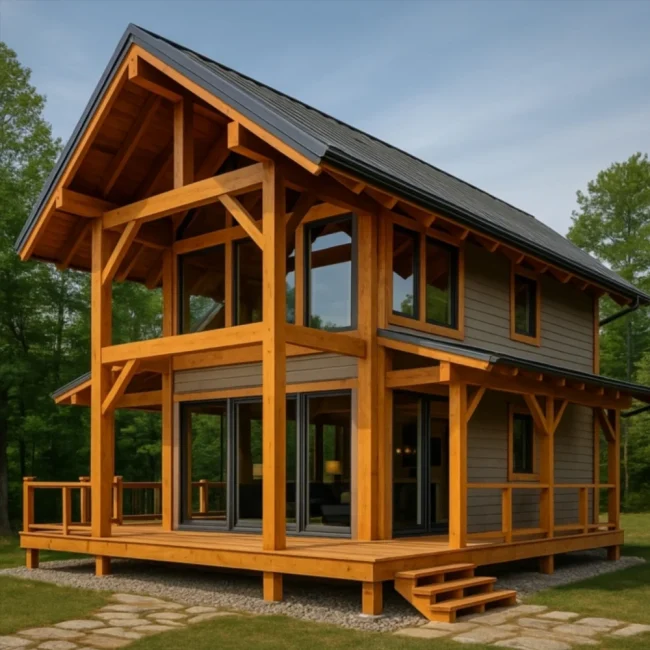
SystemPost and BeamLiterally translated as "post and beam," this type of frame construction is characterized by vertical supports (posts) and horizontal beams (beams). Unlike traditional frame houses, where the load-bearing structure is often hidden by sheathing, in Post and Beam, the load-bearing elements remain visible and become an important part of the architectural design. This makes these homes visually expressive, highlighting the massive wooden structures in both the interior and exterior.
Difference from other technologies
Confusion often arises from the similarity between Post and Beam, Timber Frame, and conventional framing technology. However, there are clear differences between them:
- Timber Frame— is also a frame technology, but it uses traditional wooden joints without metal fasteners. It requires highly skilled carpenters.
- Platform Framing— are a structure in which the walls are assembled from thin boards, covered with slabs, and the load is distributed between the sheathing and the posts.
- Post and Beam— combines solid wood elements with modern fasteners, providing strength and openness to interior spaces.
Advantages of Post and Beam Homes
- Strength and durability
The use of solid elements (glued laminated timber, solid wood) makes the structure resistant to loads. Such houses last for decades, and with proper wood protection, even centuries.
- Large spans and open spaces
Thanks to the load-bearing role of posts and beams, it is possible to create interiors with large open spaces without internal load-bearing walls.
- Aesthetics of the design
The wooden beams remain visible and become a design element. A Post and Beam home has a unique, warm, and authentic look.
- Flexibility in finishing
External and internal walls do not bear the main load, so they can be made of any material: wood, brick, glass, SIP panels, insulated frame panels, etc.
- Eco-friendliness
The wood used is a renewable natural resource. Glued laminated timber is often used, as it doesn't warp or shrink like solid wood.
- Resistance to seismic loads
The structure can withstand movement and vibration, making it suitable for areas with increased seismic activity.
Disadvantages and limitations
- Price
The use of solid wood structures and high-quality fasteners increases the price compared to a conventional frame.
- Difficulty of installation
A professional approach, precise calculations, and experienced carpenters are required. Errors in beam connections or miscalculations will lead to structural distortion.
- Limited availability of materials
High-quality glued laminated timber or dry solid timber is more expensive and not always available in the regions.
- The need for protective treatment
Wood requires antiseptic treatment and protection from moisture, fungi and insects, especially if the elements remain open.
Design features
The basis of the house is:
- Vertical posts- massive pillars that bear the load from the floors and roof.
- Horizontal beams— connect the racks, provide rigidity and support for the ceilings.
- Connecting elements— metal plates, bolts, and tenon joints. Traditional mortise and dowel joints are sometimes used.
- Strapping and braces- increase stability and prevent displacement.
- Roofing elements— rafters, wall plate and ridge beam can also be part of the architectural expression.
Materials
The main material is wood. The following are used:
- Glued laminated timber (made from spruce, pine, larch)
- Solid wood
- Oak or larch for the racks
- Stainless steel metal fasteners
- Insulation materials (mineral wool, ecowool, polyurethane foam)
- SIP panels - for filling the space between the racks
Post and Beam House Construction Stages
- Design
Precise design of structural components is required. Standard designs are unsuitable—each project is unique due to individual calculations.
- Foundation
Due to the high load, a strip or slab foundation is suitable. Sometimes, a pile foundation with a grillage is suitable.
- Manufacturing and assembly of the frame
The structures can be manufactured on-site or in a factory. They are then assembled using lifting equipment.
- Filling the walls
Various materials are used, including insulated frames, SIPs, brick, and double-glazed windows. Open-facade options are also available.
- Roof installation
The most commonly used roof is a pitched roof, gable or hipped, with wooden rafters.
- Engineering communications
Wiring, pipes, and ventilation are embedded in the walls, floors, and ceilings, or laid openly, emphasizing the industrial style.
- Finishing and finishing works
Wood, plasterboard, and decorative brick can be used inside. A popular combination is wood and glass.
Design and architecture
Post and Beam homes come in a variety of styles:
- Chalet- Alpine motifs with wide cornices and balconies.
- Minimalism- open surfaces, lots of light, glass.
- Country— using stone, wood, rough surfaces.
- Japanese style— with low roofs and internal partitions.
The absence of load-bearing walls allows for any design solution to be implemented. Panoramic glazing, double-height spaces, and exposed ceiling beams are common features of these designs.
Where Post and Beam Homes Are Relevant
- In regions with harsh winters, high-quality insulation provides good thermal insulation.
- In picturesque locations: forests, lakes, mountainous areas. Post and Beam architecture blends harmoniously with nature.
- As country houses, cottages, summer houses, bathhouses, as well as hotels, recreation centers, restaurants.
Construction Tips
- Choose a reliable team with experience in Post and Beam.
- Order a project from an architect familiar with the technology.
- Don't skimp on wood, especially laminated veneer lumber.
- Check the moisture content and type of wood for stability and durability.
- Plan your utility systems in advance.
- Use antiseptics, oils and varnishes to protect wood.
Conclusion
A Post and Beam home is more than just a dwelling; it's a philosophy of life, based on the combination of strength, beauty, and connection to nature. This architecture emphasizes structure, the integrity of materials, and the individuality of each project. Building such a home means choosing reliability, aesthetics, and durability. With the right approach, it's an investment in comfort and a unique lifestyle.