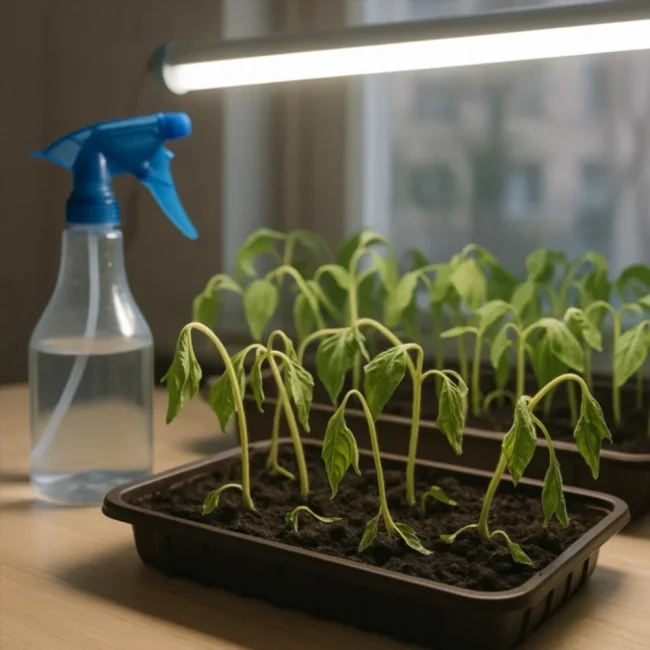
Seedlings are the beginning of a future harvest. Their health and vigor determine how successfully they will be planted, how quickly they adapt, and ultimately how richly they will reward you with fruit. Therefore, when seedlings suddenly begin to wilt, even experienced gardeners and vegetable growers worry. Why this happens and what steps should be taken—we'll explore in detail in this article.
- The main reasons for seedling wilting
- Under- or over-watering
- Lack of light
- Overfeeding or starvation
- Fungal diseases
- Violation of temperature regime
- Problems with the root system
- Emergency measures for seedling restoration
- Transplanting into new soil
- Treatment with growth stimulants
- Organization of a mini-greenhouse
- Prevention: How to prevent future fading
- Folk remedies for restoring seedlings
- Conclusion
The main reasons for seedling wilting
Seedling wilting is a symptom, not a diagnosis. To choose the right treatment, you need to accurately determine the cause. Let's look at the main ones:
Under- or over-watering
Plants are sensitive to water conditions. Overdrying the soil leads to dehydration, while overwatering leads to root rot and fungal diseases.
Signs:
- When there is a lack of moisture, the leaves lose turgor, become wilted, and may curl.
- If there is an excess, the leaves turn yellow, the stems become soft, and a musty smell may come from the soil.
What to do:
- If the soil is dry, water with warm, settled water.
- If the soil is damp, stop watering, gently loosen the top layer, and ensure drainage. You can temporarily transplant the seedlings to drier soil.
Lack of light
Seedlings require good light—at least 12–14 hours a day. Insufficient light causes photosynthetic starvation.
Signs:
- Stem extension.
- Pale color of leaves.
- General weakness of the plant.
What to do:
- Move the seedlings to a lighter windowsill.
- Install additional lighting - phytolamps or at least fluorescent lamps at a distance of 20-30 cm from the tops of the plants.
Overfeeding or starvation
It's easy to overfeed seedlings, especially with nitrogen fertilizers, or, conversely, to forget about regular feeding.
Signs:
- With excess nitrogen, the plant will have lush foliage but weak roots and will quickly wither.
- If there is a lack of nutrition, the leaves turn yellow, growth slows down, and they wither.
What to do:
- If there is excess, rinse the soil with a gentle shower or replant in fresh substrate.
- If there is a deficiency, apply complex fertilizers with microelements.
Fungal diseases
The most common seedling disease is blackleg. It occurs due to overwatering and poor ventilation.
Signs:
- Darkening and thinning of the base of the stem.
- Wilting and falling of the plant.
What to do:
- Remove affected specimens.
- Spray the remaining areas with a fungicide solution (for example, Fitosporin).
- Be sure to disinfect the soil and pots.
Violation of temperature regime
Sudden changes in temperature, especially cold drafts or overheating on a windowsill, can cause stress.
Signs:
- Withering in the morning hours.
- Curling of leaves.
- Slowing growth.
What to do:
- Eliminate the source of the draft.
- Install a thermometer and ensure that the temperature is between 18–24°C during the day and not below 14°C at night.
Problems with the root system
During replanting, the roots may have been damaged or planted too deeply. Sometimes, the cause is soil that's too compact.
Signs:
- The plant does not develop despite normal conditions.
- Leaves wither for no apparent reason.
What to do:
- Carefully dig up the seedlings and examine the roots.
- If there is rot, cut off the affected areas and transplant into a light substrate.
- Use root formation stimulants (Kornevin, Zircon).
Emergency measures for seedling restoration
Sometimes the seedlings' condition is critical, and delay can lead to their complete death. In such cases, action is required quickly.
Transplanting into new soil
If the soil is clearly contaminated, smells foul, or is excessively wet, it's time to repot. Use a sterile, loose, nutritious soil mixture. Remove any rotted roots and treat the root system with a weak solution of potassium permanganate or phytosporin.
Treatment with growth stimulants
Preparations based on humates, epin, and succinic acid will help plants regain their strength, especially after transplantation or illness.
Organization of a mini-greenhouse
Creating a miniature greenhouse with a humid atmosphere (for example, covering it with a plastic bag or lid) speeds recovery. Just remember to ventilate it 1-2 times a day.
Prevention: How to prevent future fading
Preventing a problem is always easier than dealing with its consequences. Here are some proven tips for caring for seedlings:
- Choose high-quality soil.It must be loose, breathable and disinfected.
- Water as needed.It's better to underfill than overfill. It's easier to use a spoon or syringe.
- Install phytolamps.This is especially relevant in February and March, when there is little daylight.
- Perform the picking carefully.Do not damage the roots, do not bury the growth point.
- Treat against diseases.Use preventative measures against fungus, especially after watering.
- Harden off the seedlings.1-2 weeks before planting, take the plants outside into the fresh air, starting with 10-15 minutes a day.
- Monitor the temperature.Avoid sudden changes and drafts.
Folk remedies for restoring seedlings
For those who prefer natural methods, simple but effective remedies are suitable:
- Garlic infusion(2 cloves per 1 liter of water, leave for 2–3 hours) – against fungus.
- Ash- adding to the soil reduces acidity and nourishes the plant.
- Chamomile or calendula infusion- has an antiseptic effect.
- Succinic acid- stimulates cell regeneration and growth.
Conclusion
Wilting seedlings is a warning sign, but not a death sentence. The key is not to panic, but to assess the situation and take action. An analysis of the soil, light, temperature, and plant condition will reveal the cause. And timely intervention can save even seemingly hopeless seedlings.
Pay attention to prevention, care for your plants as if they were living beings, and they will surely reward you with strong greenery, healthy stems, and a bountiful harvest.