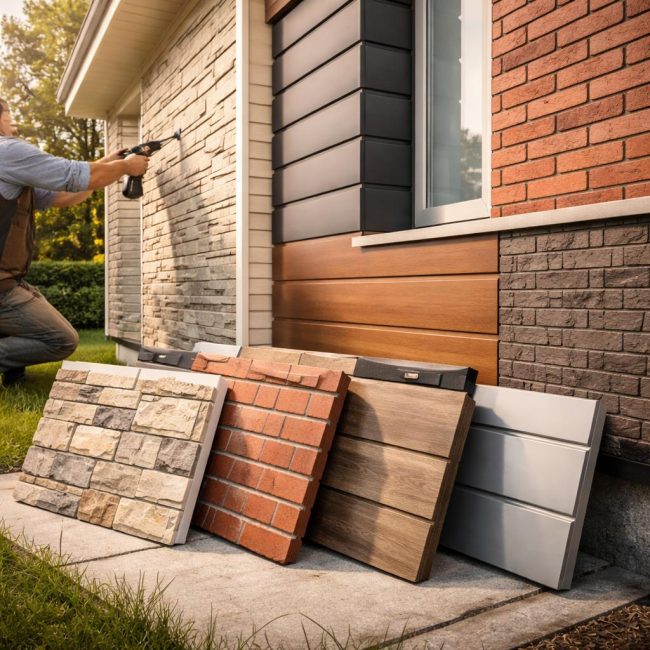
Facade panels are one of the most popular materials for finishing the exterior walls of buildings. They can serve both as a decorative element and as a base for thermal insulation and protection from external factors. However, choosing the right façade panels often raises questions, especially when considering numerous factors: climate conditions, material durability, aesthetic preferences, and cost. In this article, we'll explore the different types of façade panels, their features, and how to choose the best option for your home.
Types of facade panels
There are many different types of facade panels on the market, each with its own advantages and disadvantages. Let's look at the most popular ones.
Ventilated facades
Ventilated facades are a design in which panels are installed with a gap from the wall, allowing air to circulate freely between the panels and the building wall. This not only improves thermal insulation but also reduces the load on the wall, preventing condensation and, consequently, mold and mildew growth.
Advantages:
- Excellent heat and sound insulation.
- Protection from moisture and external factors.
- Easy to install and maintain.
Flaws:
- It requires a lot of space for installation, which is not always possible in limited spaces.
- Difficulty in installation, requires certain skills.
Composite panels
Composite façade panels are a material composed of multiple layers, such as aluminum and plastic, or plastic and mineral. These panels are often used for building cladding where a combination of lightness, strength, and durability is required.
Advantages:
- High strength and durability.
- Excellent resistance to mechanical damage.
- Easy to care for.
Flaws:
- Higher cost compared to some other types of panels.
- It may be difficult to replace or repair if damaged.
PVC panels
Polyvinyl chloride (PVC) panels are one of the most popular and affordable materials for façade finishing. They come in a variety of colors and textures, making it easy to find a solution to suit any home style. PVC panels are highly resistant to moisture, sun, and chemicals.
Advantages:
- Affordable price.
- Resistance to external influences (water, sun, chemicals).
- Easy to install and maintain.
Flaws:
- Plastic can fade and lose its appearance over time.
- Not always suitable for use in heavily polluted areas or extreme temperatures.
Stone and brick panels
For those who want to preserve the natural appearance of their building, stone and brick façade panels are an excellent solution. They mimic the classic look of brick or stonework, but are significantly lighter and easier to install.
Advantages:
- Natural and aesthetically attractive appearance.
- Strength and durability.
- High thermal insulation.
Flaws:
- High cost.
- Thorough surface preparation is required prior to installation.
Metal panels
Metal façade panels are a more modern solution for building cladding. They can be made of steel, aluminum, or copper and come with a variety of coatings, including powder coating or anti-corrosion. These panels are ideal for modern residential and commercial buildings.
Advantages:
- High strength and resistance to external influences.
- Durability and longevity.
- Aesthetically pleasing in appearance, often used in modern architectural styles.
Flaws:
- High cost.
- Require regular maintenance and painting.
How to choose facade panels?
The choice of façade panels depends on many factors, including climate conditions, building style, budget, and owner preferences. To choose the right material, it's important to consider the following:
Climate conditions
For homes in regions with cold winters or high humidity, it's preferable to choose panels with good thermal insulation properties, such as ventilated facades or mineral-based panels. For hotter regions, panels that are resistant to UV rays, such as metal or composite, are suitable.
Aesthetic preferences
If the goal is to create a façade that blends harmoniously with the surrounding landscape or has a specific style, it's worth choosing panels that visually match these requirements. For example, for classic-style homes, you can choose panels with a stone or brick effect, while metal or composite panels are suitable for modern buildings.
Budget
The cost of facade panels varies depending on the material and installation complexity. If your budget is limited, you can choose more affordable PVC panels that are just as aesthetically pleasing and functional as more expensive options.
Strength and durability
The durability of the material is a very important factor. It's important to assess how long the panels will last in your region. For example, composite panels are more resistant to damage, while PVC panels may fade over time.
Possible misconceptions when choosing facade panels
People often make mistakes when choosing facade panels based solely on appearance or low price. However, it's important to remember that:
- Panels that appear cheap may require frequent repair or replacement.
- Not all panels are suitable for specific climate conditions.
- Plastic panels may be less durable in conditions of severe temperature fluctuations.
Conclusion
Facade panels are not only an aesthetic element but also a functional part of the structure, protecting the home from external factors and affecting its energy efficiency. When choosing façade panels, it's important to consider not only their visual appeal but also the climate conditions, the durability of the material, and its functional characteristics. Remember that the right choice can significantly improve the comfort of your home, while the wrong one can lead to additional repair and maintenance costs.