When building a home, one of the key stages is the foundation. Choosing the right foundation material often raises many questions, as it's the foundation upon which the strength of the entire building depends. One popular option is a block foundation, which you can build yourself. In this article, we'll discuss what a block foundation is, when it's best to use it, the principles of working with it, and common mistakes to avoid.
What is the essence of a block foundation?
A block foundation is a durable structure made of concrete or ceramic blocks. It is an excellent choice for light and medium-sized structures, such as garages, summer cottages, and small houses. One of the main reasons many choose this type of foundation is its cost-effectiveness and relatively easy installation. It is important to understand that a block foundation is not suitable for all soil types and should only be used in cases where groundwater is located at a depth that is inaccessible to water.
How does a block foundation work?
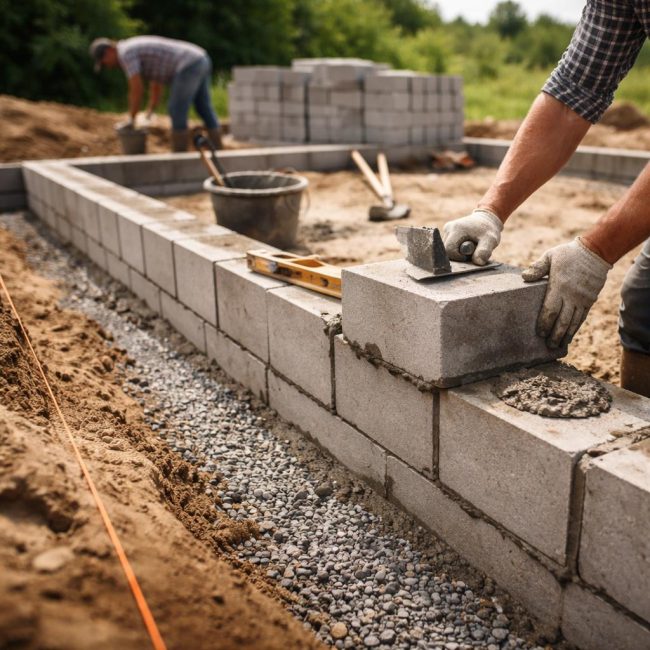
The principle of constructing a block foundation is quite simple. The blocks are installed on a prepared base, usually a sand bed, which provides additional support. The blocks are laid in one or more rows, depending on the type of structure being constructed and the soil characteristics. Joints are left between the blocks and filled with mortar to strengthen the bond between the structural elements.
The main advantage of this type of foundation is its versatility and speed of installation. Its construction doesn't require heavy construction equipment, and even a small team or, if desired, a DIY project can handle the task. However, it's important to remember that proper preparatory work and the selection of high-quality materials are essential to ensure the longevity of the structure.
Application scenarios and consequences
Using a block foundation is justified in most cases where a reliable, yet inexpensive foundation is needed for small structures. For example, when building private homes in areas with stable soil. Blocks are not suitable for areas with shifting or wet soils, where there is a risk of subsidence and structural failure.
One of the disadvantages of block foundations is their limited load-bearing capacity. For large structures or multi-story buildings, strip or monolithic foundations are preferable, as they are more effective in these conditions.
Limitations and nuances
Like any building material, blocks have their own characteristics. For example, concrete blocks are susceptible to moisture, which can lead to their failure if improperly installed or inadequately waterproofed. This is especially important in areas with high groundwater levels. Therefore, when constructing a foundation, it is important to consider the climate, soil type, and moisture level.
It's also worth considering the type of blocks. Some may be less durable than others, which will impact the longevity of the foundation. Professionals recommend using vibrated concrete blocks, which are stronger and more resistant to external influences.
Common misconceptions
One of the most common misconceptions is that block foundations require little maintenance. In fact, even this type of foundation, like any other structure, requires attention. It's important to remember that proper waterproofing and protection from moisture are key to a foundation's longevity. Without proper protection, blocks can crack or deteriorate under water exposure.
Another misconception is that a block foundation requires no additional reinforcement. In reality, to increase the structural strength and prevent block warping, consideration must be given to such factors as the quality of installation, surface leveling, and proper reinforcement.
Conclusion
A block foundation is an affordable and effective solution for most small buildings. However, to ensure its longevity, it's important to consider every detail—from material selection to proper waterproofing and reinforcement. Timely preparation and attention to detail will help avoid common mistakes and ensure the strength of your structure for many years to come.