Glamping domes are no longer a rarity, carving out a solid niche in the tourism industry. Interest in them is driven not only by their striking appearance but also by their functionality: these structures are suitable for year-round use, provide protection from the vagaries of the weather, retain heat well, and blend seamlessly into the natural landscape. Dome glamping is particularly popular, offering hotel-like comfort while being completely immersed in the wilderness.
However, not everyone thinks about it, What is this impressive structure actually made of?, how energy efficient it is, and how it's designed inside. Let's take a closer look: what materials are used, how insulation is implemented, why proper ventilation is necessary, and the role of panoramic windows in dome glampings.
- Dome design: geometry, reliability and lightness
- Dome shell: protection and aesthetics
- Popular outer shell options:
- Insulation: How to conserve heat
- The most commonly used materials are:
- Ventilation: comfort and health
- Ventilation options:
- Panoramic windows: aesthetics and light
- How windows are implemented in dome glampings:
- Interior decoration and engineering
- Possible elements:
- Conclusion
Dome design: geometry, reliability and lightness
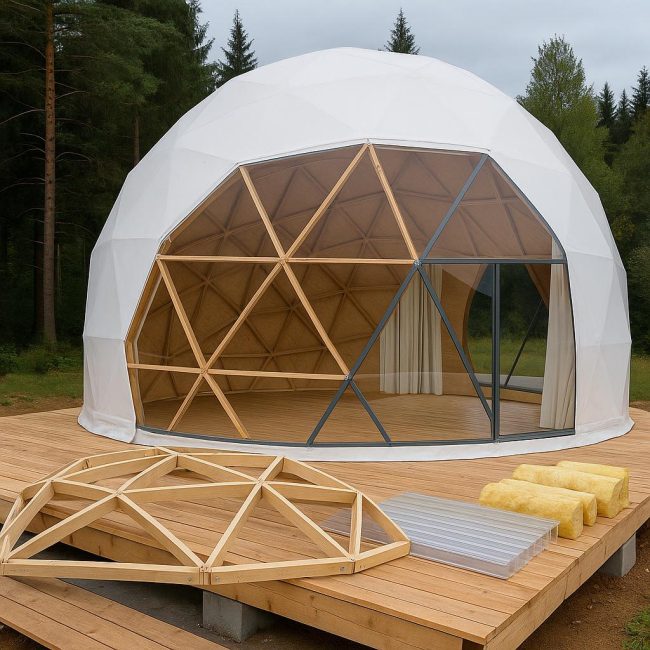
The basis of any dome glamping is geodetic structure, consisting of triangular elements forming a sphere or part of one. This shape allows for even load distribution, making the structure resistant to wind, snow, and even seismic activity.
There are two main frame options:
- Metal frame — usually made of galvanized steel or aluminum. It is durable, strong, corrosion-resistant, and requires little maintenance.
- Wooden frame — typically made from laminated veneer lumber or LVL beams. A more environmentally friendly and warm option, well suited for regions with a moderate climate. Requires regular treatment with antiseptics and moisture protection.
Assembling the frame does not require heavy construction equipment, and the dome structure can be erected in just a few days, especially when using factory-made kits.
Dome shell: protection and aesthetics
An outer covering is stretched or installed onto the frame, defining the glamping's appearance and protective properties. Various materials are used today, depending on the climate, budget, and desired design.
Popular outer shell options:
- PVC membrane — durable, waterproof, and UV-resistant. It's often used in glamping sites due to its durability (up to 15 years) and ability to retain its shape when stretched. It's available in a variety of colors, including translucent options.
- Polycarbonate — used for rigid casings, suitable for year-round use. Provides excellent light transmission, and transparent elements can be installed for panoramic views.
- Fiber cement panels And decorative shields — are used less frequently, mainly in stationary glamping sites with major interior finishing.
Some design solutions combine several materials: for example, an opaque PVC cover with a polycarbonate insert in the window area.
Insulation: How to conserve heat
If glamping dome If a building is planned for year-round use, especially in northern regions, high-quality insulation is essential. Proper thermal insulation minimizes heating costs and creates a cozy atmosphere even in sub-zero temperatures.
The most commonly used materials are:
- Mineral wool (stone or glass) - a reliable and non-flammable option with good heat and sound insulation properties.
- Polyurethane foam — a spray-on material that fills all cracks and provides a seal. However, it requires professional application.
- Ecowool — a more environmentally friendly and “breathable” material, well suited for wooden domes.
Insulation is installed between the interior finish and the exterior cladding. The thickness of the insulation depends on climate conditions: in central Russia, 100–150 mm of mineral wool is usually sufficient, while in the north, up to 200 mm is needed.
It is important to remember about vapor barriers and ventilation gaps to avoid condensation and mold formation.
Ventilation: comfort and health
The dome shape is good because it promotes natural air circulation. However, to ensure a healthy microclimate, it is necessary well-thought-out ventilation system — especially in sealed insulated domes.
Ventilation options:
- Supply and exhaust system With heat recovery—the most efficient solution for winter use. It provides a constant supply of fresh air without energy loss.
- Natural ventilation — due to the upper and lower vents (windows), however, it depends on the outside temperature and weather conditions.
- Air conditioners with dehumidification function — an additional way to maintain the microclimate in summer.
Without proper ventilation, moisture can accumulate inside the dome, especially in high humidity or if there is a shower and kitchen.
Panoramic windows: aesthetics and light
One of the striking visual elements that makes dome glamping so attractive is view windowsThey are most often installed in the southern part of the structure and offer panoramic views of a lake, forest, mountains, or the sky.
How windows are implemented in dome glampings:
- Polycarbonate inserts — can occupy up to 1/3 of the dome surface, have high impact resistance and UV protection.
- Triplex glass units — used in premium versions, provide thermal and sound insulation.
- Mechanical or automatic curtains - protect from sunlight and provide privacy.
Panoramic windows are not only aesthetically pleasing, but also a source of natural light, which is especially important during the colder months.
Interior decoration and engineering
To glamping dome was not just a temporary shelter, but a full-fledged space for relaxation, with great attention paid to the interior decoration.
Possible elements:
- Warm floors (water or electric);
- Wood or plywood finishing - warm, environmentally friendly atmosphere;
- Fireplace or bio-fireplace - creates coziness in the cold season;
- Built-in furniture - helps to use space efficiently.
Engineering systems include electrical wiring, lighting, water supply and sewerage – everything like in a country house.
Conclusion
Modern dome glamping sites are the result of a fusion of engineering, architectural aesthetics, and the philosophy of natural recreation. The right choice of materials, high-quality insulation, thoughtful ventilation, and spectacular views transform these structures into comfortable, energy-efficient, and durable spaces.
Unlike traditional campsites, the dome format allows you to relax not only in summer but also during the coldest months, remaining in harmony with the surrounding nature without sacrificing your usual level of comfort. That's why glamping dome continues to gain popularity among travelers, architects and investors around the world.