Choosing the right building material for a year-round home is one of the most crucial steps, determining not only the budget and construction timeline, but also future comfort, durability, and operating costs. Today's market offers a variety of options, such as turnkey ceramic block homes or aerated concrete homes, each with its own unique characteristics.
Main criteria for material selection
Before delving into the variety of building materials, it's worth defining the key requirements for your future home. These parameters will help narrow your search and make an informed choice.
What to pay attention to first:
- Thermal insulation. The material's ability to retain heat directly impacts heating costs during the cold season.
- Strength and durability. A home should be a reliable fortress for generations to come, so strength and resistance to external influences are important.
- Eco-friendliness. The material should not emit harmful substances, creating a healthy indoor climate.
- Fire safety. The material's high fire resistance ensures the safety of your family and property.
- Cost. The price-quality ratio plays a significant role in the final decision.
- Construction speed. Some technologies allow for significantly faster construction, which can be critical.
Popular construction materials
Today, developers often choose between proven classics and modern technological solutions.
Modern block materials:
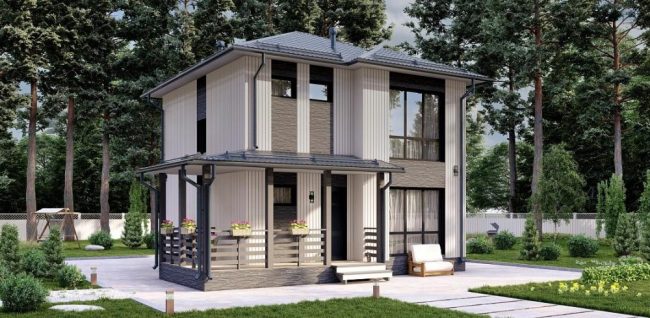
- Aerated concrete. A lightweight and warm material that's easy to work with and allows for faster construction. Its porous structure retains heat well, reducing heating costs. Ready-made aerated concrete house plans offer a variety of architectural solutions.
- Ceramic blocks. This material combines the advantages of brick with modern technology. It's environmentally friendly, made from clay, and offers excellent thermal and sound insulation. When you order a house made from ceramic blocks, you can be assured of the highest quality workmanship and adherence to the technology.
Brick is rightfully considered one of the most reliable, time-tested materials. It is strong, durable, fireproof, and provides excellent noise insulation. However, brick construction is a lengthy and expensive process, requiring a substantial foundation.
Wooden houses are attractive for their eco-friendliness and create a uniquely cozy atmosphere. Modern wood processing technologies allow for the construction of warm and durable homes. Disadvantages include the need for regular maintenance and the material's flammability.
The choice of material for building a house depends on individual priorities, regional climatic conditions, and financial capabilities.