How to read a house plan using construction drawings is a question that many future homeowners face. After receiving a set of documents, the customer is faced with a multitude of confusing lines, symbols, and numbers. Meanwhile, it is these drawings that truly capture the essence of the future building. Understanding the design documentation helps avoid mistakes during construction. It will also help you manage contractors and make informed decisions during construction. If necessary, development of a project for an individual residential buildingFor drawings and professional advice, you can consult with companies such as ProjectMinsk.
What types of house design drawings are there?
The house plan consists of several sections. Each covers a specific stage of construction and contains its own types of drawings. The main ones are:
- Floor plans show the locations of walls, doors, windows, stairs, and partitions. The first floor plan is a good place to start when getting to know the project.
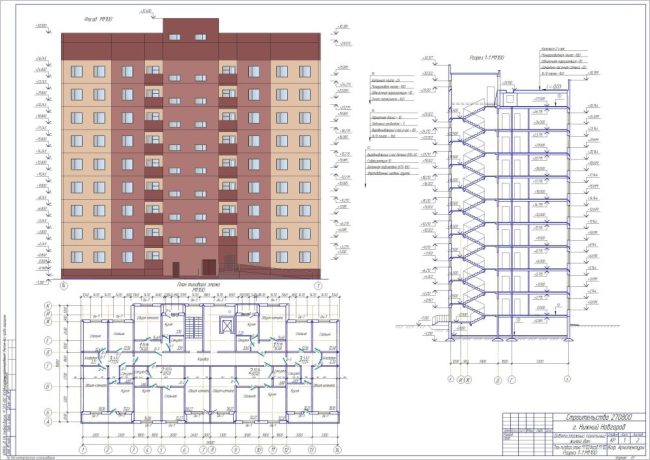
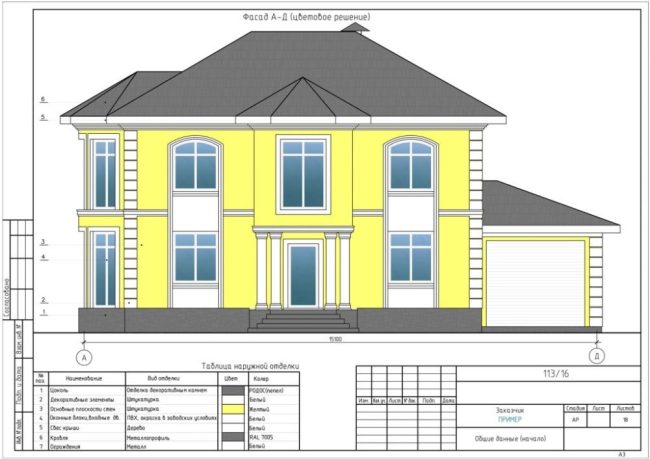
- Facades depict the house's exterior from all four sides. The facades indicate finishing materials, wall heights, opening sizes, and decorative elements.
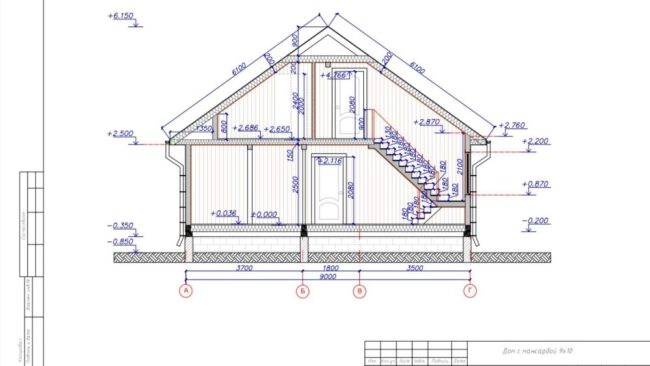
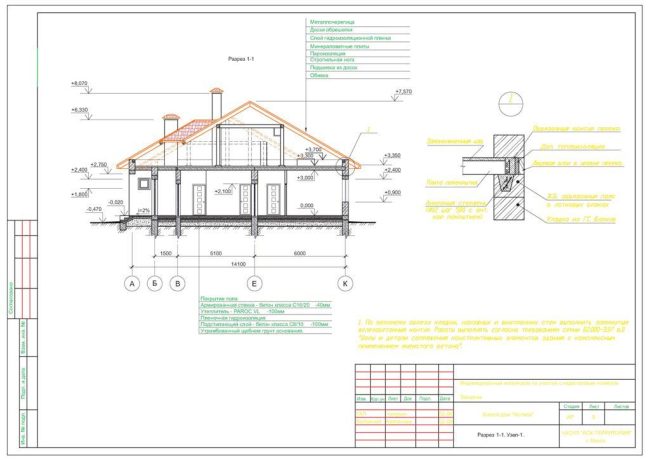
- Sections - show the "internal structure" of a building, showing how the floors, roof and foundation are arranged.
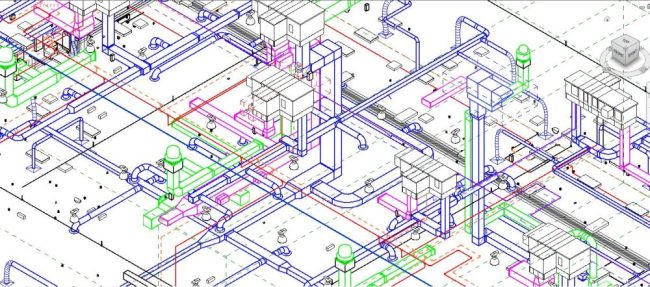
- Engineering systems diagrams include heating, electrical, water supply and ventilation systems.
- Units and parts are fragments of complex structural elements where reinforcement, insulation and finishing layers are indicated.
Understanding how to read a house plan is easy if you know the purpose of each type of drawing. You can quickly navigate the design documentation and understand where to find the information you need.
How to read a house plan of different scales?
Scale is the relationship between the actual dimensions of an object and its representation on paper. Construction drawings most often use a scale of 1:100 or 1:50. This means that one centimeter on a sheet of paper corresponds to one meter or half a meter in reality.
To correctly determine the scale, pay attention to the caption at the bottom of each sheet. For example, the caption "M 1:100" indicates that 1 cm on the drawing corresponds to 1 m on the site. This allows you to visually assess the actual dimensions of the rooms and their relationship.

Basic elements of house design drawings
To understand what's depicted on a plan and how to read a house plan, it's important to know how the main building elements are designated. At first glance, the lines and symbols may seem random, but each element has its own graphic standard. An apartment or house design project includes:
- Walls are thick solid lines that are load-bearing structures; thin ones are partitions.
- Windows are rectangles with intersections or dotted lines indicating sashes.
- Doors - arcs indicating the direction of opening of the door leaf.
- Stairs are parallel lines with arrows indicating the direction of ascent.
- Height marks are numbers in circles that indicate the floor or ceiling level relative to the zero mark.
- Dimension lines are placed outside the outline and show the length, width, and height of the elements.
Understanding these symbols will help you easily understand how to read a house plan, layout, elevations, and sections.
How to read a house plan in section?
The section with nodes and cross-sections is one of the most technically important. It shows how the individual building elements are connected: walls and floors, roof trusses, plinth, and foundation. These components represent the following:
- A sectional view is a "cut" of the structure that helps you see how the building is constructed from the inside. It allows you to determine the location of the floor, the ceiling height, and the composition of the roofing structure.
- A unit is a large fragment that shows in detail how materials are connected. For example, how a wall meets a roof or how a window opening is insulated.
Why is it important to be able to read house plans on blueprints?
Understanding architectural documents allows the client to actively participate in construction. You will be able to monitor the quality of work, promptly spot any discrepancies with the design, and avoid costly mistakes. sample architectural design of a house, you can control all stages of work.
Reading design documentation is an important part of preparing for construction. By understanding the main types of drawings, symbols, and scales, you can confidently understand what the house will look like, where the utilities are located, and what materials are included in the design.
If you're unsure of your abilities, you can always turn to specialists. For example, companies like ProjectMinsk can help develop a project for any task, providing a complete documentation package and explaining how to read a house plan so that every element of your future home is clear and thought out down to the last detail.