Over the past decade and a half, private housing has undergone a significant transformation: technologies, approaches to process organization, and the requirements of future owners have all changed. Even in the early 2010s, many projects were created using templates, and quality control depended primarily on the experience of a specific team. Today, the market has evolved to the point that turnkey house construction has become a standard that combines technology, budget predictability, and contractor responsibility for the final result. At the same time, the level of requirements for comfort, energy efficiency, and the appearance of private homes has increased, pushing the industry toward a major overhaul.
- The rise of technology: from traditional methods to digitalization
- Changing customer preferences
- Contractors have become larger and more professional
- Architectural changes: from standard boxes to individuality
- Construction economics have become clearer
- Accelerating the pace of construction
- Urban infrastructure and remote work have accelerated market growth.
- Results: The industry has become mature and quality-oriented
The rise of technology: from traditional methods to digitalization
Fifteen years ago, the private homebuilding market was fragmented: numerous small contractors offered a limited range of services, often working without clear design and formal commitments. This changed with the emergence of integrated companies that began implementing industrial construction standards in individual projects.
Digital visualization tools, 3D models, and BIM technologies have emerged, allowing for early assessment of layouts, utility system placement, and material volumes. Clients receive not just abstract drawings, but a realistic understanding of the future home. This has reduced the number of errors, improved timeliness, and made the industry more transparent.
New building materials also contributed to this trend. Aerated concrete, laminated timber, energy-efficient panels, and modern roofing materials have all become more accessible. These technologies have provided better thermal insulation, durability, and predictability. As the market has become more competitive, material manufacturers have accelerated the development of their product lines, further improving the quality of private construction.
Changing customer preferences
While in the 2010s, the primary goal was to construct a permanent structure, today the focus is on comfort, functionality, and appearance. Modern homeowners strive for energy efficiency, autonomy, aesthetics, and the rational use of space.
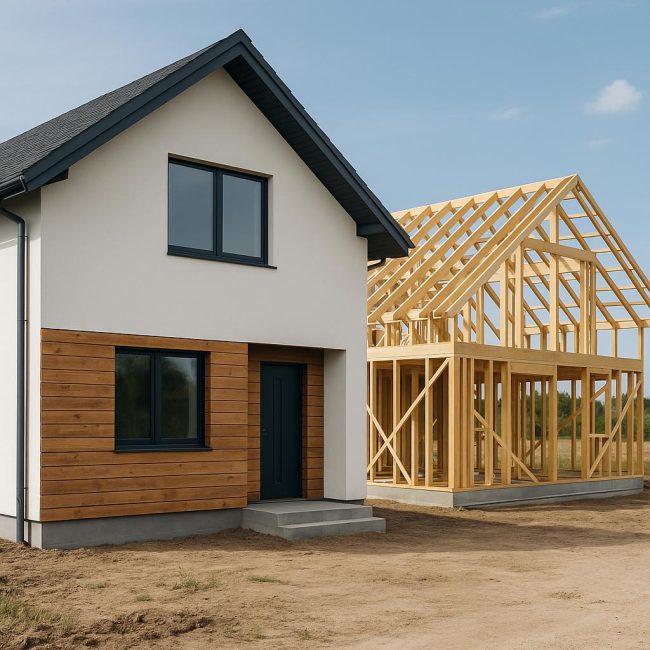
The advent of smart engineering systems—from automated heating controls to intelligent ventilation—has made private homes more technologically advanced. Now, users want more than just walls and a roof, but a well-designed structure designed for minimal operating costs. This is why the concept of a home is increasingly being used. turnkey construction of cottages, which includes not only the construction of the frame, but also well-thought-out engineering, landscaping solutions, and the installation of security systems.
Contractors have become larger and more professional
The market gradually eliminated the casual performers. Increased competition, higher standards, and stricter consumer control meant that only companies capable of ensuring a consistent level of quality survived.
Modern construction companies offer a comprehensive range of services: design, material selection, construction, finishing, utility commissioning, and subsequent warranty service. This approach minimizes risks and ensures that the building will meet the design specifications.
Furthermore, the legal component has been strengthened. Contracts have become more transparent, estimates more detailed, and responsibilities more clearly defined. Insurance instruments, legal services, and standardized contract forms have emerged. All this has increased trust in the industry and made construction more civilized.
Architectural changes: from standard boxes to individuality
In the early 2010s, private homes were largely monotonous. Simple rectangular shapes, standard layouts, and a minimal set of architectural solutions predominated. Now, designs that combine individuality and functionality are in demand.
Among the current areas:
- open spaces with panoramic glazing;
- layouts with master bedrooms and private areas;
- integration of terraces, exploitable roofs, second-level spaces;
- a combination of natural and high-tech materials in facade finishing;
- minimalist and energy efficient solutions.
The development of architecture was a direct consequence of the market's shift to a higher level of professionalism. It became important not only to build a house but also to create a well-designed living environment.
Construction economics have become clearer
Previously, clients faced variable estimates, unexpected additional expenses, and the inability to accurately calculate project costs. With increased competition and technological advancement, processes have become more transparent.
Estimates are generated based on detailed design. Materials have standard specifications, and contractors use digital cost-monitoring tools. This allows for an up-front understanding of the final budget.
Companies' level of financial responsibility has also increased. Warranties, service departments, and scheduled specialist visits have been established. Clients receive a fully managed process with predictable results, rather than a "whatever happens" service.
Accelerating the pace of construction
With the advent of modern technology and improved logistics, building a private home is no longer a seasonal process. Innovative materials allow for year-round construction, while factory-prepared structural elements significantly speed up the construction process.
Modular and combined solutions have become increasingly popular. Some building elements are assembled at a high-precision factory, with only assembly performed on-site. This reduces the risk of errors and ensures consistent quality.
Urban infrastructure and remote work have accelerated market growth.
Improved infrastructure in the suburbs—developing roads, internet, and services—has made suburban life more convenient. At the same time, the rise of remote work has allowed thousands of people to move from cities to private homes.
Demand has grown not only for traditional cottages but also for compact, energy-efficient homes for year-round living. This has spurred the development of new architectural styles, engineering solutions, and technologies.
Results: The industry has become mature and quality-oriented
Over the past 10-15 years, the private construction market has evolved from disparate services to a comprehensive system, where every stage is subject to a common quality standard. Materials, technologies, architecture, legal relations, and the very approach to housing construction have changed.
Private housing construction is no longer a chaotic set of solutions, but a well-thought-out industry aimed at creating comfortable, safe, and energy-efficient homes. Development continues, and it's clear that in the coming years, the market will become even more technologically advanced and customer-focused.