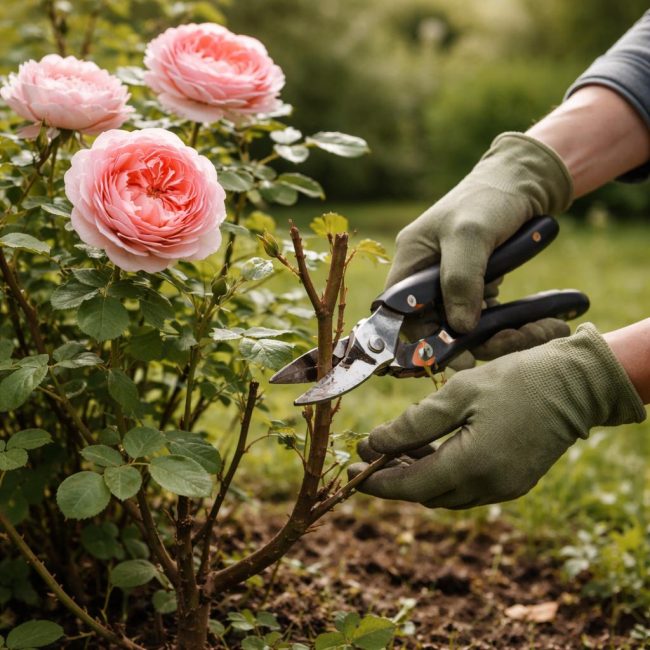
Austin roses, or English roses, are renowned for their beautiful flowers and fragrance. They are the result of the work of renowned English gardener David Austin, who dedicated his life to creating new varieties that combine the best qualities of both ancient and modern roses. These plants require special attention, especially when it comes time to prune in the spring. Pruning Austin roses is an important part of their care, helping them maintain health, improve their appearance, and promote more profuse blooms. However, when approaching this process, it's important to consider the characteristics of the variety and avoid any mistakes that could negatively impact the plant.
When to prune Austin roses in spring
In spring, Austin roses are usually pruned in late March or early April, when the threat of frost has passed and the buds on the plant are beginning to emerge. It's important not to rush this process, as pruning too early can result in bud damage from late frosts. The ideal time is when temperatures stabilize at between 5°C and 10°C.
How to prune Austin roses
Pruning Austin roses in spring involves several important steps. The main goal is to remove old, damaged, and diseased shoots and shape the bush so it looks compact and bushy. Pruning improves air circulation and prevents fungal diseases.
- Removing old and damaged branches
The first step in pruning is removing all dead, damaged, or frozen branches. These areas can be considered weak links, as they will not produce new growth and will only drain the plant's energy. Such shoots should be cut back to the healthy tissue level, where they are beginning to green up.
- Bush formation
Austin roses tend to grow vigorously, which can lead to a sparse appearance. To create a compact bush, prune all old shoots, including those growing inward. This not only improves the appearance but also ensures adequate light exposure to all parts of the plant, which is important for its health.
- Pruning flower shoots
One key step is removing old flower stems that have already bloomed last season. These stems will not produce new flowers, and pruning them stimulates the growth of new, healthy stems that will produce beautiful roses this season.
- Shortening strong shoots
To encourage bushiness and more abundant flowering, prune strong, long shoots, shortening them by 1/3 or even 50%. This will allow the plant to produce more side shoots, which will bloom later in the season.
- Thinning branches
To improve air circulation within the bush and prevent the development of fungal diseases, thin out the rose by removing some branches that are growing too close together. No more than one-third of the shoots should be pruned.
Pruning principles depending on the variety
Not all Austin rose varieties require the same pruning. Some may be more cold-hardy, while others are more sensitive. For example, varieties that produce beautiful, large blooms should be pruned sparingly, so as not to reduce their ornamental value. Conversely, more compact varieties should be pruned more aggressively to promote lush blooms.
Mistakes to Avoid When Pruning Austin Roses
- Pruning too early
Pruning too early, when the plants haven't yet recovered from winter, can damage buds. Always wait until the bushes are actively growing.
- Pruning only old branches
Pruning only old shoots isn't the best practice. To stimulate new growth, you should also pay attention to healthy shoots, shortening them to encourage the growth of lateral branches.
- Unreasonable reduction in shoot length
Trimming shoots to a minimum length can weaken the plant. Leave enough length to allow the rose to develop normally and delight you with abundant blooms.
- Use of blunt instruments
Dull scissors or pruning shears can damage the stems, creating a breeding ground for bacteria and fungal infections. Use sharp tools to ensure a clean cut.
The nuances of pruning Austin roses
When pruning, it's important to remember that each Austin rose is unique and requires a tailored approach. Some varieties require minimal pruning, while others can be pruned significantly more heavily to encourage new growth. It's also important to note that Austin roses often have a tendency to develop long shoots, which can be susceptible to disease if not removed promptly.
Why Austin roses can be difficult to care for
Many gardeners believe that pruning Austin roses is a labor-intensive and complex process that requires knowledge and experience. However, with careful and expert approach, you can create a beautiful bush that will delight you with its flowers and fragrance for many years. The key is to practice moderation, avoid over-pruning, and do it at the right time of year.
Conclusion
Pruning Austin roses in spring is an important process that requires a basic understanding of agronomy and attention to detail. This not only helps improve the plant's appearance but also promotes its health, preventing disease and stimulating flowering. It's important to remember that each variety requires its own approach, and successful pruning is the key to beautiful, lush roses that will grace your garden all season long.