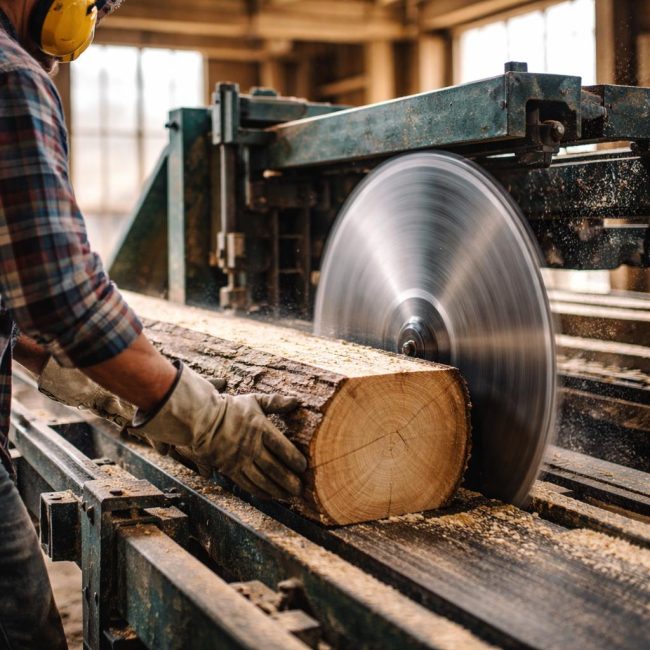
A circular sawmill is one of the most efficient and popular wood-cutting machines, widely used in construction, carpentry, and woodworking. This tool allows for quick and precise cutting of boards, beams, and other wood materials, ensuring a high level of productivity and precision. However, to ensure safe and effective sawing with a circular sawmill, it's important to understand how to use this equipment correctly.
What is a circular sawmill?
A circular sawmill is a specialized piece of equipment that uses a circular saw blade to cut wood. Unlike other saw types, a circular sawmill produces very smooth and precise cuts, making it ideal for large-volume work, such as in sawmills or woodworking shops. It can be operated in both handheld and stationary modes, providing flexibility.
How a circular sawmill works
A circular sawmill uses a rotating saw blade, which, when it engages the wood, creates a kerf. Circular saws typically have high speeds, allowing for quick and efficient cutting. Saw blades come in a variety of diameters, allowing you to select the optimal tool depending on the thickness and hardness of the wood.
Most circular saws use a material feed system, which significantly increases operating speed and reduces operator strain. It's important to note that efficient sawing depends not only on the quality of the machine itself but also on proper setup and adherence to safety precautions.
How to saw on a circular sawmill: practical tips
Sawing on a circular sawmill is not just a mechanical action, but a process that requires precision, adherence to technology, and consideration of certain specific features of working with different types of wood.
Correct equipment setup
Before starting work, it's important to properly set up the sawmill. Make sure the blade is installed correctly and its mountings are securely fastened. It's also important to check the blade angle to ensure it matches the desired cutting depth and angle.
Wood preparation
To ensure high-quality cutting of wood, it must be prepared beforehand. Boards or beams must be clear of dirt, knots, and other obstructions that could interfere with the sawing process. Also, make sure the wood is level and stable, otherwise this could affect the cutting accuracy.
Sawing technique
When sawing, try to hold the wood steady so that it doesn't move or slide across the work surface. It's important to saw smoothly, without jerking. This not only ensures more accurate cuts but also increases the lifespan of the sawmill. Always work at a safe distance from moving parts.
Use of protective equipment
A circular saw is powerful equipment, and operating it requires all safety precautions. Be sure to wear safety glasses, earmuffs, and gloves. It's also important to ensure that no one is in the immediate vicinity of the work area.
Regular maintenance
A circular sawmill, like any other piece of equipment, requires regular maintenance. This includes monitoring the condition of the saw blades, sharpening them, and maintaining the motor. After each use, it is recommended to clean the saw of wood dust and dirt.
Limitations and nuances of using a circular sawmill
Despite the high efficiency and precision of circular saws, they have several limitations. First, they are best suited for cutting relatively soft wood. When working with harder woods, special blades with additional cooling or other devices may be required.
Secondly, a circular sawmill may not be the best choice for sawing very thick logs or blanks. In such cases, specialized machines such as band sawmills are better.
Common misconceptions
One common misconception is that a circular sawmill can cut absolutely any material. However, this is not true. For example, using a circular sawmill to cut metal or stone can lead to rapid blade wear and damage to the equipment. Furthermore, many believe that operating a circular sawmill requires little caution because it's just a saw. In fact, using this tool without proper safety precautions can lead to injury.
Conclusion
A circular sawmill is a powerful and efficient wood cutting tool that, when properly configured and used, can significantly simplify various construction and repair projects. Adhering to safety precautions, regular maintenance, and proper equipment setup are key to getting the most out of this tool.