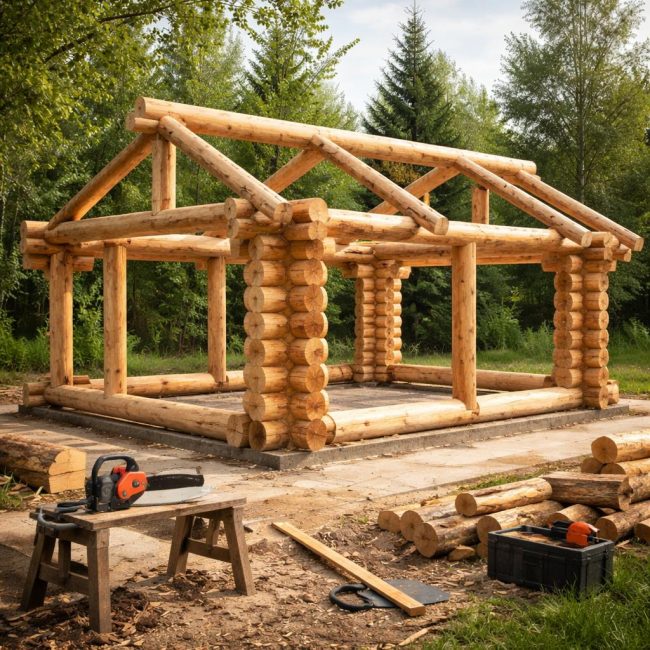
When it comes to building a house, the frame is the foundation upon which everything else is built. Building a log frame yourself is a completely doable task, provided you consider a few key aspects. In this article, we'll take a detailed look at what's needed to create a reliable and durable structure, what to consider when choosing materials, and how to avoid common mistakes.
Introductory context
A log frame is not only an efficient but also an aesthetically pleasing construction option. Unlike concrete or brick, wood has unique properties: it's natural, provides thermal insulation, and gives the home a unique atmosphere. At the same time, wood is a living material that requires careful installation.
However, it's important to understand that building a log frame house yourself is no easy task. It requires technical know-how, the ability to use tools, and an understanding of how to properly process the material to prevent structural failure. In this article, we'll explain how to build a log frame house, which materials are best, and what considerations to keep in mind when undertaking this project.
Basic principles of frame construction
A log frame is more than just a few vertical posts and horizontal beams. It's a system that must support the weight of the entire roof and walls, which means its construction requires careful attention at every step.
- Selection of materialFor frame construction, logs of a certain thickness and quality are preferred. They must be properly processed to prevent rot and decay. Logs are usually selected from coniferous species (pine, spruce), which are less susceptible to external factors and have good thermal insulation properties.
- Preparing the baseBefore starting to build the frame, it's important to prepare the foundation—a strong, level foundation. The logs will rest on this surface, and if the foundation isn't strong or level enough, the entire frame may warp.
- The process of erecting the frameOnce the foundation is prepared, you can begin assembling the frame structure. This process doesn't require any particularly complex techniques, but it does require following a number of rules: for example, it's important to properly prepare the logs (remove bark, treat with preservatives) and lay them correctly to avoid settling and warping.
How it works in practice
In practice, the process of creating a frame structure from logs usually includes several main stages:
- Preparation of materialFirst, you need to prepare the logs, cut them to the required length, and treat them with antiseptics to protect them from rot and pests.
- Installation of the foundationThe log frame must be placed on a solid foundation, which can be either concrete or wood. It's important that the foundation be level and level, otherwise even high-quality logs may warp over time.
- Creating a frameworkThe log frame is assembled on site. The first step is installing the posts that will support the future walls. The next step is connecting these posts together using horizontal beams and crossbars. It's also important to properly secure the logs in the corners to prevent them from drying out or warping.
- Processing and insulationOnce the frame is installed, it's important to treat it with protective compounds to prevent damage and exposure to external factors. Insulating the walls and ceiling can also be done at this stage.
Limitations and nuances
A log frame is a durable solution, but to ensure its successful implementation, it's important to consider a few key points:
- Quality of materialNot all logs are created equal. Using overly damp or damaged logs can lead to future problems, including shrinkage and warping.
- Drying processLogs must be properly dried before use. This will help prevent warping and cracking later.
- Technological featuresWhen building a timber-frame house, it's important to follow the correct laying technique. Incorrect laying can lead to poor thermal insulation properties and accelerated deterioration of the structure.
Common misconceptions
- "Log framing is easy"Although building a log frame seems like a fairly simple process, it requires a good knowledge of construction and careful selection of materials. Improper preparation or installation can lead to serious consequences.
- "All logs fit"This is not true. You need to carefully select your logs, checking them for cracks, rot, or damage.
- "Technology is universal for everyone"Each project is unique, and the log frame must be designed taking into account specific conditions: the foundation, the external environment, and local climatic conditions.
Conclusion
Building a log frame house yourself is an accessible task for those willing to invest the time to research the materials, prepare properly, and utilize modern technologies. Key aspects include choosing high-quality materials, paying attention to technical details, and laying the logs correctly. By taking these factors into account, you can build a reliable and durable frame that will become the foundation for a comfortable and warm home.