Using a chainsaw is not only a matter of convenience but also safety. Questions often arise about how to properly operate this tool to minimize risks and achieve good results. Many novice and even experienced users encounter various difficulties, whether due to cutting errors, improper technique, or improper equipment. In this article, we'll take a detailed look at what aspects to consider when working with a chainsaw to avoid common problems and maximize efficiency.
What to consider before you start sawing with a chainsaw
Chainsaw sawing requires attention, the right approach, and adherence to some simple but important rules. First, it's important to understand the factors that influence the quality of the work. The most important of these are:
- Choosing the right toolA chainsaw isn't a universal tool, but rather specialized equipment designed for different types of work. A standard chainsaw is suitable for small and medium-sized tasks, but for more serious tasks, such as felling trees or cutting firewood, a model with a more powerful engine and a longer bar is recommended.
- Preparing the chainsawBefore you begin working, make sure your chainsaw is in good working order. Check the oil level, the chain's condition and tension, and ensure the fuel mixture is properly mixed.
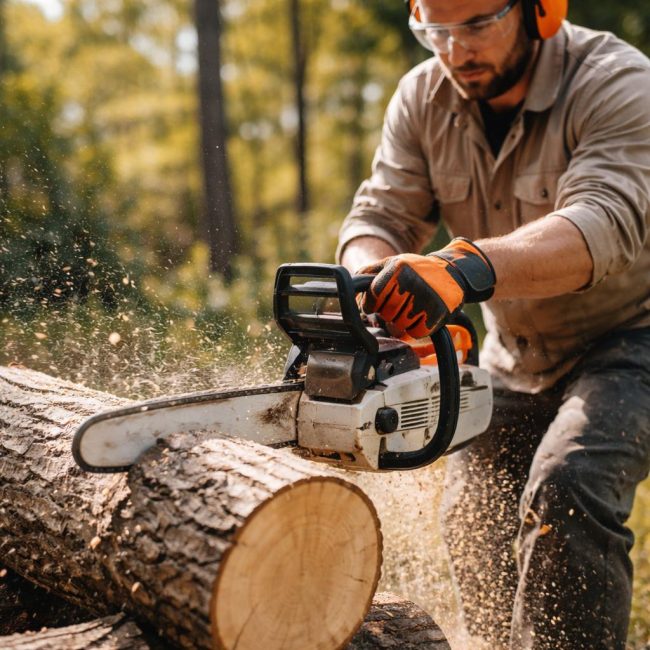
- Wearing protective equipmentA chainsaw is a powerful tool that can be dangerous if safety precautions are not taken. Always wear safety glasses, ear muffs, gloves, and a protective suit. Safety boots with steel toes and non-slip soles are also recommended.
Principles of correct sawing
The main mistake many chainsaw users make is improper sawing technique. To avoid this, it's important to follow a few simple rules:
- Selecting a position for sawingBefore you begin, find a comfortable and safe working position. You should saw standing up, not sitting or bending over. It's best if your body is in a comfortable position relative to the chainsaw bar, and your arms are in the correct position. It's especially important to avoid standing on slippery or uneven surfaces.
- Hold the saw correctlyProper grip is one of the key aspects of chainsaw safety. Both hands should hold the tool by the handles. The palm of your left hand should be on the top handle, and your right hand on the main handle. This will give you better control of the sawing process and prevent injury.
- Don't put pressure on the sawWhen working, it's important to remember not to apply too much pressure to the tool. The chainsaw should operate under its own power. Excessive pressure can cause overheating, rapid chain wear, or even damage to the mechanism.
- Sawing techniqueWhen starting to saw, avoid making quick, jerky movements. Approach the task smoothly and with concentration; this will ensure a smoother and safer cut. Cut at full speed to avoid chain jamming.
Chainsaw use scenarios and their consequences
Depending on the task, approaches to sawing can vary greatly. Let's look at several typical scenarios.
- Sawing woodThis is the most common task for a chainsaw. It's important to start cutting from the opposite side of the trunk to avoid the tree leaning and falling in an undesirable direction. When working with large trees, consider wind direction and any obstacles in the fall.
- Sawing firewood: Proper technique is also important here. When cutting a thick log, you need to work from both sides, gradually moving toward the center to avoid bending or damaging the chain.
- Working in confined spacesIn such cases, a chainsaw may not be as convenient as in open spaces. It's important to be careful not to damage surrounding objects or injure yourself.
Limitations and nuances
Not all chainsaw work is suitable for all locations or conditions. For example, working with a chainsaw in rain or snow is not recommended. Wet surfaces make the wood slippery and can wear the chain quickly.
Also, always consider your physical capabilities. Working with heavy tools for long periods of time can lead to fatigue, which increases the risk of injury.
Common misconceptions about using a chainsaw
Many novice chainsaw users make several common mistakes:
- Underestimating the importance of maintenanceSome people believe that a chainsaw will run without problems simply by filling it with fuel. But regular maintenance is the key to long-lasting performance.
- Frequent use of the saw at full speedAlthough a chainsaw can operate at high power, such use often leads to rapid engine failure and overheating.
- Sawing unprepared wood materialsSome people ignore important factors such as dry or damaged areas in the wood, which can lead to saw instability and jamming.
Conclusion
Proper use of a chainsaw is essential for safety and quality work. By applying basic sawing principles, paying attention to all details, and avoiding common mistakes, you can work effectively and safely with this tool. It's important to remember that the more you use a chainsaw, the more experience you gain, but without following safety and maintenance rules, even experienced users can encounter problems.