Metal products have become an integral part of everyday life: from building structures and car parts to household fittings and interior items. However, over time, even the most durable metals begin to fade, corrode, and deteriorate under the influence of the environment. One of the most effective ways to extend their service life is galvanic coating, which is widely used in industry, construction, and everyday life. But this is only one of many protection methods, each with its own characteristics, advantages, and applications.
Why does metal need protection?
Metals, especially ferrous ones (iron, steel), are susceptible to oxidation when exposed to moisture and oxygen. Corrosion damages the structure of the material, reduces its strength, and can lead to complete failure of the product. Furthermore, the decorative properties of the metal deteriorate over time—it becomes dull, stained, and coated with a patina.
Exposure to atmospheric factors is not limited to metal. Chemical reagents, salt spray, temperature fluctuations, and mechanical abrasion all contribute to accelerated wear. Therefore, proper metal protection not only extends service life but also increases operational reliability and reduces repair and replacement costs.
Basic methods of protecting metal products
Painting and paint coatings
One of the most common and affordable methods. Special anti-corrosion paints create a protective barrier, preventing metal from coming into contact with aggressive environments. However, such coatings are susceptible to mechanical damage and require periodic renewal.
Pros: ease of application, wide choice of colours, low cost.
Cons: insufficient resistance to high humidity and mechanical stress.
Electroplating
The method is based on the electrochemical deposition of one metal onto the surface of another. Depending on the requirements, zinc, nickel, chromium, copper, tin, and even precious metals are used. galvanic coating of metal Provides not only corrosion protection but also a decorative shine, abrasion resistance and heat resistance.
Application examples:
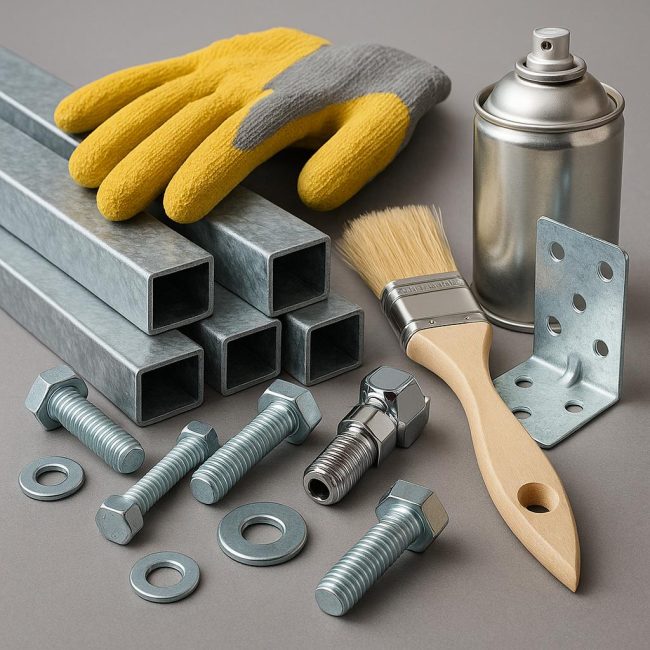
- Galvanizing of bolts, nuts, frames;
- Chrome plating of automotive and plumbing parts;
- Nickel plating of electronic components.
Pros: high corrosion resistance, durability, uniform coating.
Cons: the need for specialized equipment, environmental impact due to improper disposal of electrolytes.
Powder coating
Powder coating creates a thick, durable, and resilient layer that evenly covers the surface of the product. After application, the paint is cured in a heat chamber, creating a hard polymer shield.
Pros: Excellent adhesion, scratch and chemical resistance, environmentally friendly.
Cons: difficulty of application at home, high requirements for preliminary preparation.
Hot-dip galvanizing
Metal products are dipped in molten zinc, forming a dense and durable coating. This method is often used for outdoor structures such as fences, trusses, pipes, and supports.
Pros: maximum resistance to corrosion, especially in external environmental conditions.
Cons: High processing temperatures limit application to certain types of products.
Anodizing
It is primarily used for aluminum. The electrolytic oxidation process forms a durable oxide layer on the surface that is resistant to corrosion and abrasion. Anodized metal is often painted in various colors, making it popular in architecture and design.
Pros: decorativeness, durability, scratch resistance.
Cons: limited types of metals (mainly aluminum).
How to choose a protection method
The choice of technology depends on:
- operating conditions (humidity, aggressiveness of the environment);
- functional purpose products (decor, supporting structure, moving mechanism);
- budget for processing;
- required service life and frequency of service.
For example, for mechanical parts operating under load and subject to abrasion, it's best to choose galvanic nickel or chrome plating. For outdoor metal structures, hot-dip galvanizing is a good choice. And in designer interiors, anodized panels and decorative powder coatings are popular.
Trends and Innovations
Modern metal protection technologies go beyond classic galvanizing and painting. The following are becoming increasingly common:
- Composite coatings, combining the properties of several materials;
- Nanocoatings, providing ultra-thin yet effective protection;
- Plasma and ion-plasma technologies, used in high-tech industries - from aviation to medicine.
In addition, environmental regulations and standards are forcing manufacturers to seek safer and more energy-efficient protection methods, leading to the active development of electrolyte-free and chromium-free compounds.
Conclusion
Extending the service life of metal products is impossible without the use of modern protective technologies. The choice of the appropriate method determines not only the durability of the product but also its aesthetics, functionality, and cost effectiveness. Galvanic coating of metal is just one option, but with proper selection and proper application, it can ensure years of reliable service even under the most challenging conditions. Understanding the available methods and their features helps both manufacturers and consumers make informed choices and preserve the value of metal products for years to come.