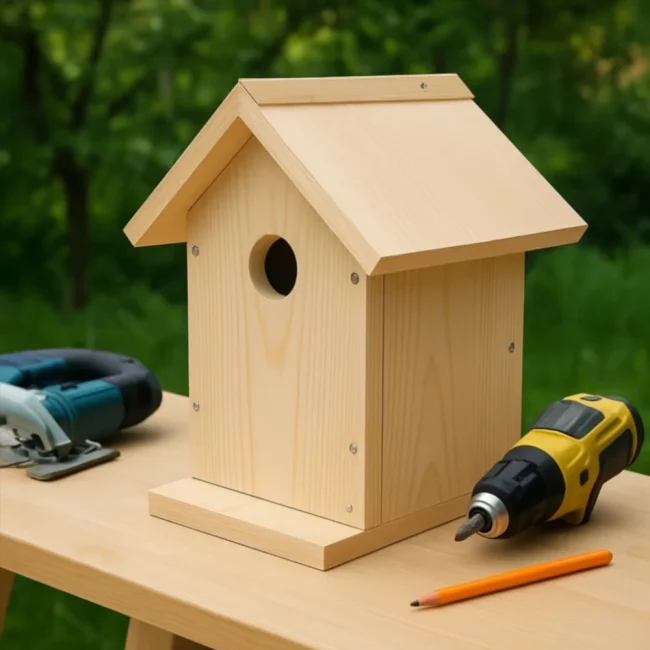
A birdhouse isn't just a decorative element of a garden or property; it's also a useful structure that can attract birds, which help control insect pests and create a cozy, natural atmosphere. Birdhouses made of plywood are especially popular—a durable, lightweight, and easy-to-work material. In this article, you'll find detailed instructions on how to build a high-quality plywood birdhouse yourself, without the help of professional carpenters or complex tools.
- Why make a birdhouse out of plywood?
- Choosing plywood: which one is suitable for a birdhouse?
- Necessary tools and materials
- Drawing and dimensions of a classic birdhouse
- Step-by-step instructions: how to build a birdhouse from plywood
- Installing a birdhouse on the property
- Caring for a birdhouse
- Additional tips
- Conclusion
Why make a birdhouse out of plywood?
Before you begin making your own, it's worth understanding why plywood is the best choice:
- Availability: plywood is easy to find in any hardware store, the price is reasonable.
- Ease of processing: plywood can be sawed, sanded and drilled easily, which is especially important for beginners.
- Low weight: the lightness of the finished structure allows it to be secured even to thin tree branches or to the walls of buildings.
- Eco-friendliness: When using safe adhesives, plywood does not pose a threat to birds.
Choosing plywood: which one is suitable for a birdhouse?
An outdoor birdhouse requires a material that can withstand humidity and temperature fluctuations. The following options are suitable:
- FSF plywood- waterproof, but with phenolic impregnation, not always environmentally friendly.
- Plywood FK (on urea resin)- less waterproof, but safe.
- Laminated plywood- resistant to moisture, but can be slippery, which is undesirable for birds.
The optimal choice— 10–15 mm thick FK plywood, additionally treated with a protective impregnation or natural drying oil.
Necessary tools and materials
To make a birdhouse from plywood with your own hands, prepare:
Materials:
- Plywood (thickness 12 mm), sheet 60×60 cm;
- Wood screws or finishing nails;
- PVA glue or wood glue;
- Stain, linseed oil or water-based paint (non-toxic);
- A loop or hook for fastening.
Tools:
- Jigsaw or hacksaw;
- Tape measure, ruler, set square;
- Pencil;
- Screwdriver or drill;
- Sandpaper (120-180 grit);
- Drill with a 35–50 mm spade bit (for the flight hole).
Drawing and dimensions of a classic birdhouse
Before assembly, be sure to draw a diagram. Approximate dimensions for a classic birdhouse, suitable for starlings, tits, and sparrows:
- Front and rear walls: 25 cm height × 20 cm width;
- Side walls: 25 cm height x 15 cm depth;
- Bottom: 15 × 15 cm;
- Roof: 25 × 20 cm (gable, each half);
- Diameter of the taphole: 4.5 cm (located at a height of 18 cm from the bottom edge).
Important: do not forget to make 2-3 small holes (3-4 mm) in the bottom for ventilation and water drainage.
Step-by-step instructions: how to build a birdhouse from plywood
Step 1: Marking and cutting
Draw the necessary elements on a sheet of plywood according to the drawing. Using a jigsaw or hacksaw, carefully cut out the pieces. Make sure the lines are straight, especially along the front panel where the entrance will be.
Step 2: Drilling a hole and ventilation
Carefully drill a hole in the front panel for the birds to enter. Be sure to sand the edges of the entrance hole to avoid burrs. Also drill ventilation holes in the bottom and under the roof of the side walls.
Step 3: Sanding the parts
All components should be thoroughly sanded, especially the interior. This will prevent injury to the birds and ensure the safety of the offspring. Interior surfaces can be left unpainted to prevent toxic fumes.
Step 4: Assembling the case
First, assemble the front, back, and side panels. Use wood glue and screws. Glue and fasten the corners one at a time, pressing firmly into place. Then install the bottom and secure it from below.
Step 5: Attaching the Roof
The roof should be removable or openable (e.g., hinged) to allow for cleaning. A gable roof should be joined at a 90° angle, and its sections should preferably be slightly longer to provide a rain shelter.
Step 6: Moisture Protection
Exterior surfaces can be treated with stain, natural paint, or drying oil. It's important to avoid varnishes and enamels with strong odors or solvents, as they are harmful to birds. Pay special attention to the plywood edges, which absorb moisture most quickly.
Installing a birdhouse on the property
Placement height- from 2.5 to 4 meters to ensure safety from cats and dogs.
Direction of the flight hole- to the southeast or east to avoid drafts and overheating.
Installation location:
- a tree with a thick branch;
- facade of a house or outbuilding;
- a fence or post reinforced with metal corners.
Important: The birdhouse shouldn't swing in the wind—vibrations disturb the birds. It's best to secure it firmly, for example, with a bracket, wire, or screws.
Caring for a birdhouse
The birdhouse needs to be regularly inspected and cleaned. This is done in the fall, after the birds have flown away:
- Open the roof or remove one of the elements;
- Remove old bedding, debris, feathers;
- Treat the insides with a weak solution of potassium permanganate or alcohol;
- Check for damage, cracks, and repair if necessary.
Cleaning is essential - any remaining nests may be a source of parasites or fungus.
Additional tips
- Do not install a perchunder the entrance - it makes it easier for predators to access.
- Do not use metal parts inside- They heat up in the heat.
- Don't paint the birdhouse in bright colors.- It scares the birds.
- Do not hang several birdhouses next to each other.- Birds are territorial and can fight.
Conclusion
A plywood birdhouse is a simple yet highly useful DIY project that you can build in just one day. This birdhouse will not only be an aesthetic addition to your property but also serve an important natural function. The birds attracted to it will become your allies in the fight against pests and will also create a vibrant atmosphere of comfort and tranquility.
By following these instructions and recommendations, you can create a safe, durable, and attractive birdhouse that will become a true home for your garden's feathered guests.