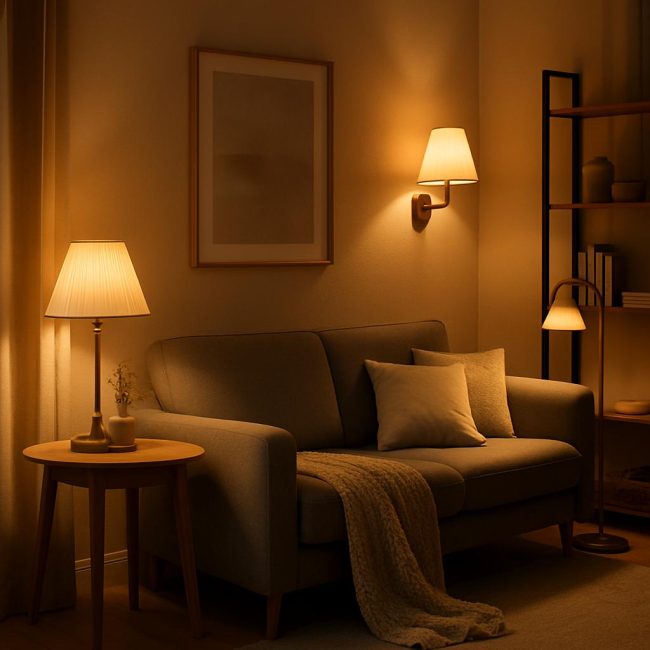
A home's cozy atmosphere is made up of many details: warm interior colors, pleasant-to-the-touch fabrics, favorite little touches—and, of course, lighting. Lighting can dramatically alter the perception of space: the same room can appear either cold and lifeless or warm and inviting—it all depends on how the lighting accents are placed.
Localized lighting plays a particularly important role here—soft, directional light that can highlight specific areas, create a cozy atmosphere, and emphasize the character of the interior. These light sources become more than just functional elements; they're part of the atmosphere: they dim the overall lighting, create a play of light and shadow, promote relaxation, and make the space truly livable. In this article, we'll explore how to effectively manage localized lighting to make your apartment warm, comfortable, and truly homey.
- What is local lighting and why is it needed?
- Local lighting as a tool for comfort
- Zoned Lighting: Practical Examples
- Relaxation and reading area
- Bedroom
- Kitchen and dining area
- Work corner
- Corridor and hallway
- Color Temperature and Light Type: How to Avoid Mistakes
- How to choose lamps to suit your interior
- Lighting scenario: don't turn on everything at once
- Conclusion
What is local lighting and why is it needed?
Spotlights are lighting fixtures designed to illuminate a specific area rather than the entire room. Unlike ambient lighting, which fills the entire space, spotlights are targeted, creating accents, reducing eye fatigue, setting the mood, and defining the space.
Such light sources include:
- table lamps;
- floor lamps;
- built-in spotlights;
- LED strips;
- wall lamps;
- lighting inside cabinets, in the kitchen or under shelves.
Localized lighting allows you to visually divide an apartment into functional zones without partitions. This is especially useful in small apartments, studios, and open floor plans.
Local lighting as a tool for comfort
Comfort begins with mood. Warm, soft light in the right spot can completely transform the feel of a room. Compare this: a bright overhead chandelier, illuminating the entire room, creates a businesslike or neutral atmosphere. But the warm light from a floor lamp next to a chair or the soft glow of a wall lamp by the bed evokes relaxation, peace, and home.
Here are some ways that local lighting can help create a cozy atmosphere:
- Forms soft shadows, which make the space more voluminous and “alive”;
- Eliminates the feeling of "hospital" brightness, which often arises from one central source;
- Creates intimacy and privacy, especially in the evening;
- Allows you to customize the light to suit your mood - include only what is needed right now.
Zoned Lighting: Practical Examples
To create truly comfortable lighting, it's important to think not about lighting fixtures in isolation from the interior, but about the functions that each area of the apartment performs.
Relaxation and reading area
Relevant here floor lamps And table lamps With a soft, warm light. They're convenient to place next to a chair or sofa, especially if you're reading or crafting. The light should be directed but not blinding.
Advice: Choose models with lampshades that provide diffused light—it's softer and more comfortable.
Bedroom
It's especially important to create a sense of privacy in this area. In addition to general lighting, localized lighting is essential—on both sides of the bed. This could be a table lamp or a wall sconce. The latter option is convenient because it frees up space on the nightstand.
Advantages of wall sconces for the bedroom: They don't take up space, are easy to turn on from a lying position, and can be directed exactly where needed—for example, at a book, not at your partner's face.
Kitchen and dining area
Kitchen lighting should be functional, but there's also a cozy feel. Spotlights under cabinets (for the countertop), lamps above the dining table, and accent lighting on open shelves all help visually highlight different areas.
Warm light above the table makes dinner feel more homey, even if it's just plain pasta.
Work corner
Even if you don't have a full-fledged office, localized lighting can help define your workspace. A desk lamp with adjustable tilt and color temperature will help you concentrate without straining your eyes.
Life hack: Cool neutral light (around 4000–5000K) promotes concentration, while warm light (2700–3000K) promotes relaxation.
Corridor and hallway
These areas are often overlooked, but they're where the first impression of an apartment is formed. Small spotlights, mirror backlighting, even a neat wall sconce—all of this makes the space feel lived-in and welcoming.
Color Temperature and Light Type: How to Avoid Mistakes
A very important parameter of comfort is color temperatureHow space is perceived depends on it.
- 2700–3000K (warm light): Ideal for bedrooms, living rooms, and relaxation areas, this light is reminiscent of sunsets or candlelight.
- 4000K (neutral): Suitable for the kitchen, hallway, bathroom – anywhere functionality is needed.
- 5000–6500K (cold): Suitable for task lighting or in a dressing room, but best avoided in living rooms.
Try to avoid "overexposure"—when warm and cool lights are on simultaneously in the same room. This creates visual discomfort.
How to choose lamps to suit your interior
Accent lighting isn't just about functionality; it's also a design element. When choosing a table lamp or sconce, consider the interior style:
- Loft: metal lampshades, exposed incandescent bulbs, rough geometry.
- Scandinavian style: white or pastel shades, natural wood, simple shapes.
- Classic: fabric lampshades, warm tones, bronze or gold elements.
- Modern minimalism: Hidden lighting, strict lines, monochrome.
If you want your lamps to blend into your interior, choose them according to the same principles as your furniture: color, shape, and material.
Lighting scenario: don't turn on everything at once
One of the mistakes in lighting is trying to illuminate the entire room at once. It's much more comfortable when you can turn on the lights. according to the script:
- in the morning - general overhead light;
- during the day - natural + illumination of the work area;
- in the evening - local sources: floor lamp, sconce, lamps at the head of the bed.
This approach is not only more comfortable, but also more economical. A key helper here can be smart lamps and systems that allow you to adjust brightness and color temperature.
Conclusion
Local lighting is much more than just lamps. It's a way to make your apartment feel personal, cozy, and vibrant. It's an opportunity to highlight details, zone the space, improve your mood, and even change the rhythm of your day.
A wall sconce, a floor lamp by the sofa, or under-cabinet lighting—all these elements work toward the same goal: creating an atmosphere you want to return to. In this sense, coziness isn't an abstraction, but the result of conscious decisions that begin with the right lighting.