Modern approaches to private construction are increasingly focused on reducing heat loss and improving building energy efficiency. Rising energy prices and stricter thermal insulation regulations make the choice of building materials and technologies critically important already at the design stage.
One such solution is the construction of houses with thermal panels, which allows for the combination of insulation and façade finishing in a single system. This technology has been actively adopted in recent years by companies such as https://fixit.washerhouse.com, working in the low-rise construction sector. Their practical experience shows that the use of thermal panels can be not only architecturally sound but also economically feasible when constructing homes in variable climates.
- What are thermal panels and why have they become popular?
- Why is building houses with thermal panels considered energy efficient?
- Advantages of building houses with thermal panels
- Quick installation
- Saving on materials and labor
- Variety of designs
- Resistance to climatic conditions
- Improved sound insulation
- Is the technology suitable for reconstruction?
- Thermal panels in the context of green construction
- Possible disadvantages and limitations
- Is it worth building a house with thermal panels?
- Conclusion
What are thermal panels and why have they become popular?
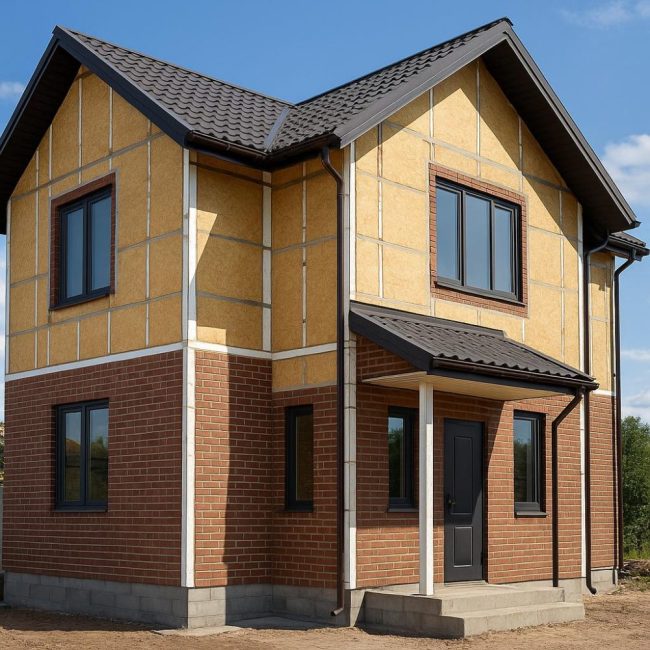
Thermal panels are multilayer boards typically consisting of an insulating core (polystyrene foam, polyurethane foam, or mineral wool), a rigid outer layer (e.g., clinker tiles, fiber cement, porcelain tiles), and a fastening system. They perform three functions simultaneously:
- provide reliable thermal insulation;
- serve as durable and aesthetic façade cladding;
- protect walls from external influences: moisture, wind, ultraviolet radiation.
The popularity of thermal panels is due to their versatility, durability, and ability to significantly reduce heat loss, which is especially important in cold climates and expensive heating.
Why is building houses with thermal panels considered energy efficient?
The main advantage of thermal panels is their ability to minimize heat loss. Thanks to the tight fit and high thermal conductivity of the insulation, the house's walls retain heat even in severe frost. This is especially important for regions with a long heating season. Experts estimate that a house clad with thermal panels can save up to 30-40% on heating costs per year compared to a similar building without additional insulation.
Energy efficiency isn't just about saving money. A well-insulated home requires less fuel, which means it has a smaller impact on the environment, reducing CO₂ emissions and other pollutants.
Advantages of building houses with thermal panels
Here are the main reasons why thermal panels are confidently occupying their niche in modern home construction:
Quick installation
Thermal panel installation is much faster than traditional façade cladding and phased insulation. This is especially valuable in tight construction deadlines or when accelerated commissioning is required.
Saving on materials and labor
Since thermal panels combine two layers—insulation and cladding—there is no need to purchase separate materials or hire two different teams (for thermal insulation and finishing).
Variety of designs
Modern thermal panels are available in a wide range of colors, textures, and shapes. This allows for the creation of custom facades that combine practicality and aesthetics. From classic brick to imitation natural stone, the choice is limited only by the customer's taste.
Resistance to climatic conditions
Thermal panels are resistant to temperature fluctuations, moisture, and UV radiation. They do not crack, peel, or fade over time, which is especially important for regions with harsh climates.
Improved sound insulation
Thanks to their multi-layer structure, thermal panels also reduce external noise levels, making living in such a home more comfortable.
Is the technology suitable for reconstruction?
Yes, thermal panels are widely used not only in new construction but also in the renovation of older buildings. They allow you to insulate an old façade and give the house a modern look without extensive demolition or wall leveling. This is especially true for brick houses built between the 1950s and 1980s, which lose heat through the walls and have an outdated appearance.
Thermal panels in the context of green construction
Interest in so-called "green building"—eco-friendly homes with a minimal carbon footprint—is growing every year. Thermal panels fit well into this concept:
- they allow to reduce energy consumption for heating and cooling;
- Some manufacturers produce panels from recycled materials;
- The durability of the coating reduces the need for repairs and replacements, which also reduces environmental damage.
In addition, construction technologies using thermal panels make it possible to design houses that meet energy efficiency standards of class A and higher.
Possible disadvantages and limitations
Despite its many advantages, the technology is not without certain limitations:
- PriceHigh-quality thermal panels are more expensive than traditional insulation. However, considering the savings on heating and labor, this difference quickly pays for itself.
- Professional installation is required: Failure to follow installation procedures may result in cold bridges or peeling of the cladding.
- The need for calculations: It is important to correctly calculate the load on the foundation, especially if the building was not originally designed for cladding with panels with dense tiles.
Is it worth building a house with thermal panels?
If you're looking for a solution that will provide your home with warmth, protection, and a beautiful appearance for years to come, thermal panel technology is definitely worth considering. It's especially suitable for:
- for regions with cold climates;
- for those who want to save on heating;
- if necessary, quickly complete construction;
- for the reconstruction of the old facade.
Conclusion
Construction of houses with thermal panels Thermal panels are a modern and efficient solution that combines aesthetics, practicality, and energy efficiency. With proper design and professional installation, such a home will last for decades, providing comfort in any weather and saving money. With rising energy prices and climate change, thermal panels are becoming more than just a fashion trend, but a logical step toward a sustainable future.