Modern residential developments often raise numerous questions among buyers and homeowners. Layout features, space distribution, and the use of various construction and landscaping solutions all directly impact living comfort. The more questions arise during the home selection process, the more important it is to understand how development sites are laid out and the principles underlying residential complex design.
Reasons for interest in developing sites
Whether someone is looking for an apartment in a new residential complex or building a private home, understanding how their site will be developed is crucial. Sites where residential buildings are planned or already constructed are not only the site for the homes but also a vital part of the entire residential complex's ecosystem. Environmental issues, amenities, transportation accessibility, and quality of life are directly related to the site's development, infrastructure, and intended use.
How are the development sites arranged?
Before we delve into the specifics of the layout, it's important to understand that every residential complex or neighborhood is designed with a variety of factors in mind. The primary goal is to create a convenient and comfortable living space. The development is based on several principles:
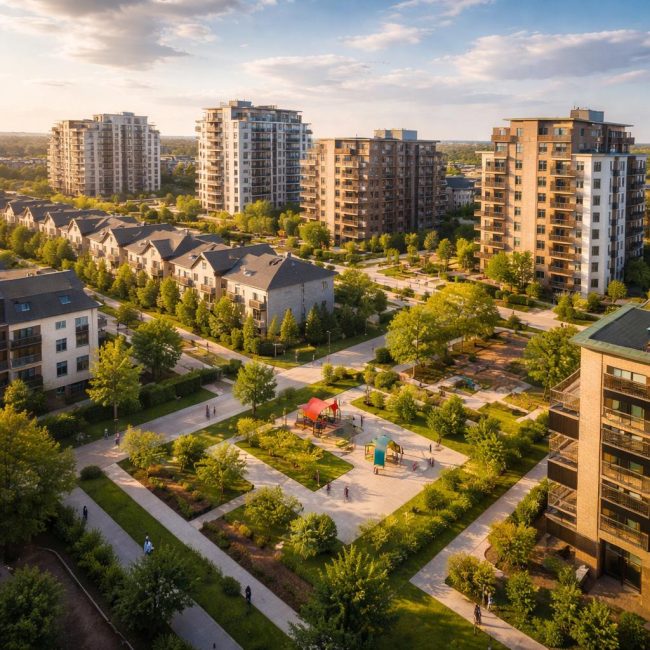
- Space zoningEach site is zoned for residential buildings, parking, recreational areas, and infrastructure. This is important for both the functionality and aesthetics of the space. Zoning helps avoid conflicts between different activities, such as noisy commercial properties and quiet residential areas.
- Compliance with norms and standardsSite design requires compliance with numerous regulations, from fire safety requirements to lighting and ventilation standards. The placement of buildings on the site must consider parameters such as minimum distances between structures, permissible building density, and environmental impact.
- InfrastructureIt's important that the sites on which residential complexes are built provide the necessary infrastructure. This includes not only roads, water supply, and sewerage systems, but also sports and playgrounds, recreation areas, shops, and other facilities that make life comfortable and safe. The importance of infrastructure isn't limited to residential buildings; developments often also include work facilities such as offices, shops, and cafes.
Design principles in practice
In actual practice of site development, it is important to take into account various aspects, such as:
- Relief and natural featuresDesigners often have to adapt their plans based on landscape features. This may include slopes, the presence of bodies of water, or forested areas. For example, on sites with steep slopes, multi-level developments are preferred, while on sites with low water tables, houses with additional waterproofing can be built.
- Transport accessibilityDuring the planning stage, it's also important to consider convenient access roads and parking areas. Accessible transportation links and high-quality road surfaces ensure easy movement within and around the complex, which is important for all residents.
- Environmental friendliness of developmentModern residential complexes are often designed with green technologies, such as solar panel systems, energy-efficient heating, and rainwater recycling. Systems that reduce environmental impact are installed on sites, which is especially important in the context of global climate change.
Impact on quality of life
No matter how diverse the development approaches, each one impacts the quality of life of future residents. Let's consider several factors that determine comfortable living:
- Spatial organizationThis is directly related to how comfortable a person will feel in their apartment. Residents are often offered a choice between high-rise and low-rise buildings on development sites, allowing them to tailor their living space to their personal preferences.
- Environmental safetyDevelopment must not disturb the ecosystem's balance. Designers strive to preserve green spaces, establish waste collection points, and consider the needs of local ecosystems in each project.
- Social interactionAn important aspect is not only housing affordability but also the availability of spaces for residents to interact. These can include public spaces and shared events, including educational and cultural ones, which help create a welcoming atmosphere for neighbors.
Problems and limitations
Of course, development has its limitations, and projects aren't always ideally realized. For example, a common problem with dense development in large cities is the lack of green space, as well as long distances to parks and recreation areas. In such cases, designers try to make adjustments, for example, by creating special green roofs or large areas within complexes for promenades.
Another problem is rising housing costs, making housing unaffordable for many citizens, especially in large cities. This is due to rising land prices and the need to comply with all the aforementioned standards and regulations.
Common misconceptions
Many people mistakenly believe that all residential complexes are equally convenient and efficient. However, design approaches vary significantly, and even a small lot can become a source of inconvenience in the future. For example, insufficient parking, poor sound insulation, or poor landscaping can seriously impact quality of life.
Conclusion
Thus, land development is a multifaceted process that requires a careful approach to every detail. Modern projects are focused on creating comfortable, safe, and environmentally sustainable spaces. The sites on which residential complexes are designed must consider a variety of factors, from topography and transport accessibility to ecology and infrastructure. Ultimately, the goal of development is not only to provide housing but also to create a space for a fulfilling and comfortable life.