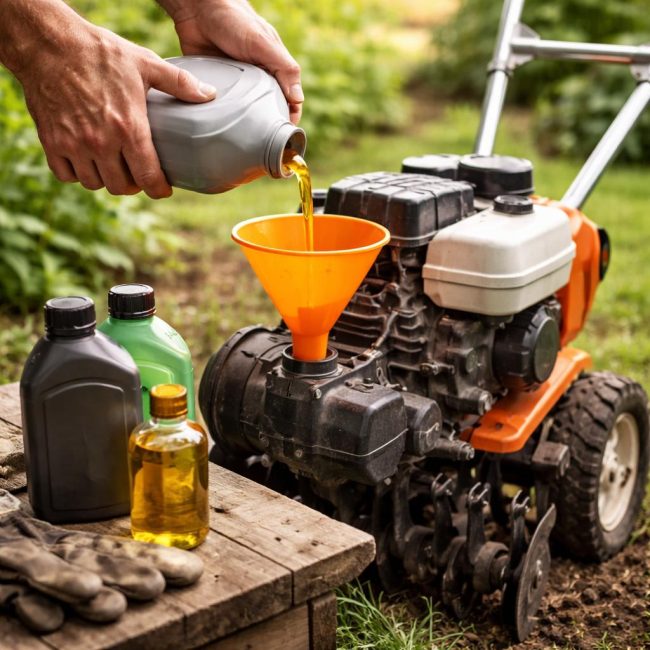
Choosing cultivator oil may not seem like a crucial step in operating a gardening tool, but this decision affects not only the lifespan of the device but also its efficiency. Many garden owners face the question of which oil to use for their cultivator and how to choose the right one, given the wide variety of options on the market. It's important to remember that choosing the wrong or low-quality oil can lead to accelerated engine wear, reduced performance, and even breakdowns. Let's explore what to consider when choosing cultivator oil and its nuances.
Main types of oils for cultivators
The most important factor when choosing oil is the engine type of your cultivator. Modern models are typically equipped with four-stroke or two-stroke engines, and each type requires a specific oil.
- Oil for four-stroke engines
Four-stroke engines are more common in garden equipment due to their fuel efficiency and durability. These engines typically use small-equipment motor oil, which comes in two types: mineral and synthetic. Mineral oil is suitable for standard operating conditions and is less expensive, while synthetic oil provides better lubrication at high temperatures and under heavy loads, extending the engine's life.
- Two-stroke engine oil
Two-stroke engines require a mixture of oil and fuel, so it's important to use only specially formulated two-stroke oil. Typically, the packaging for two-stroke oil specifies the proper mixing ratio with gasoline. An incorrect mixture can lead to engine overheating, scuffing, or even failure.
How does cultivator oil work?
Engine oil performs several key functions. It not only lubricates engine parts, reducing friction, but also cools the engine, preventing overheating. Furthermore, oil helps seal seals, reducing fuel leaks and reducing contamination. It's important to remember that oil loses its properties over time, especially with frequent use.
The frequency of oil changes depends on the intensity of use of the cultivator. For four-stroke models, the oil is typically changed every 50-100 hours of operation, while for two-stroke models, it's changed after each refill. Low-quality oil or too much oil can negatively impact engine performance, so it's important to monitor the oil level and condition.
Application scenarios and consequences of choice
When considering the practical use of cultivator oils, it's important to consider several factors, such as soil type, climate conditions, and frequency of use. For example, during cold winter months or with frequent use in cold regions, the cultivator may require an oil with improved anti-foam properties or one specifically formulated for winter conditions to ensure stable operation at low temperatures.
Furthermore, choosing the wrong oil can lead to engine overheating or deposits, which shorten its lifespan. For example, using low-quality oil or oil of the wrong viscosity grade can cause increased wear on engine parts, especially under intensive operating conditions. Therefore, it is important to select oil that is suitable for the operating conditions of the equipment.
Limitations and nuances when choosing oil
When choosing oil for a cultivator, keep in mind certain limitations. For example, don't use automotive motor oil, as it may not provide the necessary lubrication under the high loads of a garden equipment engine. Furthermore, many garden equipment oils have a special coating to protect against oxidation, which extends their service life.
Equally important is following the cultivator manufacturer's recommendations. Some models may have specific requirements for oil type, viscosity, and additives, which must be taken into account to ensure warranty coverage.
Common Misconceptions About Cultivator Oil
One of the most common misconceptions is that two-stroke and four-stroke engine oils can be used interchangeably. This is not true. Using oil improperly can lead to engine failure or reduced performance.
Another common misconception is skimping on oil by using cheaper options or oils not intended for garden equipment. Such savings can result in significant repair costs down the road, so it's best to choose high-quality oil from reputable manufacturers right away.
Conclusion
Choosing the right oil for your cultivator is essential for the long-term, efficient operation of your equipment. It depends on many factors, including engine type, climate conditions, and usage intensity. It's important to remember that oil plays a key role in lubricating and protecting the engine, and its quality shouldn't be compromised. Be sure to follow the manufacturer's recommendations and carefully select the right oil to ensure reliable operation of your cultivator for years to come.