A modern window is, first and foremost, its double-glazed unit. It determines how warm, quiet, and bright the room will be, how the windows will perform in winter and summer, whether condensation will occur, and how comfortable the indoor climate will be. The profile and hardware are important, but their impact is secondary to the type of glass installed and how it is assembled. Understanding the principles of double-glazed unit selection allows you to avoid common mistakes and choose a solution that truly suits the needs of your home.
- The role of the glass unit in the window structure
- The number of chambers and its impact on thermal insulation
- Types of glass and their practical importance
- Sound insulation and glass thickness
- Filling the chambers with air or inert gas
- The influence of climate and window orientation
- Condensation and indoor microclimate
- Light transmission and visual comfort
- Common misconceptions when choosing a double-glazed window
- How to connect the choice of double-glazed windows with the tasks of the house
The role of the glass unit in the window structure
The double-glazed unit occupies the majority of the window's surface area and serves several functions. It retains heat, reduces street noise, lets in daylight, and influences the durability of the entire structure. Even with the same profile, the difference between a basic and a well-designed double-glazed unit can be more noticeable than between different window systems.
In practice, this means that saving on double-glazed windows often results in increased heat loss, fogging, or constant background noise. For this reason, choosing double-glazed windows is not an afterthought, but a key decision when replacing or installing windows.
The number of chambers and its impact on thermal insulation
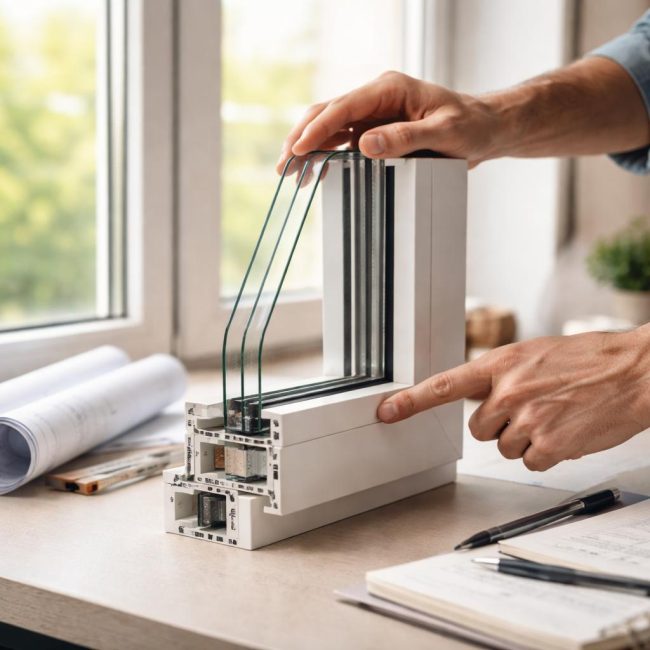
A classic double-glazed unit consists of two or three panes of glass, with air- or inert gas-filled chambers between them. A single-glazed unit has one air gap, while a double-glazed unit has two.
Single-chamber solutions are currently used sparingly. They are suitable for unheated spaces, balconies, interior partitions, or regions with mild climates. In living rooms, such double-glazed windows often become a source of cold and condensation.
A double-glazed unit provides significantly better thermal insulation. The additional chamber reduces heat loss, and the inner surface of the glass stays warmer in winter. However, increasing the number of chambers beyond two doesn't always produce a proportional effect: the quality of the glass and the composition of the infill are more important than the quantity.
Types of glass and their practical importance
The glass in a double-glazed unit is more than just a transparent surface. Its properties directly impact energy efficiency, safety, and acoustic comfort.
Energy-saving glass has a thin coating that reflects radiant heat back into the room. This reduces heat loss in winter and helps keep the room cool in summer. In practice, this type of glass allows single-pane glass units to approach the performance of standard double-pane units.
Multifunctional glass combines energy-saving and solar-protective properties. It reduces overheating in south- or west-facing rooms and reduces the load on air conditioning systems.
Tempered glass offers increased strength and safe breakage. Upon impact, it shatters into small, sharp-edged fragments. This type of glass is ideal for ground floors, panoramic windows, and doorways.
Triplex glass consists of several layers of glass bonded with a special film. It enhances security, improves sound insulation, and holds glass fragments together if damaged. In residential buildings, it is often used in areas with high security or quiet requirements.
Sound insulation and glass thickness
Noise protection depends not only on the number of chambers but also on the different thicknesses of the glass and the distance between them. If all the glass is uniform, sound waves pass through the structure more easily. Glass of varying thickness disrupts this resonance and reduces noise levels.
For apartments facing busy streets, an effective solution is a double-glazed unit with an asymmetrical design: for example, a combination of panes of varying thickness and increased spacing between them. This approach often produces better results than simply adding another chamber.
Filling the chambers with air or inert gas
By default, the chambers of the insulated glass unit are filled with dehumidified air. This is an affordable and stable solution suitable for most situations. The use of inert gases, most often argon, further reduces heat transfer.
The difference in feel is usually not dramatic, but in colder regions or with large glazed areas, argon filling can improve comfort. However, airtightness is important: over time, some of the gas may leak, and the effect will depend on the quality of the insulating glass unit's assembly.
The influence of climate and window orientation
The choice of double-glazed windows is always determined by the operating conditions. In northern regions, thermal insulation is a priority, while in southern regions, sun protection is. Windows facing different directions may require different solutions, even within the same apartment.
For north-facing windows, it's important to reduce heat loss and avoid cold glass surfaces. Energy-saving coatings and double-glazed windows are appropriate here. For south-facing windows, solar control is important, especially in summer. Multifunctional glass helps reduce overheating without significantly reducing light levels.
Condensation and indoor microclimate
Fogging of glass is often perceived as a window defect, although in reality it is the result of a combination of several factors. A cold inner glass surface, high humidity, and poor ventilation lead to condensation.
A double-glazed unit with good thermal insulation properties reduces the risk of this problem, but does not eliminate it completely. If the humidity in the room is constantly high, even the warmest double-glazed unit will not provide adequate ventilation. Therefore, when choosing a window, it is important to consider not only the window's characteristics but also the operating conditions.
Light transmission and visual comfort
Increasing the number of panes and applying coatings inevitably affects the amount of light passing through. Modern energy-saving glass has minimal distortion of light, but with complex combinations, the effect can be noticeable.
In residential spaces, the balance between thermal insulation and light transmission is especially important. A double-glazed unit that is too heavy can make a room appear darker, even with ample glazing. For this reason, choosing a window is always a compromise, not a matter of maximizing either parameter.
Common misconceptions when choosing a double-glazed window
One common misconception is focusing solely on the number of chambers. In practice, a glass unit with a high-quality coating and a well-designed layout can perform more efficiently than a more massive but simpler design.
Another mistake is trying to solve all problems with a single parameter. Sound insulation, thermal insulation, and solar protection require different technical solutions, and there is no universal, unlimited double-glazed unit.
The importance of installation is also often underestimated. Even a properly selected double-glazed window will not perform its intended function if the installation and sealing procedures are not followed.
How to connect the choice of double-glazed windows with the tasks of the house
The optimal double-glazed unit isn't an abstract "best" option, but a solution tailored to specific conditions: climate, number of floors, window orientation, noise level, and safety requirements. In one building, an emphasis on thermal insulation may be warranted, while in another, acoustic comfort or sun protection may be more important.
Understanding the principles of insulated glass allows for meaningful and informed discussions about your choice. As a result, the window ceases to be a source of compromise and begins to function as a fully-fledged part of the living space, maintaining comfort throughout the year.