Renovating the interior of existing buildings is a challenging task. In offices, renovations can disrupt workflows, and in residential apartments, they can disrupt everyday comfort. However, modern materials and technologies allow for the work to be completed quickly, accurately, and with minimal disruption to residents or employees.
One tool that helps solve this problem is Habez Start starting gypsum plaster. It allows you to level walls without excess dust, moisture, or long processing times, which is especially important for spaces where activity cannot be completely suspended.
Preparing the space: no chaos and mess
The first stage of any renovation is proper organization.
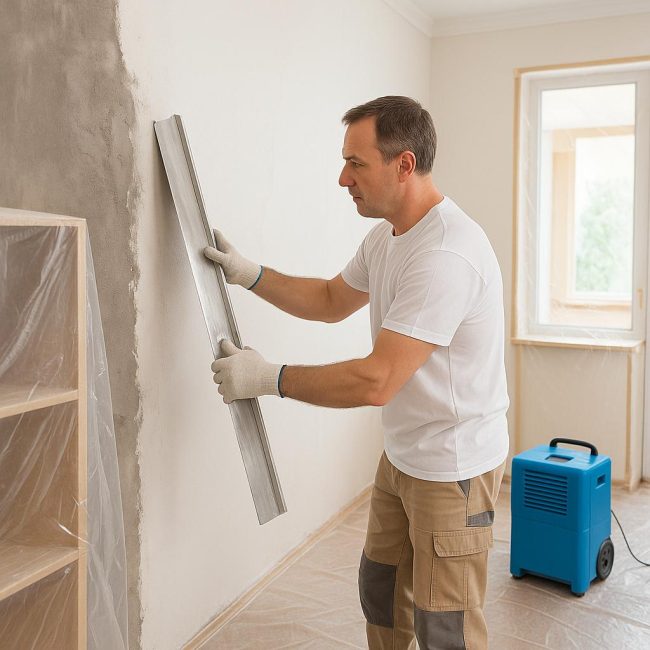
Furniture, floors, and doorways are insulated with film and masking tape. This prevents dust from spreading and makes cleaning easier.
Next, select a primer depending on the base:
- for monolithic construction, use "concrete contact";
- for porous materials - deep penetration primer.
Priming improves adhesion and reduces moisture absorption, which ensures the reliability of the plaster layer and reduces the risk of peeling in the future.
By beacons or "on site": the choice of technology
There are different ways to align walls:
- By the lighthouses - convenient for large differences in elevation when you need to quickly create a level surface.
- On site - suitable for local areas where it makes no sense to install beacons.
Plastic consistency of the mixture plaster allows you to easily apply a layer without dips or cuts, which speeds up the work and improves the quality of the result.
Planning the stages: renovation by zones
One of the main secrets of a neat renovation is to carry it out in stages.
Work is often planned in "strips": for example, one wall is leveled today, the next day, the next. This approach allows residents or employees to continue using the space without turning the renovation into a stressful experience.
To speed up drying, use portable dehumidifiers or active ventilation. After setting, the surface is carefully trimmed, sanded, and inspected under oblique light—it immediately reveals any minor imperfections.
A finish without surprises
Well-leveled starting surfaces provide significant benefits:
- saving putty and paint,
- smooth laying of wallpaper without "steps"
- even paint absorption without stains.
Before finishing, priming is mandatory - this ensures durability and a uniform result.
⚠️ Mistakes to Avoid
Even high-quality materials won't save you if the technology isn't followed correctly. The most common mistakes:
- skipping the priming stage;
- applying too thick a layer at one time;
- sanding until completely dry;
- drafts and overheating of air.
By avoiding these mistakes, you can complete repairs quickly, cleanly, and without rework.
Results: fast, clean and non-stop
Renovations in existing buildings are possible without a full site visit if you select the right materials and organize the process wisely. Starter plasters such as Habez Start, help to level walls accurately, controlling dust and moisture levels, and reducing drying time and the number of stages.