Installing utility systems in a country house requires specialized equipment to perform a wide range of tasks. The correct choice of specialized equipment determines construction timelines, installation quality, and the overall cost of the project.
Modern engineering systems include complex communications systems that require precise planning and professional installation. Renting specialized equipment is becoming an optimal solution for most developers, allowing them to access the necessary equipment without significant capital outlays.
When selecting equipment, it's important to consider the specifics of each stage of the work, the site characteristics, and installation quality requirements. Professional equipment for the installation of utility systems https://fixit.washerhouse.com/en/ ensures high precision of work execution and compliance with all technological requirements.
- The main types of engineering systems in a country house
- Water supply and sanitation systems
- Heating systems
- Electrical networks and low-current systems
- Ventilation systems
- Stages of installation of engineering systems and necessary equipment
- Preparatory excavation work
- Laying external communications
- Installation of internal systems
- Excavators and earthmoving equipment for engineering works
- Mini excavators for precision work
- Full-size excavators
- Trenchers
- Cranes and lifting equipment
- Truck cranes for equipment installation
- Telescopic handlers
- Aerial work platforms for high-altitude work
- Drilling equipment for wells and communications
- Drilling rigs for water supply
- Horizontal directional drilling
- Transport and auxiliary equipment
- Manipulators and tow trucks
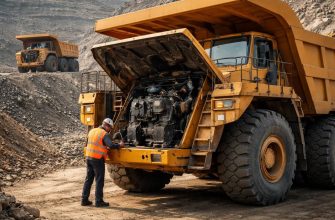
- Dump trucks and delivery equipment
- Criteria for choosing special equipment for rent
- Estimation of the scope of work
- Technical specifications
- Rental conditions and cost
- Comparative table of special equipment by type of work
- Peculiarities of working with different types of soil
- Safety when working with rented equipment
- Typical mistakes when choosing equipment
- Seasonal Features of Special Equipment Rental
- The economic feasibility of renting vs. buying
The main types of engineering systems in a country house
The utility systems of a country house are a complex of interconnected utilities that ensure comfortable living. Each system has its own installation requirements and requires a specialized approach to selecting equipment.
The main engineering systems include water supply and drainage, heating and heat supply, electricity and low-voltage networks, ventilation and air conditioning, and gas supply. Each of these systems requires the use of specific types of specialized equipment at various stages of installation.
Water supply and sanitation systems
A country house's water supply system includes external and internal pipelines, pumping equipment, treatment systems, and storage tanks. Installation requires excavation work to lay main pipes and connect to centralized networks or independent sources.
The drainage system consists of sewer pipes, treatment facilities, drainage systems, and storm drains. Particular attention is paid to the correct pipe slope and the tightness of connections. In temperate climates, water pipes are laid 1.5 to 2 meters below the frost line.
Installing water and sewer systems requires equipment for excavation, material transportation, and precise positioning. Excavators of various types and sizes, as well as specialized well drilling equipment, play a key role.
Heating systems
Heating systems for country houses include boiler equipment, piping, radiators, underfloor heating, and ventilation systems. Heating installation requires precise equipment installation, pipe laying with proper slopes, and connection to fuel systems.
Gas heating systems require special safety requirements and certified equipment. Electric systems require powerful wiring and protective automation. Alternative heating systems include heat pumps, solar collectors, and geothermal systems, which require specialized installation equipment.
Electrical networks and low-current systems
The electrical system for a country house includes the main distribution board, internal wiring, outlets, switches, and lighting fixtures. Installation of electrical systems requires adherence to electrical safety regulations and the use of specialized tools.
Low-current systems include telecommunications networks, security systems, video surveillance, and home automation. These systems require specialized cabling and active equipment. Connection to external power grids may require the installation of transformer substations and long cable runs.
Ventilation systems
Ventilation systems ensure a comfortable indoor climate by providing fresh air and removing stale air. These systems include ventilation ducts, air purification equipment, and air conditioning.
Forced ventilation requires the installation of ventilation equipment, ductwork, and an automated control system. Natural ventilation relies on ventilation shafts and vents. Truck-mounted cranes and aerial platforms are used to install large ventilation equipment on building roofs.
Stages of installation of engineering systems and necessary equipment
Installing utility systems in a country house is a multi-stage process that requires sequential execution and coordination between various specialists. Each stage has its own specific characteristics and requires specific specialized equipment.
Preparatory excavation work
Preparatory work includes site surveying, topsoil removal, land planning, and the creation of access roads for equipment. At this stage, utility routes and equipment installation locations are determined.
Geodetic surveys ensure precise site alignment and elevation determination. Surveying the engineering and geological conditions allows for the selection of optimal construction technologies. Bulldozers, graders, rollers, and other earthmoving equipment are used for preparatory work.
It's important to ensure the safety of existing utilities and compliance with environmental requirements. Proper organization of the preparatory phase determines the success of the entire project and influences the choice of primary equipment for subsequent work.
Laying external communications
Laying external utility lines includes digging trenches, laying pipes and cables, constructing manholes and chambers, backfilling, and restoring pavements. The work is carried out in accordance with design documentation and regulatory requirements.
The stages of laying communications are carried out in a strict sequence:
- Geodetic marking of communication routes
- Digging trenches of a given profile and depth
- Preparing the base and laying pipes
- Construction of inspection wells and chambers
- Backfilling of trenches with layer-by-layer compaction
- Restoration of pavements and improvement
The depth of utility installations is determined by climate conditions, soil type, and the intended purpose of the system. Particular attention is paid to the quality of pipe insulation, protection from mechanical damage, and accessibility for maintenance.
Installation of internal systems
Installation of internal systems is carried out after completion of the main construction work and includes the distribution of communications throughout the building, installation of equipment and devices, and connection to external networks.
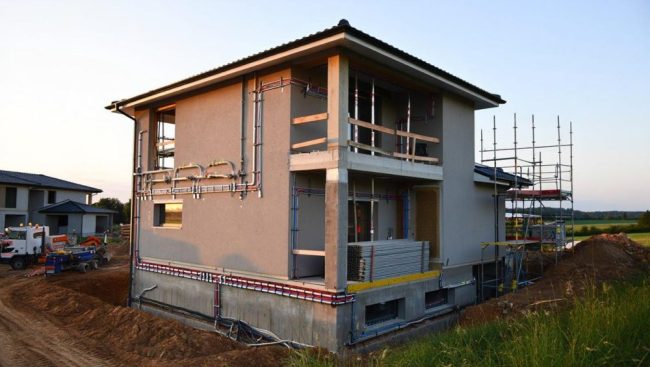
Concealed utility installation is performed during construction, with pipes and cables embedded within the walls and ceilings. Open installation allows for access for maintenance and repair.
Testing of installed systems includes checking for leaks, equipment operability, and compliance with design parameters. Commissioning ensures proper configuration of automation and protection systems.
Excavators and earthmoving equipment for engineering works
Earthmoving equipment forms the backbone of the machinery fleet used for installing utility systems. The choice of a specific excavator type depends on the scope of work, soil characteristics, and work conditions.
Mini excavators for precision work
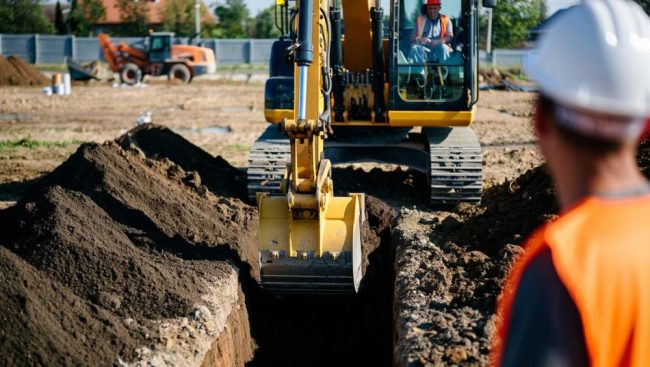
Mini excavators weighing up to 6 tons are ideal for working in confined spaces, laying utility lines on built-up areas, and performing precision excavation work. Their compact size allows for working between existing buildings and in confined spaces.
The key advantages of mini excavators include high maneuverability, low ground pressure, the ability to work on soft surfaces, and minimal impact on the landscape. Interchangeable working attachments expand the equipment's functionality, allowing a single machine to perform a variety of operations.
Mini excavators are used for digging trenches for water and sewer pipes, preparing pits for septic tanks and pumping stations, site planning, and landscaping. Their productivity ranges from 20 to 50 cubic meters of soil per shift, depending on working conditions.
Full-size excavators
Full-size excavators weighing over 20 tons are used for large-scale earthmoving, digging deep trenches and pits, and moving significant volumes of soil. High productivity ensures cost-effectiveness on large projects.
Crawler excavators provide stability on uneven surfaces and high traction. Wheeled excavators are characterized by mobility and the ability to quickly move between sites. Specialized excavators for utility installations are equipped with narrow buckets, laser leveling systems, and additional equipment for precise work.
Trenchers
Trenchers are specialized equipment for digging trenches of a given profile with high precision and productivity. Chain trenchers are used in soft and medium soils, ensuring smooth trench walls and precise dimensional control.
Rotary trenchers are effective in hard soils and those containing inclusions. The advantages of trenchers include high operating speed, high-quality pipe bed preparation, minimal soil disturbance, and the ability to work in a variety of soil conditions.
Cranes and lifting equipment
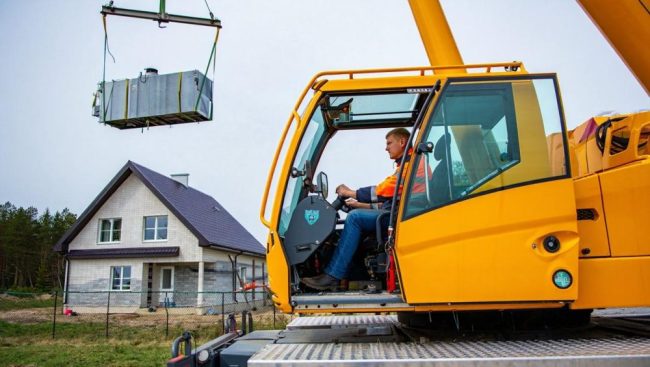
Lifting equipment plays a key role in the installation of heavy equipment within utility systems. The choice of crane is determined by the weight of the load being lifted, the lifting height, and the working conditions at the site.
Truck cranes for equipment installation
Truck cranes with lifting capacities from 16 to 100 tons are used for installing boiler equipment, pumping stations, tanks, and other heavy utility equipment. Their mobility allows for rapid movement between sites and the ability to operate in a variety of conditions.
The choice of a truck crane is determined by several key factors:
- Maximum load capacity
- The required boom reach to reach the installation site
- Required lifting height
- Crane lifting height characteristics
- Working conditions and accessibility of the facility
Modern truck cranes are equipped with safety systems that limit overloads and telescopic booms to increase the working area. Experienced operators and modern control systems ensure precise equipment placement.
Telescopic handlers
Telescopic handlers combine the functions of a forklift and a crane, providing versatility for utility system installations. The telescopic boom allows for work at heights of up to 14 meters and in hard-to-reach areas.
Telescopic handlers have lifting capacities ranging from 2 to 5 tons with a maximum lifting height of up to 14 meters. Their compact size and maneuverability ensure efficient operation in confined spaces, which is especially important when working in built-up areas.
Interchangeable attachments expand the functionality of forklifts, allowing them to be used for material handling, site clearing, and loading and unloading. This makes telehandlers one of the most sought-after types of equipment for complex projects.
Aerial work platforms for high-altitude work
Aerial work platforms provide safe access to high-rise utility system components for installation and maintenance. Their working height ranges from 14 to 45 meters, depending on the model and intended use.
Articulated boom lifts provide access to hard-to-reach areas thanks to their complex boom trajectory. Telescopic boom lifts are characterized by their simple design and high load capacity. Applications for boom lifts include installing ventilation equipment, antennas and lightning protection systems, and servicing high-rise utility systems.
Drilling equipment for wells and communications
Drilling equipment is used to create water supply wells, lay utility lines using horizontal directional drilling, and install geothermal systems. The choice of drilling equipment is determined by the drilling depth, soil type, and the well's intended purpose.
Drilling rigs for water supply
Water supply drilling rigs are designed to create wells from 20 to 200 meters deep in various geological conditions. Modern rigs ensure high drilling speeds and high-quality wells, which are critical for a reliable water supply for a country home.
Rotary percussion drilling rigs are used in hard rock and ensure high borehole directional accuracy. Cable-percussion drilling rigs are effective in soft soils and boulders. The choice of drilling rig takes into account the depth of the aquifer, the required well productivity, geological conditions, and water quality requirements.
Horizontal directional drilling
Horizontal directional drilling technology allows for the installation of utility lines without disturbing the surface, which is especially important when crossing roads, bodies of water, and built-up areas. This method ensures high installation accuracy and minimal environmental impact.
HDD drilling rigs are equipped with navigation systems that ensure precise control of the drilling trajectory and precise positioning at a predetermined point. The diameter of the installed pipelines can reach 1200 mm, making this technology suitable for use in trunk pipelines.
HDD applications include laying water and sewer pipes, gas pipelines, cable lines, and other utility lines in challenging conditions. Productivity ranges from 80 to 200 meters per shift, depending on the diameter and soil conditions.
Transport and auxiliary equipment
Transport vehicles ensure the delivery of materials, equipment, and finished products to utility system installation sites. Auxiliary vehicles perform additional functions that enhance the efficiency of primary operations.
Manipulators and tow trucks
Manipulators combine the functions of a vehicle and a crane, enabling the delivery and installation of equipment in a single operation. With a lifting capacity of 3 to 15 tons and a boom reach of up to 12 meters, they can handle most equipment handling tasks.
The advantages of manipulators include versatility, cost-effective operation, the ability to work in confined spaces, and high mobility. Hydraulic grippers allow handling of loads of various shapes, from pipes to finished equipment units.
Tow trucks are used to transport faulty equipment, deliver small-sized equipment, and perform auxiliary operations at construction sites. Their role is especially important in areas with limited access.
Dump trucks and delivery equipment
Dump trucks of various load capacities transport bulk materials, remove soil, and deliver construction materials. The choice of dump truck is determined by the volume of transportation, the type of cargo, and the operating conditions at a specific site.
Specialized vehicles include cement trucks, concrete mixers, fuel trucks, and other equipment for delivering specialized materials and liquids. Light-duty delivery vehicles transport tools, materials, and equipment in tight spaces or for small-volume jobs.
Criteria for choosing special equipment for rent
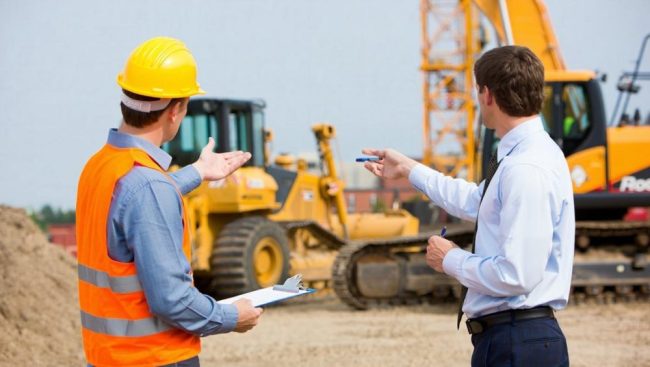
Selecting the right rental equipment determines the efficiency of the work, meeting deadlines, and the project's cost-effectiveness. Equipment requirements should be analyzed during the planning stage, taking into account all the site's specifics.
Estimation of the scope of work
Estimating the scope of work includes determining the amount of excavation work required, the weight of the load to be lifted, the length of utility lines, and the complexity of installation. Accurately calculating the scope of work allows for optimal equipment performance and avoids overpayments for excess capacity.
An analysis of the work schedule determines the equipment rental duration and the possibility of combining operations. Planning the work sequence minimizes equipment downtime and optimizes costs. Considering seasonal factors influences the selection of equipment and the planning of work schedules.
Technical specifications
The technical specifications of specialized equipment must meet the requirements of the work being performed, with a margin for key parameters. Insufficient equipment performance leads to increased timelines and costs, while excessive performance leads to unnecessary expenses.
Key parameters for evaluation include:
- Load capacity and load moment for lifting equipment
- Digging depth and dumping height for excavators
- Performance and speed of operations
- Maneuverability and cross-country ability at the site
- Reliability and cost-effectiveness of operation
Compatibility of equipment with the materials and technologies used ensures high-quality work. Specialized equipment expands the functionality of the basic machines.
Rental conditions and cost
Rental terms include machine shift costs, minimum rental period, equipment delivery terms, and the parties' responsibilities. Transparent contract terms eliminate additional costs and disputes during the work process.
Rental prices vary depending on the type of equipment, rental period, season, and region. Long-term rentals typically offer more favorable terms than short-term rentals. Additional services include equipment delivery, maintenance, operator provision, and insurance.
Comparative table of special equipment by type of work
| Type of work | Recommended technique | Performance | Features of application |
|---|---|---|---|
| Digging trenches for water pipes | Mini excavator, trencher | 70-150 m/shift | Accuracy of dimensions, quality of the base |
| Construction of a pit for a septic tank | Mini excavator | 20-50 m³/shift | Depth up to 4 m, slopes of walls |
| Installation of boiler equipment | Truck crane 25-50 t | 3-8 lifts/shift | Installation accuracy, safety |
| Drilling a water intake well | Drilling rig | 30-80 m/shift | Quality of the wellbore, casing |
| HDD cable laying | HDD installation | 80-200 m/shift | Trajectory accuracy |
| High-altitude installation | Aerial platform | Individually | Work safety |
Peculiarities of working with different types of soil
Soil type significantly influences the choice of specialized equipment and the technology used to carry out the work. Geological surveys allow us to determine soil characteristics and select the optimal work methods even during the project planning stage.
Sandy soils are easy to work, but require trench wall reinforcement due to their tendency to collapse. Clayey soils provide slope stability, but become difficult to work when frozen and require more powerful equipment.
Rocky and frozen soils require preliminary loosening or the use of specialized equipment with increased digging force. Saturated soils require dewatering and the use of high-traffic equipment.
Equipment for working in difficult soils must have the appropriate digging force, abrasion resistance, and reliability in harsh conditions. Selecting the wrong equipment can significantly increase the time and cost of the project.
Safety when working with rented equipment
Safe operation of rented specialized equipment requires compliance with operating regulations, training, and monitoring of the technical condition of the equipment. Both the lessor and the lessee are responsible for safety within the scope of their respective obligations.
Before starting work, inspect the equipment, check the safety systems, and read the operating instructions. The operator must be appropriately qualified and authorized to operate this type of equipment.
The work area must be fenced off, marked with warning signs, and equipped with communication equipment. Work near existing utility lines requires special caution and prior approval from the operating organization.
Regular maintenance and equipment condition monitoring prevent emergency situations and ensure reliable operation of the equipment throughout the rental period.
Typical mistakes when choosing equipment
The most common mistake is underestimating the scope of work and choosing insufficient equipment. This leads to longer completion times and additional lease renewal costs.
Ignoring the site's operating conditions can lead to the selection of equipment incapable of operating effectively under these conditions. Site accessibility analysis for equipment should be conducted in advance, taking into account access dimensions and the bearing capacity of the soil.
Common mistakes when choosing equipment include:
- Underestimation of the complexity of soil conditions
- Saving on the quality of equipment at the expense of reliability
- Failure to take into account seasonal work characteristics
- Lack of backup options in case of failure of the main equipment
- Insufficient logistics and delivery planning
Insufficient planning of work sequences leads to inefficient use of equipment and increased overall rental costs. It is important to plan in advance the optimal use of various types of equipment.
Seasonal Features of Special Equipment Rental
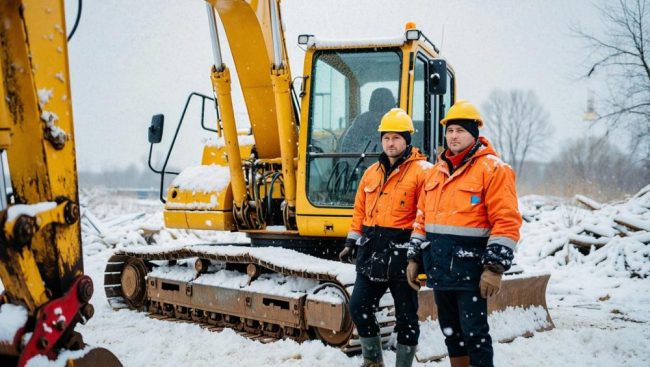
Seasonality significantly impacts the cost of specialized equipment rentals and the availability of certain types of machinery. Planning work according to seasonal factors allows for cost optimization and ensures timely project completion.
Spring is characterized by a sharp increase in demand for earthmoving equipment and rising rental prices. Early planning and signing contracts during the winter allows you to secure more favorable terms and ensure the availability of the necessary equipment.
The summer season provides optimal conditions for most types of work, but is characterized by peak rental prices for popular equipment. High occupancy rates can create equipment availability issues, especially in construction regions.
Autumn is a good time to complete outdoor work before the frost sets in. Reduced demand can lead to more favorable rental terms for certain types of equipment, especially at the end of the construction season.
Winter work requires specially prepared equipment with additional accessories for working in low temperatures. Limited excavation capabilities shift the focus to internal systems and planning for the upcoming season.
The economic feasibility of renting vs. buying
The choice between leasing and purchasing specialized equipment depends on the volume and frequency of work, available capital, and business development strategy. Renting provides flexibility and minimizes the risks associated with equipment ownership.
Renting is practical for one-off projects, limited budgets, the need for specialized equipment, and the desire to avoid maintenance costs. Access to modern equipment without significant capital investment is the main advantage of leasing for most developers.
The purchase is justified if the work is carried out regularly, the equipment is sufficiently utilized, the presence of an in-house repair facility, and long-term business planning. Equipment depreciation can provide tax advantages for construction companies.
Factors influencing the decision to buy or rent:
- Planned intensity of equipment use
- Availability of qualified operators and mechanics
- Possibility of efficient storage and maintenance
- Business development prospects and future project volumes
- Requirements for specific models and characteristics
Leasing offers a middle ground, combining the advantages of both renting and purchasing. The option to purchase equipment at its residual value makes leasing attractive to companies with a stable workload.
According to Trade28 specialists, choosing the right equipment for installing utility systems in a country house requires a comprehensive approach that considers all project specifics, working conditions, and economic factors. Professional consultation and high-quality equipment ensure the successful completion of any project within the specified timeframe and in compliance with all safety requirements.
Proper planning of specialized equipment use, the right choice of lessor, and compliance with all technological requirements guarantee high-quality installation of utility systems within the planned budget and with minimal risk for all project participants.