Scandinavian-style timber frame houses have become one of the most popular architectural trends in recent years. Combining simplicity, functionality, and aesthetics, these homes not only attract attention with their visual appeal but also offer a number of practical benefits for owners. In this article, we'll explore what Scandinavian-style timber frame houses are, how they work, and what features to consider when choosing and building one.
The essence of a Scandinavian frame house
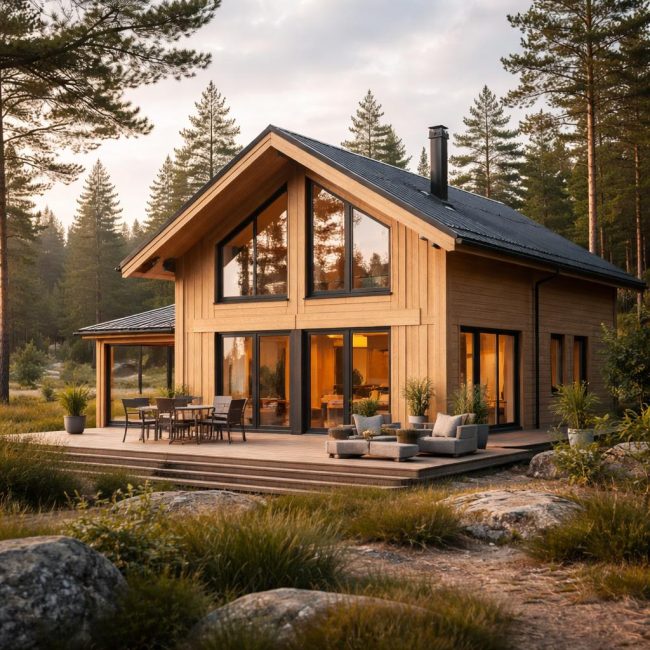
Frame construction is a method of building construction in which the primary load-bearing element is the frame, rather than the external walls. This approach has become traditional in Scandinavian countries, as it allows for lightweight yet durable structures that are quick to erect and offer good thermal insulation. In the Scandinavian style, frame houses are often characterized by simple yet elegant lines, large windows, and the extensive use of natural materials.
Simplicity and functionality are the fundamental principles underlying this style. Frame houses often use wood as the primary construction material, making these buildings particularly cozy and blending harmoniously into the natural landscape.
How does this work in practice?
Scandinavian-style frame houses are built using high-quality materials, ensuring durability and safety. The main stages of construction include:
- DesignAt this stage, it's important to consider both functional and aesthetic aspects. Scandinavian style emphasizes clean lines and minimalist decor, but also attention to detail to ensure maximum comfort.
- Erection of the frameTypically, a wooden frame is used, reinforced with metal fittings. This allows the house to be not only lightweight but also durable.
- InsulationScandinavian homes are known for their excellent thermal insulation. Natural materials such as sheep's wool or cellulose are most often used for insulation, which helps keep the home warm in winter and cool in summer.
- FinishingThe interior decoration traditionally includes wood paneling and simple yet stylish elements. This creates an atmosphere of comfort and harmony with nature.
Limitations and nuances
Like any other type of construction, Scandinavian-style frame houses have their own characteristics and limitations. Firstly, they require careful selection of materials, as high-quality materials help prevent moisture, mold, and rot in a variable climate. It's also worth considering that frame houses are best suited for mild and moderate climates.
In addition, such a house requires regular inspection of the condition of its external and internal structures to avoid damage associated with exposure to moisture and wind.
Common misconceptions
One common misconception is that frame houses are cheap and temporary housing. In fact, well-built frame houses can last for decades, retaining heat and protecting from external factors. Many also believe they don't withstand frost well, but this is a myth: modern materials and insulation technologies make it possible to create a home that is ideal for winter living even in the coldest regions.
Another misunderstanding concerns aesthetics. Scandinavian style can be perceived as too minimalist or cold, but the right choice of materials and attention to detail can create a warm and cozy interior that suits the tastes of most people.
Conclusion
Scandinavian-style timber frame houses are not only a trend but also a sensible choice for those seeking a cozy, warm, and durable home. These homes perfectly combine functionality and aesthetics, making them an excellent choice for those who value simplicity and natural comfort. Building a timber frame house requires attention to detail, but the end result is a space you'll enjoy for years to come.