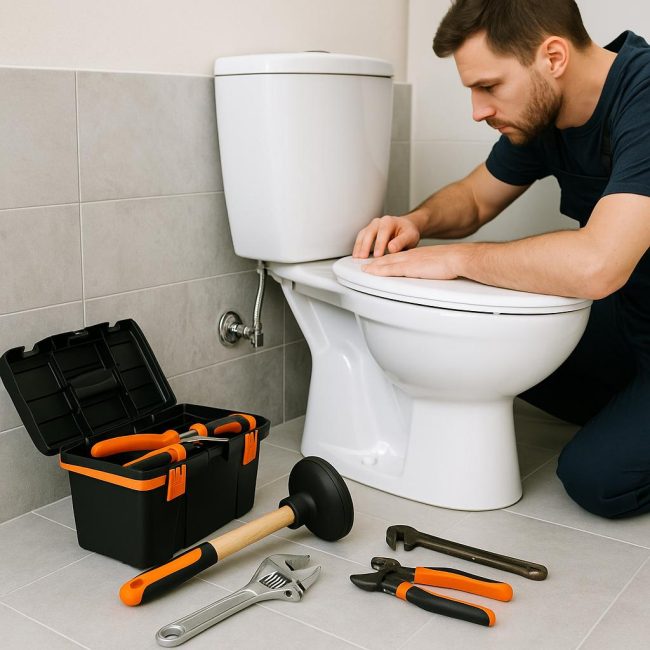
Plumbing plays a much more important role in everyday life than we often think. Even the slightest malfunction can disrupt our usual comfort. Many people try to fix it themselves, relying on online advice and available tools. But experience shows that this isn't always successful. People especially often seek help when it comes to toilet repairs in St. Petersburg—a seemingly simple device, but any mistake during DIY repairs can result in leaks, flooding, or even the need for a complete replacement.
Let's look at the five most common problems for which it's best to immediately call a professional rather than experiment on your own.
- Water leaks and hidden damage
- What is the essence of the problem?
- Why you can't pull
- When you need a master
- Blockages and poor drainage
- What is the essence of the problem?
- Why you can't pull
- When you need a master
- Failure of the tank fittings
- What is the essence of the problem?
- Why you can't pull
- When you need a master
- Cracks and damage to ceramics
- What is the essence of the problem?
- Why you can't pull
- When you need a master
- Malfunctions in the water supply and sewerage system
- What is the essence of the problem?
- Why you can't pull
- When you need a master
- What are the benefits of calling a specialist?
- Conclusion
Water leaks and hidden damage
What is the essence of the problem?
A leaking cistern or fitting is one of the most common issues. At first glance, it seems like replacing a gasket or tightening a nut is enough. However, water can leak through more than just visible cracks. There can be hidden damage in the supply system, cracks in the ceramic, or leaks in the fastening points.
Why you can't pull
- An unnoticed leak gradually leads to mold and mildew.
- With prolonged exposure, water destroys the ceilings and causes corrosion of the metal.
- Utility bills are rising due to constant water consumption.
When you need a master
An experienced plumber will quickly identify the source of the leak, check the tightness of the connections, and replace any damaged components if necessary. A full diagnosis is difficult to perform at home—the problem often returns within a couple of days.
Blockages and poor drainage
What is the essence of the problem?
A weak or completely blocked drain is another common scenario. Many people try to clear the clog with chemicals or homemade drain snakes.
Why you can't pull
- Using aggressive reagents without understanding the design can corrode plastic or rubber parts.
- If you do the wrong thing, the blockage will not be removed, but will only go deeper into the pipe.
- Water pressure from “folk methods” sometimes leads to depressurization of connections.
When you need a master
The plumber uses professional tools: spirals, mechanical and hydrodynamic units. This allows for clearing the blockage without damaging the pipes and restoring the system's normal operation.
Failure of the tank fittings
What is the essence of the problem?
The internal mechanism of a toilet is a system of levers, floats, and valves. When broken, the toilet either makes constant noise and fills with water, or fails to flush at all.
Why you can't pull
- Incorrect settings or "homemade repairs" often result in water flowing uncontrollably into the sewer.
- Constant filling and draining increases water consumption and creates a risk of flooding.
- Some parts are incompatible with each other, and random replacement does not produce results.
When you need a master
A specialist will select the right fittings for your toilet model, adjust them, and check the system for leaks. This will help extend the life of your plumbing fixtures for years to come.
Cracks and damage to ceramics
What is the essence of the problem?
A crack in the toilet bowl's surface isn't just an aesthetic defect. Even a small crack can gradually widen due to changes in temperature and pressure.
Why you can't pull
- Over time, water begins to seep through microcracks.
- Chips and damage become a source of contamination and unpleasant odor.
- Attempts to “fill” the crack with glue or sealant rarely produce a long-term effect.
When you need a master
A plumber will assess the extent of the damage: if it's not critical, a high-quality repair using specialized compounds is possible. If the crack threatens the integrity of the structure, the technician will quickly replace the toilet and properly connect it to the system.
Malfunctions in the water supply and sewerage system
What is the essence of the problem?
Sometimes the problem lies not with the toilet itself, but with the plumbing. For example, weak water pressure, worn pipes, or improperly installed sewer connections.
Why you can't pull
- Attempts to independently tighten connections or replace components without experience lead to emergency situations.
- Errors in sewer installation can cause unpleasant odors and backflow of wastewater.
- If old pipes are damaged, there is a high risk of causing a breakthrough.
When you need a master
A plumber has the equipment to diagnose the condition of pipes, can assess the wear of the system, and offer the optimal solution: from local replacement of parts to a complete modernization of the area.
What are the benefits of calling a specialist?
- Saving time and nerves. What takes half an hour for a professional can take a day for a non-professional.
- Quality assurance. Many specialists provide a guarantee for the work performed.
- Problem prevention. The plumber not only fixes the problem, but also checks the entire system to prevent further breakdowns.
- Safety. Working with water and utility systems carries the risk of flooding and property damage.
Conclusion
Household breakdowns only seem simple at first glance. This is especially true for plumbing, which endures significant daily stress. Attempts to fix the problem yourself often result in additional expenses and stress. Therefore, at the first sign of serious problems, it's best to entrust the work to a professional.
If the cistern is leaking, the fittings are broken, or a clog appears, the right solution is to call a plumber. This approach will eliminate unnecessary risks and help maintain comfort in your home for a long time.