In recent years, the commercial real estate market has undergone significant changes. While traditional offices and retail stores with long-term leases were once the priority, today demand is shifting toward flexible solutions. Coworking spaces, flexible offices, pop-up spaces, and multifunctional sites are becoming increasingly popular. Owners and developers understand that to remain relevant, they need to adapt their properties to meet the modern demands of tenants.
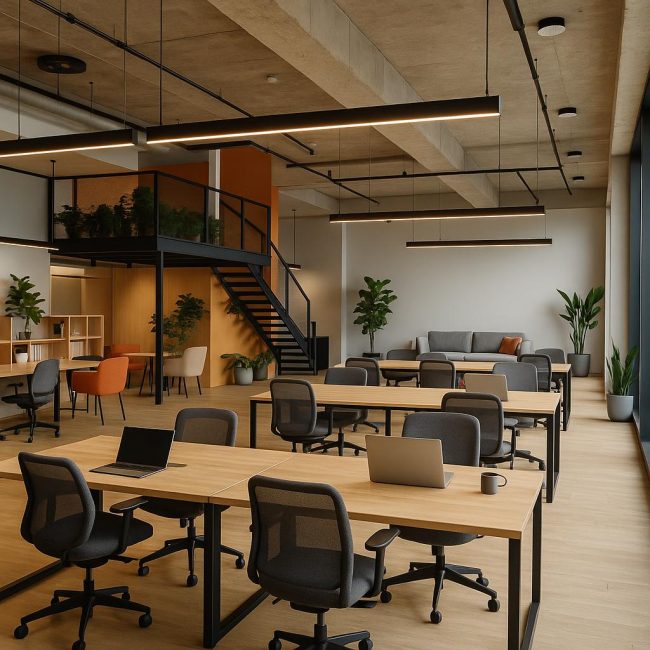
The success of such projects depends largely on a comprehensive approach—not only in terms of architecture and engineering solutions, but also in terms of operational strategy. One striking example is the case described in the article "Coworking Space Design Project: How to Create a Space That Will Get Booked Even Before Opening" on https://fixit.washerhouse.com/en/blog/It clearly demonstrates how thoughtful design and adaptation to a real-world user scenario can generate demand even before the facility is commissioned.
- Why classic solutions no longer work
- Flexible formats: what does it mean?
- Property Adaptation: Where to Start
- Target audience analysis
- Redesign for use cases
- Focus on design and atmosphere
- Integration of digital solutions
- Additional services
- Cases and examples: what to learn
- New generation coworking spaces
- Pop-up formats in shopping centers
- Microoffices and Plug&Play
- What do owners get: the benefits of a flexible approach?
- Conclusion
Why classic solutions no longer work
Traditional commercial leasing business models were built on long-term contracts, fixed rates, and rigid floor plans. However, following the pandemic and the widespread shift to remote and hybrid work, tenants have become more selective. Many companies are abandoning large offices, preferring to rent space "as needed," while retailers and service providers are shifting to temporary formats, testing new markets and audiences.
Moreover, the approach to space itself has changed. Now, tenants evaluate not only square footage, but also functionality, atmosphere, services, and the ability to transform the space to suit their needs.
Flexible formats: what does it mean?
Flexible commercial real estate — these are spaces that can be adapted to different scenarios:
-
Coworking spaces — unite freelancers, small companies and startups;
-
Plug-and-play offices — completely ready for use with minimal investment;
-
Pop-up shops and showrooms — temporary points of sale, especially relevant for e-commerce;
-
Multifunctional halls — are transformed for events, conferences, exhibitions.
The main feature of flexible objects is variability of useThis requires not only a special planning approach, but also infrastructure readiness for change.
Property Adaptation: Where to Start
Target audience analysis
The first step is to understand who will be using the space. These could be freelancers, creative agencies, small IT companies, startups, educational projects, or temporary retail concepts. Each segment has its own needs and requirements.
Redesign for use cases
The layout should be flexible. It's best to use modular structures, mobile partitions, and transformable furniture. This allows for quick configuration changes depending on the needs—whether it's an office, a presentation, or a workshop.
Focus on design and atmosphere
Modern tenants value visual design and the emotional resonance of a space. This is why design is becoming not only an aesthetic concern but also a marketing tool. As demonstrated in the aforementioned coworking project, a well-thought-out visual concept can generate interest and bookings long before the space opens.
Integration of digital solutions
Smart booking systems, lighting and climate control, and mobile app access are all becoming essential elements of competitive spaces. Tenants increasingly expect a level of comfort comparable to hotels or premium public spaces.
Additional services
Kitchens, lounge areas, meeting rooms, call boxes, bike racks, and event areas are not just amenities, but factors that influence rental decisions. Flexible space should be multifunctional.
Cases and examples: what to learn
New generation coworking spaces
The coworking design project case we referenced above clearly demonstrates how a well-designed visual strategy and scenario-based planning can build a high level of trust among potential tenants. Even before the space opens, a client pool is already forming. This is achieved through:
-
thoughtful visualization;
-
demonstrations of use cases;
-
adaptation to the target audience;
-
marketing integrated with the design stage.
Pop-up formats in shopping centers
Many shopping centers have begun to abandon long-term tenants in favor of temporary branded zones. These spaces are becoming dynamic: displays change monthly, new food zones and themed events appear. This maintains visitor interest and provides tenants with a tool for A/B testing.
Microoffices and Plug&Play
Compact office units of 10–20 square meters with shared amenities (reception, meeting rooms, kitchen) are a popular solution for self-employed individuals, sole proprietors, and small teams. They allow businesses to avoid renovation and fit-out costs while maintaining flexibility in lease terms.
What do owners get: the benefits of a flexible approach?
-
Fast turnover of space: instead of idle long-term rentals, you get a stream of short-term renters.
-
Scalability: it is possible to gradually increase the volume of supply in response to demand.
-
Differentiation: In a competitive environment, flexible spaces stand out from traditional offices and stores.
-
Real demand data: Booking systems allow you to analyze tenant behavior and adjust your strategy.
Conclusion
Flexible formats aren't a fad, but a response to a reality in which businesses demand mobility, tenants value savings and speed, and users expect comfort and a visual wow factor. Investors, developers, and property owners should consider transforming their properties to accommodate a flexible commercial model today—before their competitors get there first.