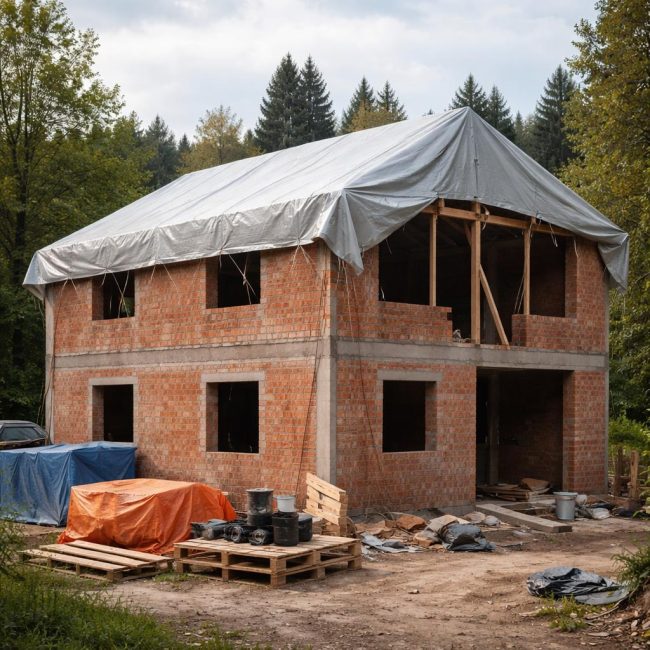
A house left without a roof can arise for various reasons: damage, unsuccessful renovation attempts, lengthy construction work, or even force majeure. In such cases, an important question arises: how to preserve the structure and avoid its collapse? Preserving a roofless house requires a careful approach, especially when it comes to maintaining its long-term stability. In this article, we will examine the basic principles and methods of preserving buildings without a roof covering, as well as potential risks and common mistakes.
Why is it necessary to preserve a house without a roof?
When a roof is removed or damaged, the house becomes vulnerable to external factors. Moisture, solar radiation, temperature fluctuations, and even potential natural disasters can all negatively impact the walls, foundation, and other structural elements of the building. This is why it's so important to ensure timely preservation. This procedure minimizes the impact of the external environment and ensures the long-term safety of the structure.
There are various reasons why a house might lose its roof. It could be part of a renovation that requires removing the old roof, or a temporary halt in construction. It's important to remember that even a short-term roofless home can be detrimental to its longevity, especially if weather conditions are unpredictable.
How is roofless buildings preserved?
The primary goal of preservation is to protect the building's structural elements from moisture, rain, and snow. This can be accomplished using temporary shelters, which should effectively protect the building throughout its roofless period. It's important to understand that this process should not compromise the overall integrity of the building, but rather, promote its preservation. Preservation typically involves several stages:
- Creation of a temporary coveringOne of the first steps is to provide protection from precipitation. This can be achieved using temporary coverings such as plastic sheets, fabrics, or wooden or metal structures. The main goal is to prevent moisture from penetrating the walls and foundation, which could cause deterioration or mold growth.
- Treatment of materials for moisture protectionTo prevent wood rot or mildew from developing on walls, it's important to treat materials with protective compounds. This is especially important for wooden elements, which are vulnerable to moisture. Using specialized water-repellent compounds helps preserve the structure of the materials for a long time.
- Foundation and wall maintenanceThe foundation and walls are most at risk because they are exposed to moisture. Protect them from water, reinforce them if necessary, and be sure to monitor the surface condition. It's important to remember that the roof protects the house, not just the walls, which also require attention.
Application scenarios: when and why to preserve a house without a roof
Preserving a roofless house may be necessary in several situations. One of the most common is a delay in construction. If for any reason construction is slowed or suspended, it's important to quickly and efficiently preserve the structure. This will protect the house from future damage. Preservation may also be necessary if the construction project involves removing the roof during restoration or renovation.
Another situation where preservation is necessary is when the roof is damaged by natural disasters. In this case, the house can be temporarily covered to preserve it in a condition suitable for further restoration.
What is important to consider when preserving food
Preserving a roofless house requires a careful approach. In practice, several important factors must be considered:
- Preservation timeThe longer a house remains roofless, the greater the risk of damage. Therefore, it's important not only to properly cover the structure but also to organize the work so that the roof can be restored as quickly as possible.
- Temperature fluctuationsIt's important to prevent room temperatures from reaching extreme levels. Excessive temperature fluctuations can lead to the destruction of building materials. Therefore, preservation must consider not only moisture but also thermal protection.
- Proper organization of work with materialsBuilding materials used for preservation must be high-quality and durable to provide the necessary protection in conditions where the house will not be roofed.
Limitations and nuances
Despite its apparent simplicity, preserving a house without a roof has its limitations. One of the most important aspects is that such temporary measures cannot replace a proper roof. They are merely a protective measure designed to preserve the house until the roof can be restored. It's important to understand that in the case of long-term preservation, especially in regions with harsh climates, the effectiveness of such measures may be limited.
Another concern is the risk of damage to interior finishes, furniture, and other interior elements. Even temporary protection from precipitation cannot guarantee 100% protection from moisture and temperature fluctuations. This can lead to mold or rot, especially if the house was not properly insulated.
Common misconceptions
One common misconception is that preserving a house without a roof requires minimal effort. This is not true. Even temporary shelter requires high-quality materials and properly planned work. Furthermore, it's important to note that replacing a roof isn't always possible quickly, and the longer the preservation process drags on, the greater the risk to the house.
Another misconception is the belief that a temporary covering is sufficient for protection. It's important to understand that it must be not just temporary but also durable. A mistake in this regard can lead to significant damage to the structure.
Conclusion
Preserving a roofless house isn't just a matter of protecting the structure from external influences; it's also a crucial part of the job that must be carried out with particular care. This process requires an understanding of all the risks and the selection of the right materials and methods. Despite the difficulties, high-quality preservation can significantly increase the chances of preserving the building in the event of an emergency and prevent its destruction.