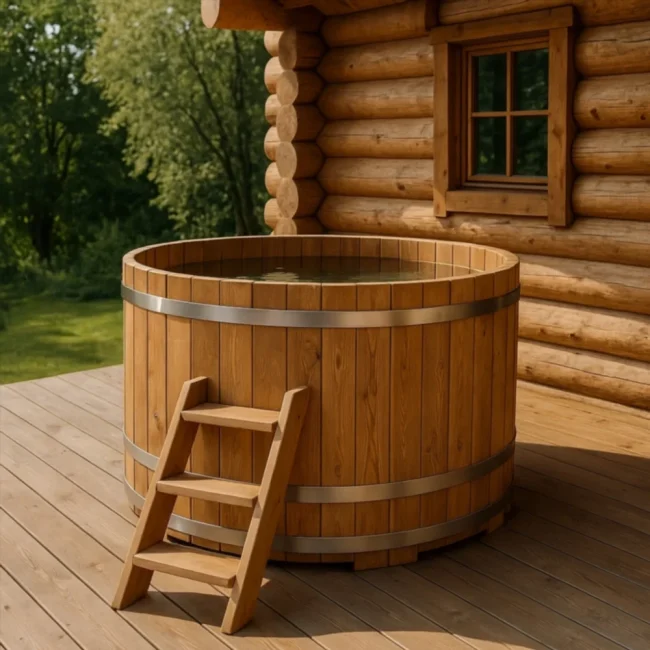
A banya is not only a hygienic procedure but also a ritual of cleansing the body and soul, with roots dating back to ancient times. One of the most important elements of a traditional Russian banya is the font—a container filled with cold or warm water, designed for dousing or immersion. Wooden fonts are especially prized—aesthetic, eco-friendly, and atmospheric. They imbue the banya with the authentic spirit of ancient traditions and serve not only as a functional but also as a decorative element of the interior or garden.
In this article, we'll take a detailed look at the types of wooden hot tubs, the wood species used, manufacturing methods, recommendations for selection and installation, and care guidelines that will help extend the life of this useful and beautiful element of the bathhouse.
- What is a wooden hot tub: a brief definition and functions
- Advantages of a wooden hot tub
- Types of wooden fonts by shape and design
- By form:
- By design type:
- Types of wood for hot tubs
- Larch
- Oak
- Cedar
- Aspen
- Ash, beech, pine
- Making a font: a brief overview of the technology
- How to choose a wooden hot tub: what to look for
- Installing a hot tub: step-by-step instructions
- Caring for a wooden hot tub
- Possible problems and their solutions
- 10. Conclusion
What is a wooden hot tub: a brief definition and functions
A wooden tub is a large container, usually cylindrical or oval, made of durable wood. It is used for contrast water treatments: after a steam bath, a person plunges into cold water, which stimulates circulation, strengthens blood vessels, and promotes a healthy body.
The hot tub can be installed either inside the sauna or outside—on the street, on the terrace, or in the garden. Some models are equipped with heating, ladders, lids, filters, and other amenities. Its main difference from other hot tubs is the use of natural wood, which provides a pleasant aroma, tactile feel, and a unique atmosphere.
Advantages of a wooden hot tub
A wooden hot tub is a choice that combines aesthetics, eco-friendliness, and tradition. Its key advantages include:
- Eco-friendlinessNatural wood does not emit harmful substances and has a beneficial effect on the microclimate in the sauna.
- Authenticity and styleA wooden font fits perfectly into the traditional interior of a Russian bathhouse.
- Unique smellThe aroma of cedar, larch, or oak enhances the healing effects of bath treatments.
- DurabilityWith proper care, a wooden hot tub can last for decades.
- Easy to installThese designs do not require complex installation or utility connections (unless we are talking about models with heating and filtration).
- Excellent thermal insulationThe tree retains water temperature well.
Types of wooden fonts by shape and design
There are several types of wooden hot tubs, differing in design, shape and installation location.
By form:
- Round— the classic, most common option. It ensures even water distribution and is convenient for immersion.
- Oval- suitable for limited spaces, fits better into the interior, especially when placed along the walls.
- Rectangular— less common, more often used as a stationary model or in the form of a mini-pool.
By design type:
- Monolithic (prefabricated)— made to order by a craftsman or purchased ready-made. All elements are joined together without glue or sealant, like a barrel.
- Removable (disassemblable)— more convenient for transportation, but requires additional sealing.
- With heating— comes with a wood-burning stove, either built into the frame or installed nearby. Particularly convenient in cold weather.
- With filtration and circulation- suitable for continuous use, requires connection of pumps and filters.
Types of wood for hot tubs
The choice of material determines not only the appearance of the font, but also its strength, moisture resistance and service life.
Larch
The most popular choice for bath tubs. It boasts high density, moisture and rot resistance, and a beautiful grain pattern. It withstands temperature fluctuations and does not crack or warp.
Oak
An elite wood species known for its durability, strength, and antibacterial properties. It has a dark brown hue and a distinctive woody aroma. Ideal for premium bathtubs.
Cedar
It has pronounced aromatherapeutic properties and enriches the air with phytoncides. Cedar baths are pleasant to the touch and water-resistant, but require regular oil treatment.
Aspen
A budget-friendly and lightweight option. Aspen tolerates moisture well, but is inferior to larch and oak in terms of strength. Suitable for temporary or seasonal structures.
Ash, beech, pine
They can be used, but require special impregnation and more careful maintenance. Pine, in particular, is prone to resin leaching.
Making a font: a brief overview of the technology
A wooden font is made using a technology similar to barrel production. The process involves the following steps:
- Drying woodThe material must be well dried to avoid deformation.
- Fitting the boards (rivets)The elements are made with grooves and tenons for a tight fit.
- Assembling the caseThe boards are fastened with metal hoops. Sometimes, locking joints are used.
- SealingThe natural properties of the wood ensure a watertight seal after swelling, but sometimes flax strand or natural resin is used.
- Surface treatmentNatural oils or waxes are used to protect against moisture and preserve the texture of the wood.
- Installation of fittings: drains, lids, ladders, thermometers.
How to choose a wooden hot tub: what to look for
When purchasing or ordering a hot tub, there are a number of factors to consider:
- Dimensions. Focus on the number of users: for one person, a diameter of 0.8–1 m is sufficient, for two – 1.2 m or more.
- Wood speciesConsider the climate, installation location, and your preferences for appearance.
- Availability of additional functions: heating, lid, benches inside, massage attachments.
- Installation locationOutdoor models require a stable foundation and protection from precipitation. Indoor hot tubs must be installed with ventilation and drainage in mind.
- Manufacturer or masterIt's best to choose trusted workshops or brands with positive reviews.
Installing a hot tub: step-by-step instructions
Proper installation is essential for proper and safe operation. Here are the basic steps:
- Preparing the baseThe site must be level and solid: a concrete slab, plank flooring, or compacted crushed stone.
- Waterproofing. Especially for indoor models.
- Drain installationIt is recommended to use a siphon with a plug or tap.
- Connecting the heating (if provided)If there is a stove, fire safety regulations must be observed.
- Water filling and initial packingThe wood swells, sealing the joints; leaks are possible during the first 24 hours.
- Oil treatment. This is carried out after each drying of the font.
Caring for a wooden hot tub
To maintain aesthetics and functionality it is necessary:
- Wash the interior surface regularlywith gentle products without aggressive chemicals.
- Drying the fontafter each use, especially in winter.
- Treat wood with oil(1-2 times a month) or special impregnations.
- Clean the filter and oven(if any).
- Check the integrity of the hoopsand tighten if necessary.
Possible problems and their solutions
Despite the simplicity of the design, the font requires attention:
- Leaks— occur when the material is overdried. Solution: refilling, replacing rivets, adjusting the humidity level.
- Mold— a consequence of poor ventilation. Solution: regular drying and antiseptic treatment.
- Cracks— from drying out. Solution: sanding and re-oiling.
- Rust on the hoops— replacement with stainless or galvanized elements.
10. Conclusion
A wooden hot tub is not just a useful bath accessory but also an important part of the bathing experience. It creates an atmosphere of comfort, relaxation, and rejuvenation. With the right choice, proper installation, and regular maintenance, a hot tub will last for many years, bringing pleasure and benefit to your body and spirit.
This element in your banya will highlight your commitment to tradition and your care for your health. By choosing high-quality wood, a reliable craftsman, and following simple guidelines, you'll get not just a bath, but a fully-fledged wellness center in miniature—in the best Russian traditions.