Until recently, furniture in interiors was perceived as a fixed element: each piece had a single function and a strictly defined place. Today, this approach is changing. Apartment space is increasingly being used in different ways throughout the day, and the traditional boundaries between zones are blurring. The living room can serve as a bedroom, the work area can appear and disappear, and the same room can adapt to different lifestyles.
In such circumstances, solutions that combine multiple functions are particularly attractive. For example, a 3-in-1 convertible sofa allows you to use the same area for relaxation, sleeping, and storage, without cluttering the interior with additional furniture. Such pieces are increasingly becoming part of living spaces, prompting a new perspective on the role of furniture in interior design.
- Why housing format has changed furniture requirements
- What is transformable furniture really?
- Trend: Where is its popularity growing from?
- Real necessity: a view from everyday life
- Is there a downside to transformation?
- How to understand whether transformable furniture is right for you
- Bottom line: a trend that grew out of necessity
Why housing format has changed furniture requirements
Modern city apartments are becoming more compact. Studios, one-bedroom apartments, and open-plan apartments all dictate new rules. Space must now be flexible: for work in the morning, living in the evening, and sometimes even for guests.
In such circumstances, furniture ceases to be simply "filling" the interior. It begins to play an active role in organizing the space, adapting to different lifestyles. This is where transformable solutions become especially in demand—not because of fashion, but because of the need to use every square meter efficiently.
What is transformable furniture really?
Transformable furniture isn't just folding tables or sofas in the traditional sense. It's about items that:
- perform several functions;
- change shape or purpose without complex manipulations;
- allow you to adapt the interior to current tasks.
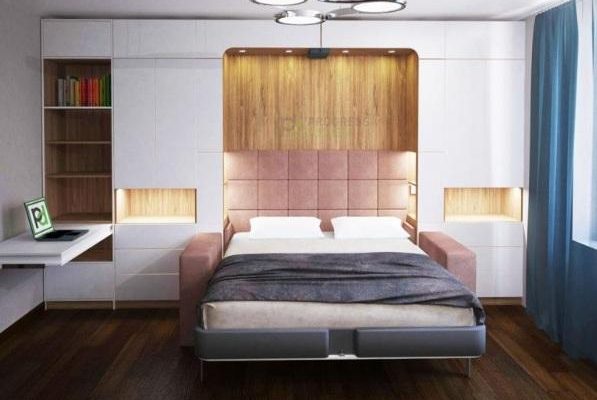
These could be beds that can be stored in a closet, tables that can be adjusted in height and size, storage systems that can be transformed into work areas, and upholstered furniture that can replace several items at once.
Importantly, modern transformable furniture is increasingly being designed with ergonomics and visual neutrality in mind. It doesn't look "technical" or temporary, but rather blends seamlessly into a living space.
Trend: Where is its popularity growing from?
In terms of trends, interest in transformable furniture is fueled by several factors:
- Minimalism and conscious consumption.
Fewer things, more functions. This principle fits well with the philosophy of modern interior design. - The rise of remote work.
When a home becomes an office, living room, and bedroom all at once, there is a need for furniture that can easily change its purpose. - Visual culture.
Social networks and interior design media are actively showcasing smart solutions, creating a sense of novelty and engagement.
In this sense, transformable furniture has truly become part of the fashion agenda. But fashion here merely enhances what is already in demand in practice.
Real necessity: a view from everyday life
If we look beyond trends and at everyday life, it becomes clear: transformable furniture solves very specific problems.
Firstly, space savingOne item replaces two or three, freeing up space for movement and storage.
Secondly, interior flexibilityThe room is no longer "fixed" to a single function. This is especially important for families where the space is used differently throughout the day.
Thirdly, adaptation to changes in lifeHaving a baby, changing your job, moving—all of this is easier to cope with when furniture isn't rigidly tied to one role.
Thus, for many people, transformable furniture is not a design whim, but a tool for adapting a home to real conditions.
Is there a downside to transformation?
Despite the obvious advantages, it's worth noting the limitations. Transformer furniture requires:
- high-quality mechanisms;
- thoughtful design;
- correct operation.
Cheap or poorly designed models can quickly fail, while complex systems can become irritating during daily use. Therefore, the key is not the transformation itself, but the quality of the implementation.
Moreover, multifunctionality isn't always justified. In spacious apartments with clearly defined zones, it's sometimes more convenient to use classic solutions without complicating the interior.
How to understand whether transformable furniture is right for you
To answer this question, it's important to honestly assess your lifestyle. It's helpful to ask yourself a few questions:
- Is the same room used for different purposes?
- Is there a need to receive guests often?
- Is it necessary to combine work and living space?
- Is the apartment area limited?
If the answer to at least some of these questions is yes, transformable furniture ceases to be a fashionable experiment and becomes a practical choice.
Bottom line: a trend that grew out of necessity
Transformable furniture has truly become a noticeable interior design trend. But unlike many visual trends, it has a solid practical basis. Its popularity stems not only from pretty images, but also from real changes in the way people live, work, and use their spaces.
Therefore, it's more accurate to speak not of a "trend versus necessity" conflict, but rather of necessity having, over time, become a sustainable interior design trend. This is precisely what makes transformable furniture not a temporary phenomenon, but a logical step in the evolution of modern living space.