Minimalist homes are becoming increasingly popular thanks to their clean and functional aesthetic. These structures combine simplicity and practicality, making them an excellent choice for a variety of housing types, from country houses to modern city apartments. However, as with any construction project, it's important to consider several key aspects to ensure not only aesthetic appeal but also comfort and functionality for the occupants.
Minimalist house concept
Minimalism in architecture and design is a philosophy focused on eliminating all unnecessary elements and focusing on the most essential and functional ones. In the context of homes, this means a lack of unnecessary embellishments, clean lines, simple shapes, and the use of natural materials. In a minimalist home, every element has a specific function, making it not only aesthetically pleasing but also user-friendly.
This approach allows for the creation of spaces that appear clean and organized, without excessive clutter. At the same time, minimalism doesn't imply dullness—on the contrary, such homes often boast a very expressive design, where every detail plays a role in the overall context.
Why minimalism?
Building a minimalist house can be an excellent choice for those who value simplicity and tranquility. These homes are uncluttered with decor, allowing them to blend harmoniously into any natural or urban landscape. Furthermore, minimalism often goes hand in hand with sustainable and eco-friendly technologies, making these homes more energy-efficient and environmentally friendly.
Beyond its aesthetic appeal, minimalism also helps enhance functionality and save space. Fewer insignificant details means more usable space. This is especially important for small homes, where every square meter counts.
How minimalism is applied in practice
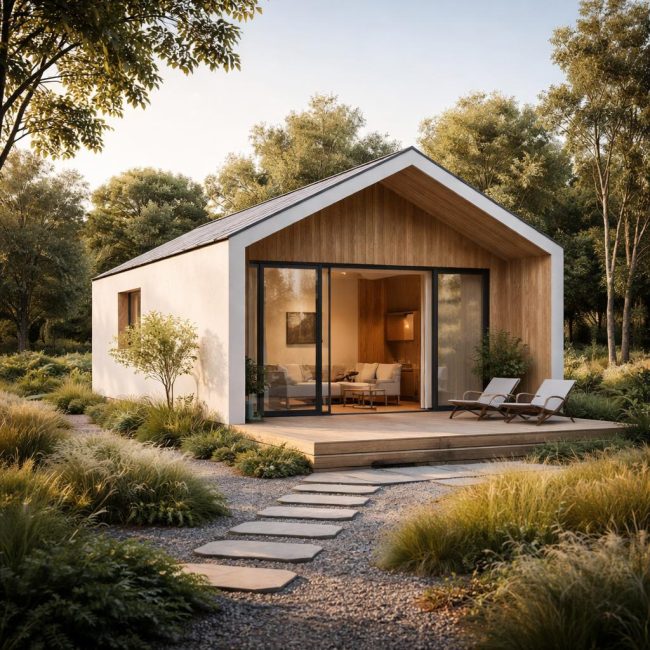
In construction practice, minimalist homes often feature open floor plans, large windows that maximize natural light, and the use of modern materials such as glass, metal, and wood. Simple geometric shapes, often with flat or simple pitched roofs, give these homes a distinctive look.
Importantly, minimalism isn't limited to the home's façade. The interior also plays a key role in creating a sense of spaciousness. Spacious rooms, uncluttered with furniture, with comfortable and thoughtful interiors, help residents feel comfortable and unstressed by excessive visual clutter.
Basic principles of minimalist construction
- Energy efficiency and sustainabilityModern minimalist homes are often built using eco-friendly materials and energy-saving technologies, which help reduce energy consumption and make the home more environmentally friendly.
- Practicality and functionalityIt's not just the exterior design that's important, but also how the space is used internally. Every square meter should be rationally distributed so that all elements of the home fulfill their practical purpose.
- Natural materialsMinimalist homes make extensive use of natural and durable materials such as wood, stone, concrete, and metal. This not only gives the home a modern and elegant look but also helps maintain a comfortable indoor climate.
- Minimum decorRemoving unnecessary decorative elements helps create a clean and calm atmosphere. Instead of bright and ostentatious decorations, the home is adorned with understated yet expressive elements.
- Open spacesOne of the main principles of minimalism is open and spacious floor plans. This allows for a visually expanded space, making it brighter and more harmonious.
Scenarios for using a minimalist house
A minimalist house can be the ideal solution for a variety of situations. It could be a dacha or a small family cottage, combining simplicity and functionality. It's also suitable for small properties where it's important to make the most of every square meter. In urban settings, such a house can be an excellent option for those who prefer compact, modern living, where every element serves a specific purpose.
Another popular scenario is the creation of small homes for rent or outdoor living, which has become increasingly popular in recent years. Minimalism allows such homes to easily integrate into the natural surroundings while providing a high level of comfort.
Limitations and nuances
Despite their many advantages, minimalist homes also have their limitations. One of them is the need for careful space planning, as minimalism demands maximum functionality from every element. Not everyone can adapt to such conditions, especially if they're accustomed to a more hectic life with many possessions and decorative elements.
Furthermore, minimalism often requires more expensive materials, which can increase construction costs compared to more traditional approaches. This is especially important to consider when planning a project budget.
Common misconceptions about minimalism
Many people mistakenly believe that a minimalist home must be boring and lifeless, devoid of any detail. In fact, minimalism can be very expressive and even luxurious if materials and space are used correctly. It's also a common misconception that such homes are difficult to build or maintain, but modern technology and the availability of eco-friendly materials make them a very practical option for many.
Conclusion
A minimalist house isn't just about its outward simplicity, but also about the thoughtfulness of every element. This approach to construction allows for the creation of a space that perfectly blends with nature and modern technology, while still providing convenience and comfort. It's important to remember that minimalism isn't simply about eliminating unnecessary elements, but also about ensuring that every element works for the benefit of the home's owners.