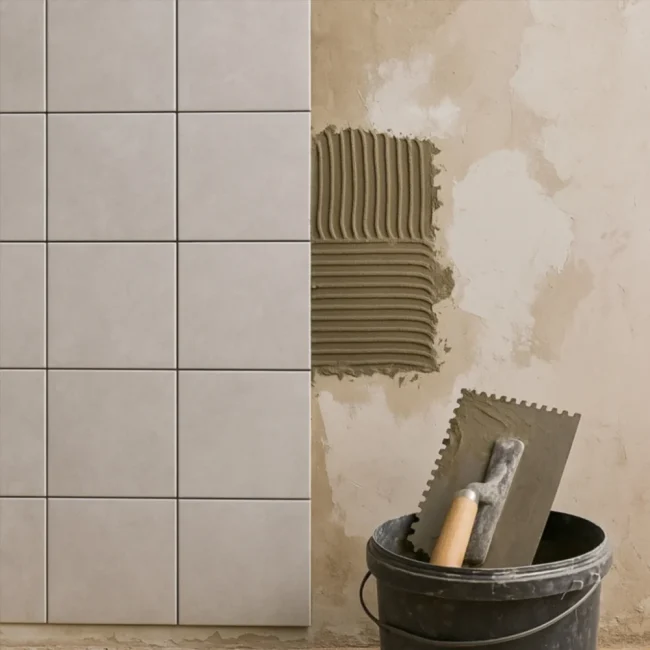
Laying tiles is an important and crucial step in the renovation process. Tiles are used on both walls and floors in bathrooms, kitchens, hallways, and sometimes even in living spaces. Proper subfloor preparation is key to ensuring the durability and reliability of the finish. One frequently asked question among DIYers and novice builders is whether it's possible to lay tiles over spackle. This issue requires careful consideration, as mistakes can have costly consequences.
In this article, we'll take a detailed look at the features of putty, compare it to other bases, consider the risks associated with laying tiles over a putty layer, and provide expert recommendations for proper surface preparation.
- What is putty and what are its features?
- Why you can't glue tiles onto putty
- Insufficient foundation strength
- Poor adhesion
- Destruction from moisture
- Violation of integrity under loads
- When is it possible to lay tiles on putty?
- What the experts recommend: the right base for tiles
- Cement-based plaster
- Moisture-resistant gypsum plasterboard (GKLV)
- Primed concrete or cement screed
- Dry building mixtures (levelers, reinforced putties)
- Preparing the surface before laying tiles
- Possible consequences of laying tiles on putty
- Tips for those who already have a plastered wall
- Conclusion
What is putty and what are its features?
Putty is a thin-layer finishing material designed to smooth surfaces before final finishing (painting, wallpapering, or decorative plastering). The main characteristics of putty are:
- Low compressive and tensile strength;
- Thin layer application (usually 0.5–3 mm);
- Poor adhesion to some materials;
- Tendency to become soggy when exposed to moisture (depending on composition);
- Low resistance to mechanical stress.
Putties come in gypsum, cement, or polymer-based varieties. Gypsum putties are the most popular, especially in residential spaces. However, they are more susceptible to damage from moisture, making them unsuitable for use as a base for ceramic tiles.
Why you can't glue tiles onto putty
From a technical standpoint, laying tiles on a layer of putty is considered a serious violation of technology. This is due to several important factors:
Insufficient foundation strength
Spackle isn't designed to support the weight of tiles and adhesive, especially when used with large-format tiles or flooring. The weight of the tiles can cause the spackle to peel off the substrate, causing the entire tiling to come off.
Poor adhesion
Even when using high-quality tile adhesive, the adhesion between the filler and the adhesive will be poor. This increases the risk of tile peeling within the first few months or even weeks after installation.
Destruction from moisture
In rooms with high humidity (bathrooms, kitchens, toilets), gypsum putty loses its properties. Even when using moisture-resistant putties, the risk of damage from steam or condensation remains.
Violation of integrity under loads
If tiles are laid on a floor or wall where vibrations and loads are possible (for example, when installing furniture), the putty may crack, which will lead to the destruction of the cladding.
When is it possible to lay tiles on putty?
Despite the risks mentioned above, some professionals still allow tiling over a putty layer, but only under certain strict conditions:
- Cement-based putty, moisture-resistant and highly durable.
- Very good contact of the putty with the base, that is, priming the surface before puttying.
- The layer thickness does not exceed 2 mmand it is applied evenly, without peeling.
- The surface is carefully primedBefore applying tile adhesive, it is advisable to use special adhesion primers.
- Using high quality gluewith a high degree of adhesion (e.g. C2TE or higher according to EN 12004).
- Laying small format tiles and tiles on walls not subject to loads.
Even in these cases, such installation is considered "at your own risk" and is not recommended by professional building standards.
What the experts recommend: the right base for tiles
The following bases are recommended for laying tiles:
Cement-based plaster
Cement plaster is an ideal option for walls under tiles. It's durable, moisture-resistant, holds tile adhesive well, and can last for decades without deteriorating.
Moisture-resistant gypsum plasterboard (GKLV)
When properly installed and primed, drywall is a worthy base for tile. It is especially commonly used in bathrooms and kitchens.
Primed concrete or cement screed
This is the best option for floors and heavy slabs. The adhesive's adhesion to concrete is among the most reliable.
Dry building mixtures (levelers, reinforced putties)
Some special compounds with additives can be used under tiles, but only if specified in the manufacturer's instructions.
Preparing the surface before laying tiles
Proper subfloor preparation is key to the longevity of your tile installation. Here are the steps to follow:
- Cleaning from dust, paint, oil stains.
- Deep penetration primer- improves the adhesion of the glue to the base.
- Checking the level and flatness of the surface.
- Leveling with plaster or levelers, if required.
- Applying tile adhesive in accordance with the manufacturer's recommendations.
Possible consequences of laying tiles on putty
If you ignore the recommendations and lay tiles on putty, the consequences may be as follows:
- The cladding will come off the wall after a few months.
- The tile will crack due to movement of the base.
- Moisture will cause the putty to become soggy, especially in the kitchen or bathroom.
- We will have to redo the work involving dismantling and damaging the tiles.
Considering the cost of tiles, adhesive, labor, and possible damage to walls, such mistakes can be costly.
Tips for those who already have a plastered wall
If the wall is already plastered, but tiling is planned, the following steps are possible:
- Remove the putty down to the base- this is the most correct way.
- Sanding to a durable layer + priming with an adhesion mixture- a temporary measure, but less reliable.
- Reinforce the base with reinforcing meshand apply a strong adhesive leveling layer.
Conclusion
So, is it possible to lay tiles over putty? From an engineering perspective—NoThis violates all standards for strength, moisture resistance, and adhesion. Even when using cement-based fillers, this method does not guarantee durability. If you want a high-quality and reliable result, remove the filler and prepare the surface properly.
Saving time and money by ignoring technology can result in significant future expenses and complete removal of the tiling. Follow the recommendations of tile adhesive and building material manufacturers, work according to technology, and you'll enjoy the results for years to come.