Reliable and stable fire alarm systems are crucial in modern fire safety systems. A key component of such systems is the cable that transmits information from the sensors to the central control panel. Fire-resistant cable, which can maintain functionality even when exposed to fire and extreme temperatures, is especially important. In this article, we'll take a detailed look at what fire-resistant cable for fire alarms is, its components, the different types available, and how to choose the right one for maximum safety.
Flame retardant cable design
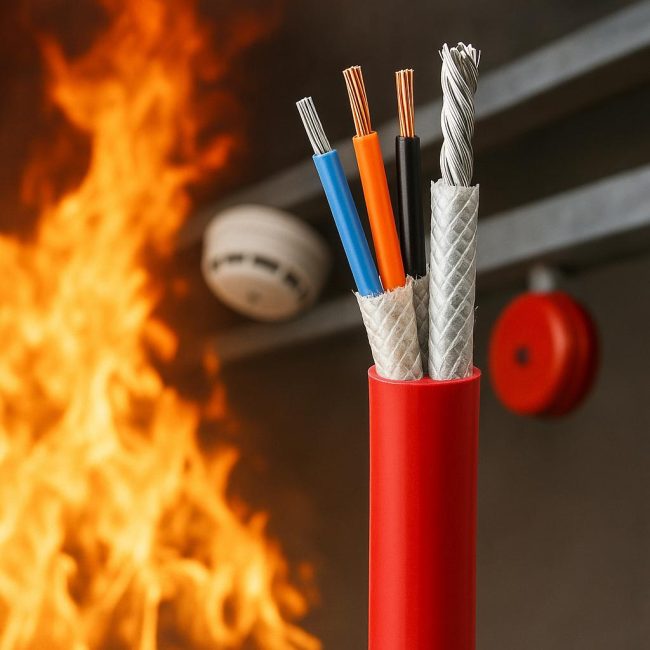
Fire-resistant cable for fire alarms consists of several components, each of which performs its own important function:
- Conductors are the primary element that transmits electrical signals. Copper is commonly used, due to its high conductivity and resistance to mechanical damage.
- Conductor insulation is a special material that is flame-retardant and maintains its properties even at high temperatures. Cross-linked polyethylene, PVC with flame-retardant additives, or heat-resistant silicone-based materials are often used.
- The inner sheath protects the conductors from moisture and chemical influences, and must also withstand high temperatures and not burn.
- Shielding braid (if provided) – prevents electromagnetic interference, which is important for the correct operation of the alarm.
- The outer shell is the final protective layer made of non-flammable materials, such as PVC with fire-retardant additives or silicone, which prevents the spread of flame.
A special role is given to additives in insulating materials, which ensure fire resistance, minimal emission of toxic gases and minimal smoke concentration.
Main types of fire-resistant cables
Depending on their design and characteristics, there are several types of fire alarm cables:
- Cables marked FIRE-RESISTANT or fire-resistant (for example, RKGO, KGPP, KNPV) are capable of maintaining signal transmission for a certain period of time at temperatures above 600 °C.
- Low Smoke Zero Halogen (LSZH) cables emit minimal amounts of toxic and corrosive substances when burning.
- Flame retardant with shielding for applications where protection from electromagnetic interference and signal preservation even under extreme conditions are important.
- Multi-core and single-core cables, their choice depends on the specifics of the system and the length of the network.
Features of using non-flammable cables
The primary purpose of such cables is to ensure the operability of the fire alarm system during a fire, when a timely response is essential to ensure the safety of people and property. Installation must comply with regulatory requirements: the cables must be protected from mechanical damage, and in areas with elevated temperatures, they must be installed within fire-resistant structures.
It's important to install the cable so it's easily accessible for inspection and maintenance. It's also important to maintain proper clearances to other utility lines to avoid damage and interference.
How to choose the right fire-resistant cable
When selecting a cable, you should be guided by the following parameters:
- Certification and compliance. Choose cables that are certified to GOST, TU, and international fire safety standards (e.g., EN 50575).
- Fire-related operational time. Depending on the facility, a cable is selected that maintains signal transmission for 30, 60, or 90 minutes.
- Cable design and material characteristics. Choose cable with low smoke and toxic emissions if required for indoor applications.
- The diameter and cross-section of the conductors are in accordance with the signaling diagrams and the length of the lines.
- The presence of shielding - if there are sources of electromagnetic interference nearby.
- Price and manufacturer's warranty. Discuss warranty coverage with your supplier.
Practical tips for installing fire-resistant cable
Use special fire-resistant boxes and channels. They will provide additional protection from fire and mechanical damage.
Avoid sharp bends and tension on the cable. This will prolong its life and reduce the risk of damage.
Check the markings and integrity of the insulation on each section before installation.
Place fire lines separately from power cables to avoid cross-fires and interference.
Use special sleeves and plugs at the points where cables enter equipment to improve sealing and prevent smoke and flames from entering the facility.
Fire-resistant cable for fire alarms is an essential safety element, capable of maintaining functionality in extreme fire conditions. By selecting the right cable and adhering to installation standards, you can ensure reliable operation of your fire alarm system, thereby protecting lives and property.