Waterproofing is an important, yet often underestimated, step in a bathroom renovation. Many people believe that tile alone is sufficient for water protection and neglect this element. However, neglecting waterproofing can lead to serious problems, from mold and odors to damage to structural components and conflict with neighbors below. In this article, we'll explore whether waterproofing is really necessary in a bathroom, the different types available, how to install it correctly, and what mistakes to avoid.
- Why is waterproofing in the bathroom essential?
- Types of waterproofing for the bathroom
- Coating (liquid)
- Pasting (roll)
- Impregnating
- Membrane (spray coating)
- Where waterproofing is necessary
- Step-by-step instructions for applying coating waterproofing
- Preparing the base
- Processing of seams and corners
- Applying the base coat
- Control and testing
- How to choose materials
- Mistakes when waterproofing a bathroom
- How much does bathroom waterproofing cost?
- Conclusion
Why is waterproofing in the bathroom essential?
The bathroom is a room with high humidity and regular contact with water. It's prone to both occasional leaks and chronic exposure to steam and condensation. The main sources of moisture are:
- shower cabins and bathtubs;
- washbasins and toilets;
- washing machines and pipes;
- high air humidity.
Failure to protect surfaces from moisture may result in the following consequences:
- the appearance of mold and mildew- not only spoils the appearance, but is also harmful to health;
- destruction of finishing materials— tiles, wallpaper, and putty begin to fall off;
- damage to building structures— concrete, wood and metal are destroyed by moisture;
- leaks to the lower floors— a direct path to conflicts with neighbors and possible lawsuits;
- unpleasant odor— due to stagnant moisture and organic deposits.
Even if your bathroom is tiled with high-quality tiles, it won't prevent moisture from penetrating through seams, microcracks, and joints. Waterproofing provides an additional, deeper level of protection.
Types of waterproofing for the bathroom
There are several types of waterproofing, each of which is used depending on the design of the room, materials and budget.
Coating (liquid)
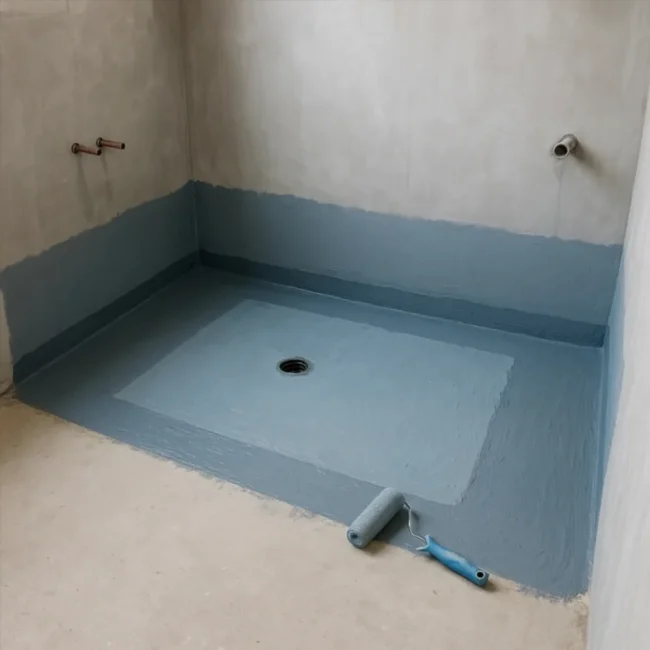
The most popular and convenient method. It consists of a mastic based on bitumen, acrylic, cement, or polymers, applied with a brush or roller to the floor and walls.
Advantages:
- good adhesion to surfaces;
- ease of application;
- high efficiency;
- affordable price.
Flaws:
- care must be taken when applying;
- It is necessary to observe the drying technology and layer thickness.
Pasting (roll)
It consists of rolls of materials (bitumen, fiberglass, membrane), which are glued to the base using mastic or heating.
Pros:
- high strength and durability;
- reliable protection against severe leaks.
Cons:
- difficulty of installation in small spaces;
- the need for precise fitting of joints.
Impregnating
Used during construction or major renovations, the surfaces are impregnated with special compounds that penetrate deep into the material and create a water-repellent effect.
Suitable for:
- concrete;
- bricks;
- plaster.
Membrane (spray coating)
A modern, but expensive method is to spray a polymer membrane to form a seamless layer.
Advantages:
- high strength and elasticity;
- durability;
- absence of seams.
Flaws:
- requires special equipment and professional application.
Where waterproofing is necessary
Ideally, the entire bathroom should be waterproofed, especially the floor and lower portions of the walls. However, there are high-risk areas where treatment is essential:
- The floor is completely— especially under the bath, shower and washbasin.
- Walls at a height of 20–30 cm from the floor— at this level, a leak usually occurs.
- Areas around the bathtub and shower stall— both on the floor and on the walls up to a height of at least 1.5 m.
- Water supply and sewerage pipes- at the entrance to the floor or walls.
- Seams between walls and floor— especially at partitions and joints of floor slabs.
For shower enclosures without a tray (floor-level shower areas), waterproofing must be particularly thorough.
Step-by-step instructions for applying coating waterproofing
This method is considered the most versatile and accessible. Let's look at the main steps:
Preparing the base
- Remove old finishes, dust, grease and dirt.
- Seal cracks, seams, and potholes with cement mortar.
- Treat the surface with a deep penetration primer.
Processing of seams and corners
- The corners and joints are reinforced with a special tape (waterproofing non-woven fabric or butyl rubber tape).
- The tape is pressed into the mastic that has not yet dried.
Applying the base coat
- Use a roller or brush.
- Apply 2-3 layers of mastic, allowing it to dry between them (the time depends on the composition - from 4 to 24 hours).
- Pay special attention to the places where pipes enter and the shower area.
Control and testing
- After complete drying, perform a “water test”: fill the floor with water and check for leaks within 24 hours.
- If there are no leaks, you can proceed to laying the tiles.
How to choose materials
When choosing materials, it is important to consider several criteria:
- Compatibility with the base— concrete, cement screed, gypsum, etc.
- Temperature and humidity— some compositions cannot withstand temperature changes.
- Type of finishing— for tiles and porcelain tiles, cement and polymer compounds are better.
- Layer thickness— the thicker, the better the protection, but the longer it takes to dry.
- Manufacturer and service life— It’s better to give preference to proven brands.
Mistakes when waterproofing a bathroom
Even with high-quality material, it’s easy to make a mistake that will reduce protection to zero:
- applying waterproofing to dusty or wet surfaces;
- too thin a layer or a single application;
- lack of reinforcing tapes in the corners;
- violation of drying technology;
- no overlap when laid in rolls;
- installation of plumbing fixtures without sealing the pipe entry points.
How much does bathroom waterproofing cost?
Approximate prices (depending on region and materials):
- Materials— from 100 to 500 rubles per m².
- Work of specialists— from 300 to 800 rubles per m².
- Independent work— costs only for materials.
The average cost of waterproofing a bathroom of 4–5 m² ranges from 2,000 to 6,000 rubles if you do it yourself, and up to 10,000–15,000 rubles if you hire professionals.
Conclusion
Waterproofing a bathroom isn't a luxury, but a necessary measure to ensure the durability of the renovation, comfort, and safety of residents. Don't skimp on this step, as the cost of repairing a leak or repairing the ceilings will far exceed the cost of proper protection. This is especially true in apartment buildings, where the risk of damage to other people's property is very high.
Choose proven materials, follow application procedures, and don't forget about weak spots like corners, joints, and pipes. Then your bathroom will not only be beautiful but also reliably protected from moisture for years to come.